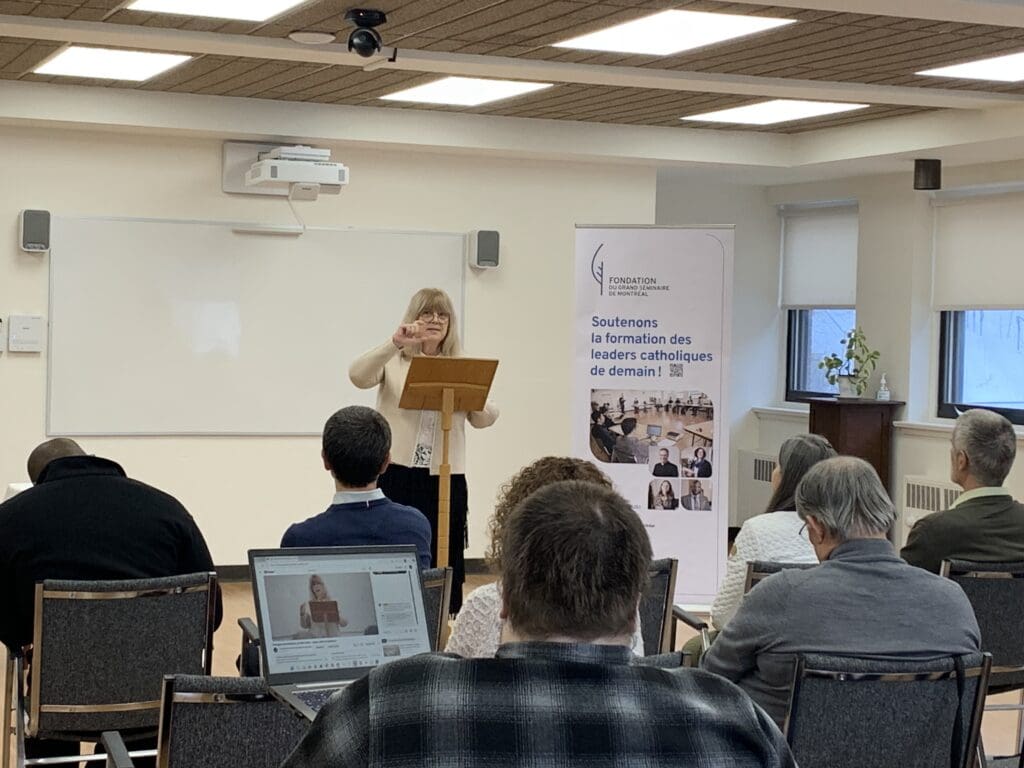
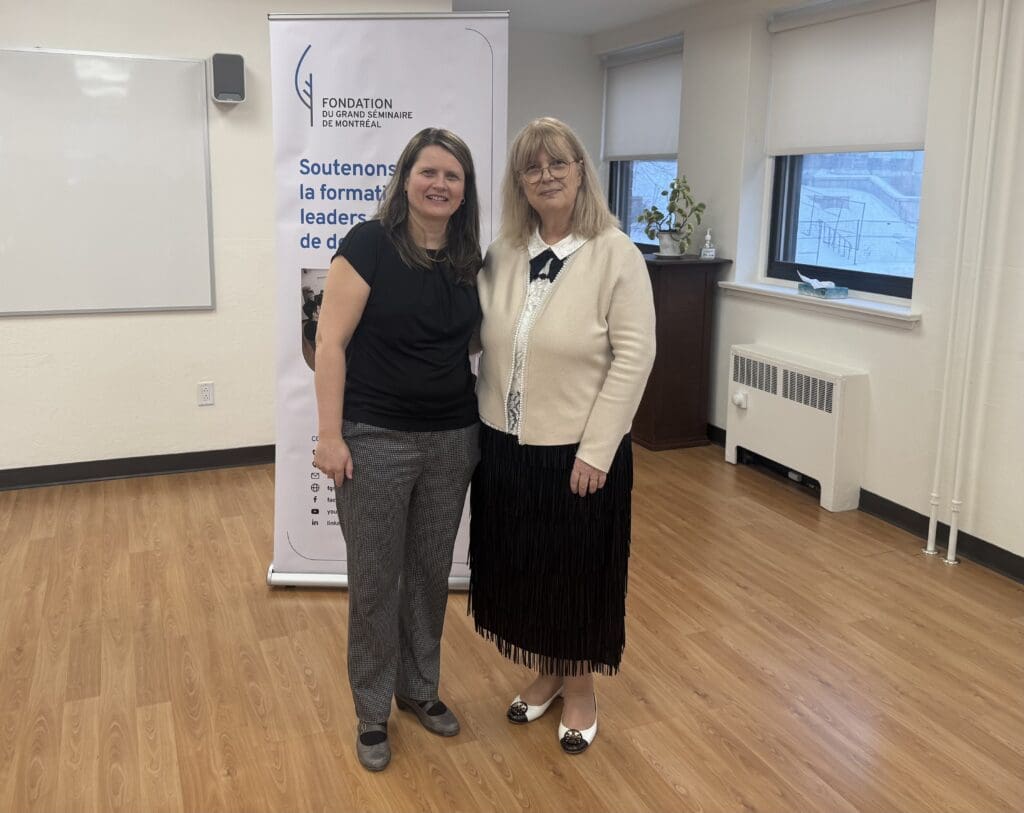
On January 31, at the Grand Séminaire de Montréal, I had the honor of opening a new conference series organized by the Fondation du Grand Séminaire, entitled Dialogues et espérance. The inaugural lecture, Ecumenical Dialogues in the 21st Century: Challenges, Wounds, and Hope, brought together participants both in person and online for a moment of reflection on Christian unity in our complex and fragile world.
This initiative is particularly meaningful because it opens the doors of theological reflection to the wider public, inviting dialogue not only among scholars and clergy, but also among all those concerned with the future of Christianity and its witness in today’s world.
Ecumenism: A Long and Winding Road
The term ecumenism comes from the Greek oikoumene, meaning “the whole inhabited world.” In the Christian tradition, it refers to the effort toward unity among divided Churches. This journey has never been simple. Protestant Churches were the first to engage in modern ecumenism at the Edinburgh Missionary Conference in 1910, seeking cooperation and a common Christian witness. Orthodox Churches entered ecumenical dialogue in the early 20th century, emphasizing faithfulness to apostolic tradition. The Catholic Church officially committed itself to ecumenism only with the Second Vatican Council, especially through the decree Unitatis Redintegratio (1964), which marked a profound shift toward dialogue, mutual recognition, and cooperation.
Throughout the 20th century, ecumenism transformed Christian theology and practice. Unity came to be understood not as uniformity, but as communion in diversity — a unity grounded in Christ, nourished by love, and expressed through shared prayer, service, and mission.
Contemporary Challenges: The Example of Ukraine
Yet the 21st century confronts ecumenism with new and painful challenges. One striking example is Ukraine, where ecclesial divisions intersect with geopolitical conflict. Orthodox, Catholic, and Greek-Catholic Churches coexist within a context marked by war, displacement, and suffering.
Despite historical tensions and recent fractures within Orthodoxy, the Churches in Ukraine have demonstrated something profoundly Christian: solidarity. Since the Russian was in 2022, Catholic, Greek-Catholic, Orthodox, and Protestant communities have worked together to support displaced families, shelter the homeless, and provide humanitarian aid. Monasteries, parishes, schools, and universities have opened their doors without asking about denominational affiliation.
This lived collaboration can be described as an ecumenism of suffering — an ecumenism rooted not in theological documents alone, but in compassion, prayer, and concrete love. Through my visits to Ukraine with CNEWA partners, I have witnessed how Christian unity often becomes most visible in times of trial.
Ecumenism Beyond Diplomacy
High-level encounters between Church leaders remain important, yet they also reveal the fragility of Christian unity. Recent tensions within the Orthodox world have limited common participation in significant ecumenical commemorations, reminding us that unity cannot be achieved through diplomacy alone.
Pope Leo XIV has emphasized that Christian unity is not a secondary ideal but a divine mandate at the heart of Christian identity. The Catholic Church has sought to embody this conviction through concrete gestures, such as recognizing saints venerated in other traditions and offering material and moral support to Eastern Churches in times of crisis. These acts, including sustained support for the Armenian Apostolic Church, reflect an ecumenism of friendship and solidarity rather than institutional self-interest.
A Path Forward: Spiritual Ecumenism
In closing the conference, I proposed a renewed vision for ecumenism in the 21st century: spiritual ecumenism. True unity, after all, is a gift of the Holy Spirit. It grows through humility, prayer, fasting, and repentance — not through competition or claims of superiority.
The saints show us this path. Their lives transcend confessional boundaries and reveal what unity in Christ truly means. As Saint John Paul II once said, “The Church today needs saints, not reformers.” In a fractured world, authentic Christian unity will emerge not only from dialogue tables, but from transformed hearts.
The conference concluded with a lively exchange of questions, confirming that ecumenism remains not only a theological concern, but a living hope — one that continues to inspire prayer, action, and commitment across Churches and continents.