A thousand olive trees, along with other crops, were engulfed in flames on 25 August on the outskirts of Qlayaa, a hilltop village in southern Lebanon.
Most of the 750 families who still live in Qlayaa rely on farming for income. South Lebanon’s economy relies largely on agriculture and provides olives, citrus fruit and bananas for the whole country.
The villagers’ lands “are very threatened by the war at the moment,” said the Rev. Antonios Farah, the priest of the Maronite Catholic Church of St. George.
Father Farah did not rule out natural causes for the wildfire, but local outlet Naqd Media reported that the Israeli army launched incendiary bombs in the area.
The firefighters were unable to intervene “because this area sits within the occupied zone,” Father Farah said.
The Israeli army has been occupying swathes of southern Lebanon since 2024 and established a no-go zone, “the yellow line,” in 2026; in June, it spanned 240 square miles.
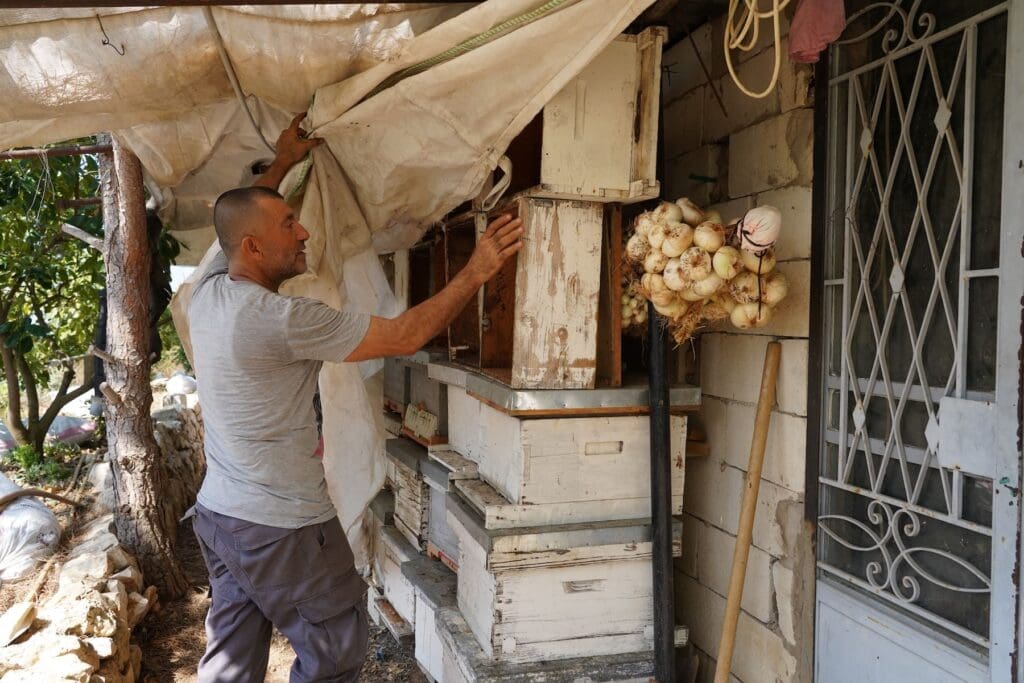
Qlayaa lies outside the no-go zone but remains exposed to bombardment and drone attacks. This year, four residents were killed by the Israeli army, including the Rev. Pierre al-Rahi, a local Maronite priest, as well as a man with his two children. Father Farah succeeded Father Rahi as the pastor of St. George.
The village also faces two strategic positions: Beaufort Castle, taken over by the Israeli army in May, and Ali al-Taher ridge. On 10 September, the Israeli army destroyed alleged Hezbollah tunnel infrastructure in Ali al-Taher, triggering a shockwave similar to a magnitude-4.1 earthquake.
By mid-September, nearly 9,000 people had died in Israeli attacks in Lebanon since 2023. In a government report in April, Lebanese Environment Minister Tamara El Zein said the war has “reshaped both the physical and ecological landscape of the country.”
“The scale and intentionality of the damage to forests, agricultural lands, marine ecosystems, water resources and atmospheric quality constitute … an act of ecocide,” she said.
In 2023, “the Israeli army first used white phosphorus,” whose indiscriminate use in Lebanon violates international humanitarian law, said Mohammad el Husseini, the head of the Farmers Union in South Lebanon. Then, he said, Israeli “bulldozers removed natural covers such as trees and crops.”
In February, the Israeli army sprayed glyphosate, an herbicide, along the demarcation line, leading to “farmed lands and forest to die in a matter of days.”
Mr. Husseini said these actions contribute to “a kind of desertification amounting to war crime.”
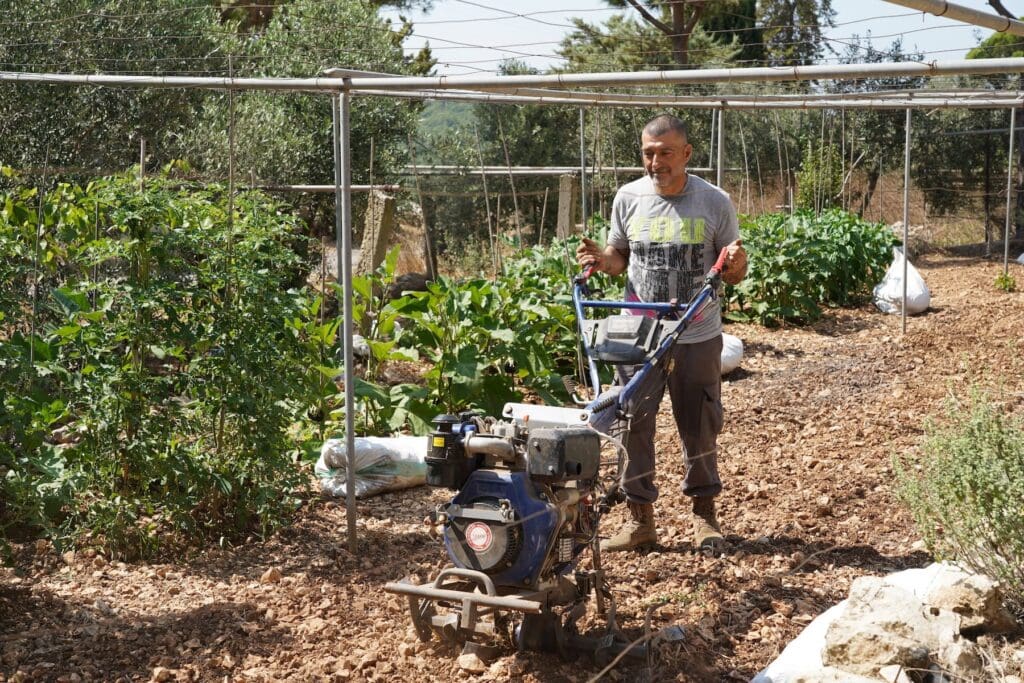
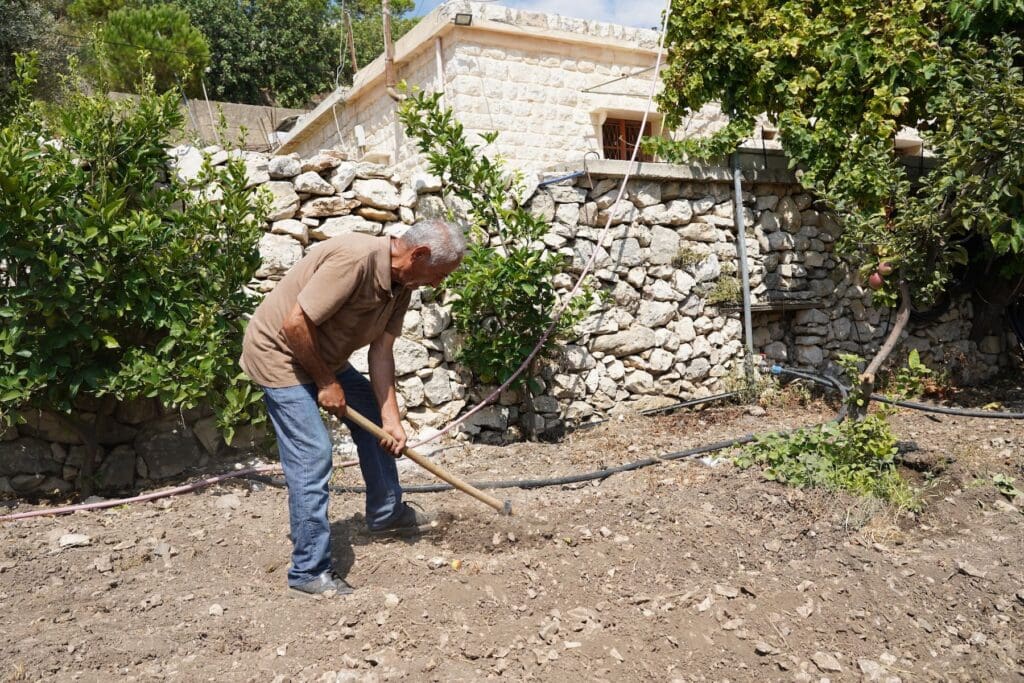
Speaking from his home in Qlayaa, farmer Marwan Rizq said he has been able to cultivate only part of his lands since 2023, and his production of olive oil, pecans, pine nuts and watermelons has become very limited.
“Going to our agricultural land is dangerous, bombardments can happen at any time, as well as military operations,” he said.
According to Lebanon’s National Council for Scientific Research (CNRS), 5,323 acres of orchards were burned between October 2023 and December 2024, including 2,011 acres of olive groves and 1,574 acres of citrus plantations; 220 acres of stone pine were damaged.
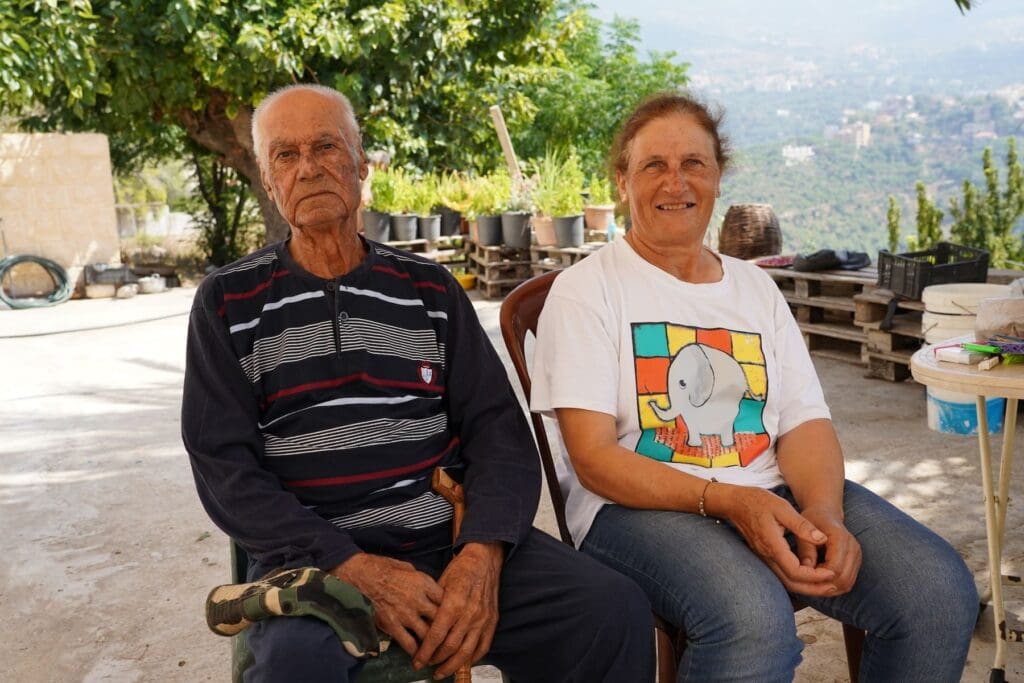
Mr. Rizq said 700 of his 1,500 olive trees “were taken by [Israeli] excavators” on 28 October 2024. In 2026, his farm produced 79 gallons of olive oil instead of the usual 2,642 gallons, leading to a substantial decrease in revenue.
“My brother and I live off these farms,” Mr. Rizq said.
“Praise be to God, we still have our houses, but it is not enough,” he said. “We need to be able to work, and we want peace.”
Since 2023, CNEWA-Pontifical Mission has been supporting Qlayaa’s inhabitants and municipality with cash assistance, fuel and food relief, amounting to $39,000 in 2026.
Farther from the frontline, CNEWA-PM adopted a “smart emergency response” to support farmers affected by the crisis, said Michel Constantin, director of CNEWA’s regional office in Beirut.
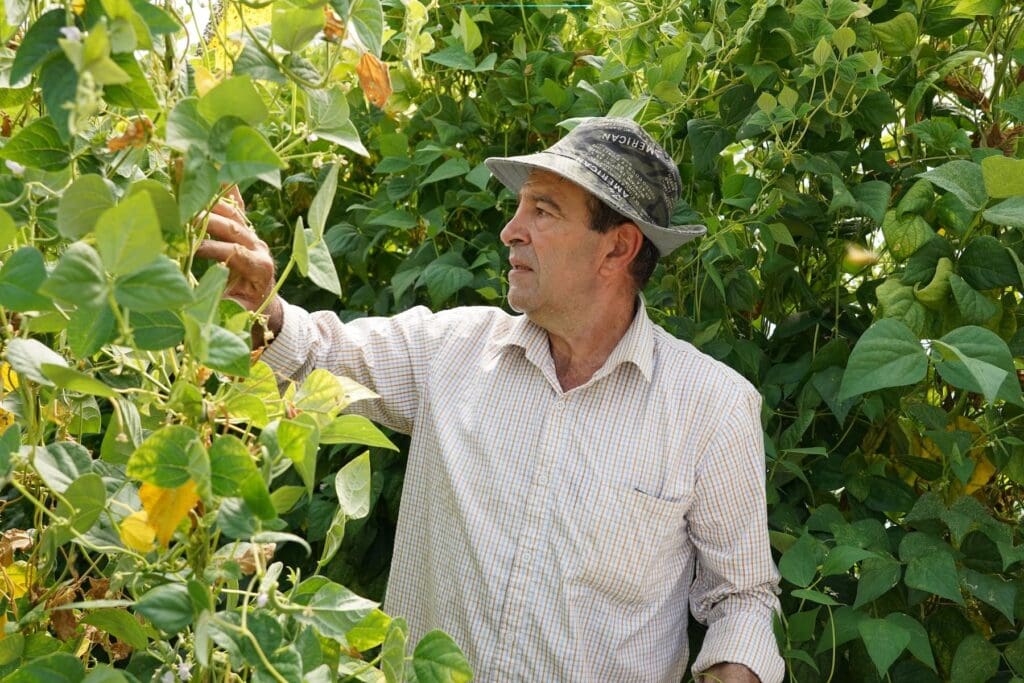
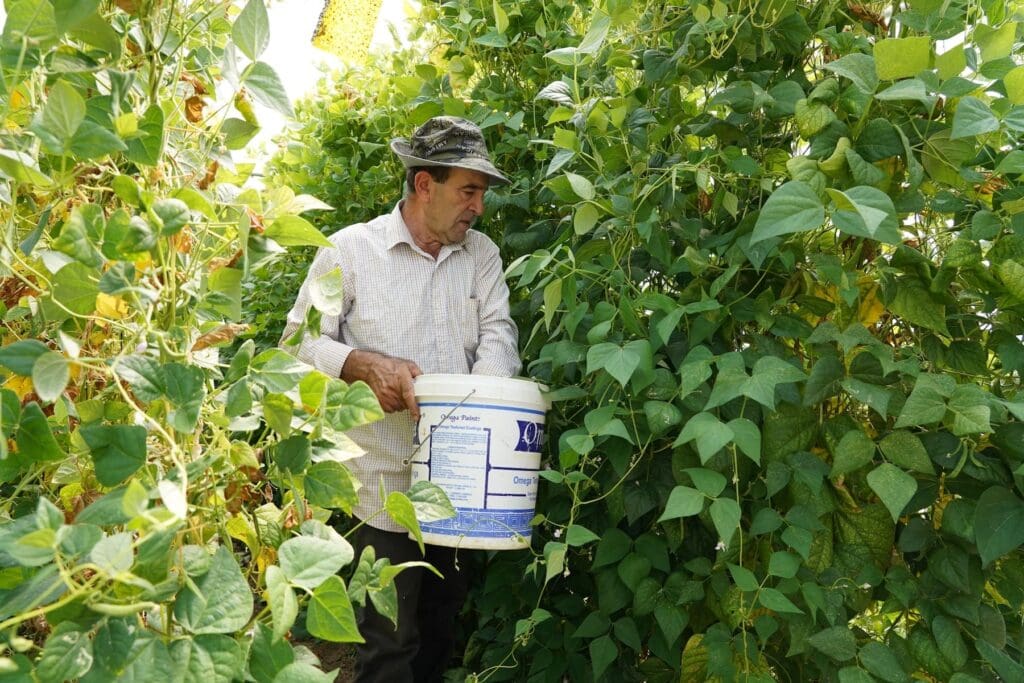
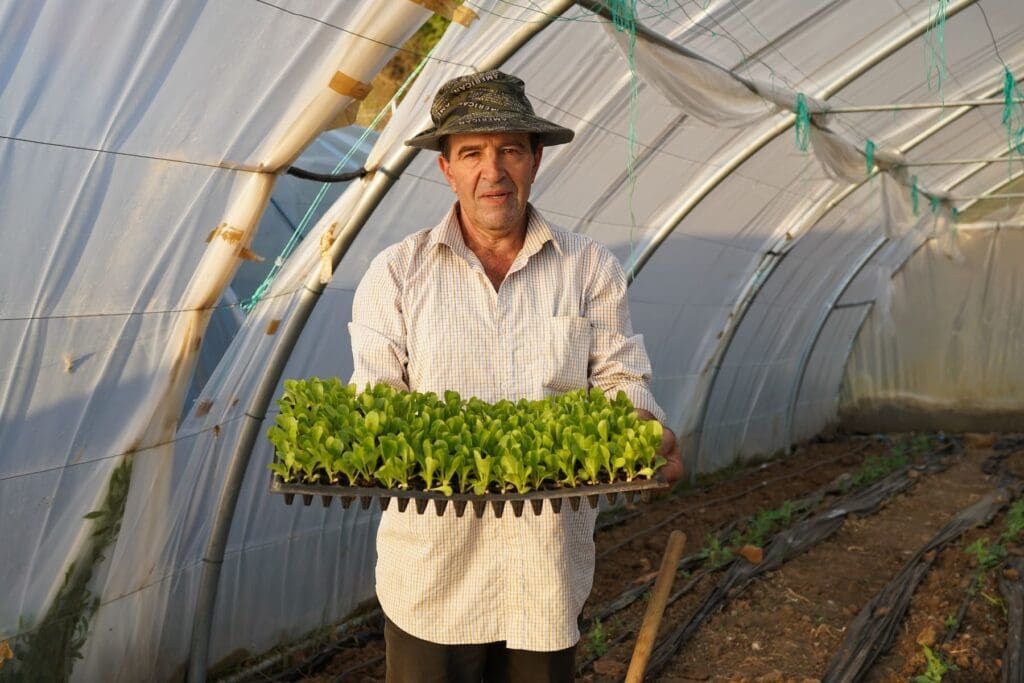
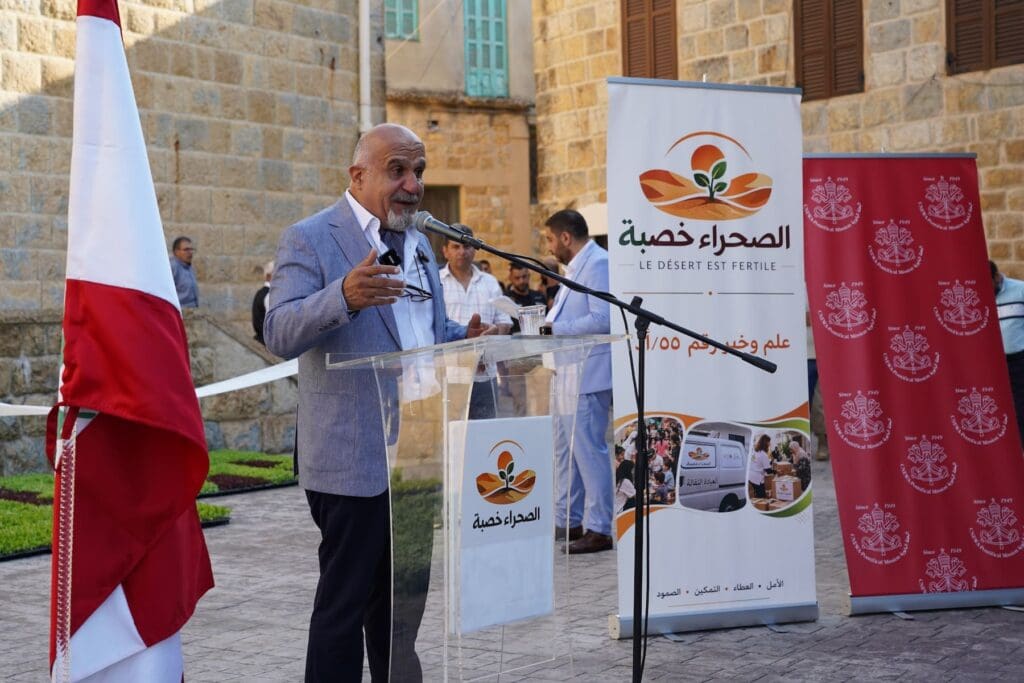
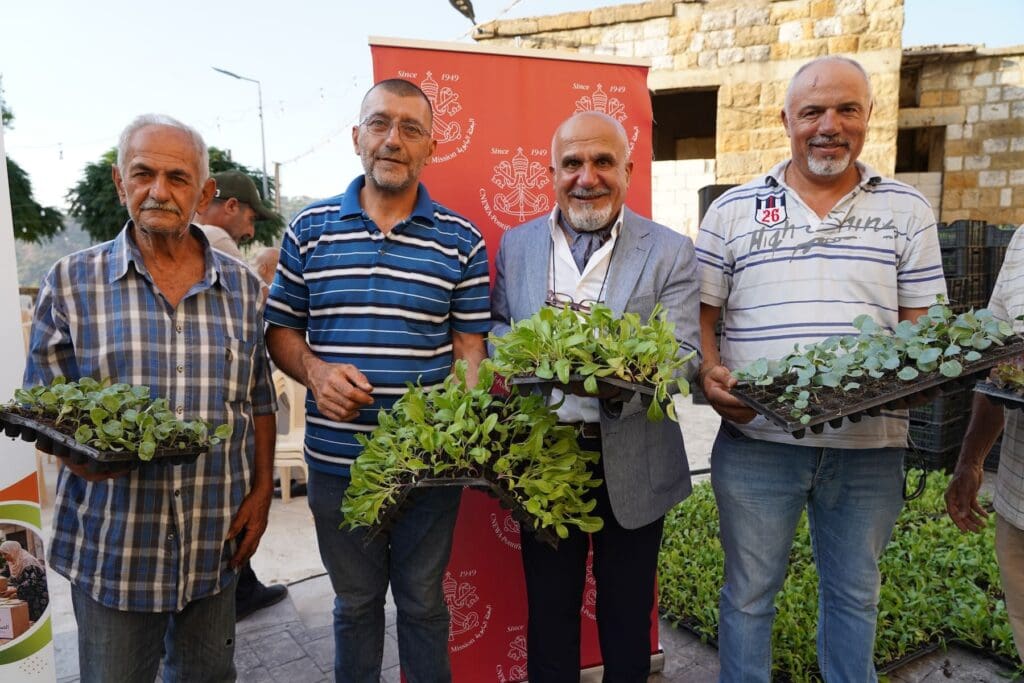
In September, CNEWA-PM and a local partner, The Desert is Fertile, distributed hundreds of seedlings to 11,000 farmers coming from villages across the Jezzine and Saida districts, where more people can access their lands.
“Farmers will be able to feed their families with the crops and to sell them,” Mr. Constantin said.
Speaking from Qlayaa, Mr. Rizq said he feared losing another source of income: his honey. “The bombardments, the detonations, the smell of ammonium [used as explosive] … this impacts the environment. How are the bees going to live?”
According to the CNRS report, soils are “contaminated by heavy metals, hydrocarbons, and chemical residues from munitions and debris.” Phosphorus and chromium, which are markedly present, “can persist in soils for decades, posing risks to plant growth and food safety.”
The report states that “contamination hotspots overlap with key agricultural zones.”
Hisham Younes, a founder of the Green Southerners, a local environmental organization, speaks of “a pattern and a policy which aims to erase the villages — not only the physical houses and infrastructures but also trees and ecosystems.”
“Some impacted zones had a rich biodiversity, and now they are dead zones,” he said, noting the intensification of an Israeli scorched-earth policy since July.
Some observers believe this is a strategy to render the south of Lebanon as uninhabitable.
“What is happening in Gaza and Lebanon reminds us of the ‘herem,’ the anathema, that is described in the Book of Deuteronomy,” said the Rev. Bassem al Rai, a political philosopher who teaches political science at St. Joseph University of Beirut and Lebanese University.
According to Deuteronomy’s “herem” laws, when the Jews occupy the enemy’s land, a zero-tolerance rule may be applied if what is encountered there threatens the community and its worship of the One God.
“Everything has to be destroyed and burned, so that nothing is left,” Father Rai added.