Riham Jahshan can see the Israeli settlement of Gilo from her living room window. She and her family live in a tidy, carefully kept home in Beit Jala — just one mile from the Old City of Bethlehem, long revered as the cradle of Christianity.
However, the reality in Bethlehem and its neighboring communities in the southern West Bank, where Palestinians live under Israeli military occupation, bears little resemblance to the postcard images of the Holy Land.
Gilo, home to more than 30,000 people, is slated for another expansion that will build nearly 2,000 new housing units across 43 acres. For Ms. Jahshan, a Greek Orthodox Palestinian, the view is a daily reminder the world around her family keeps closing in around her.
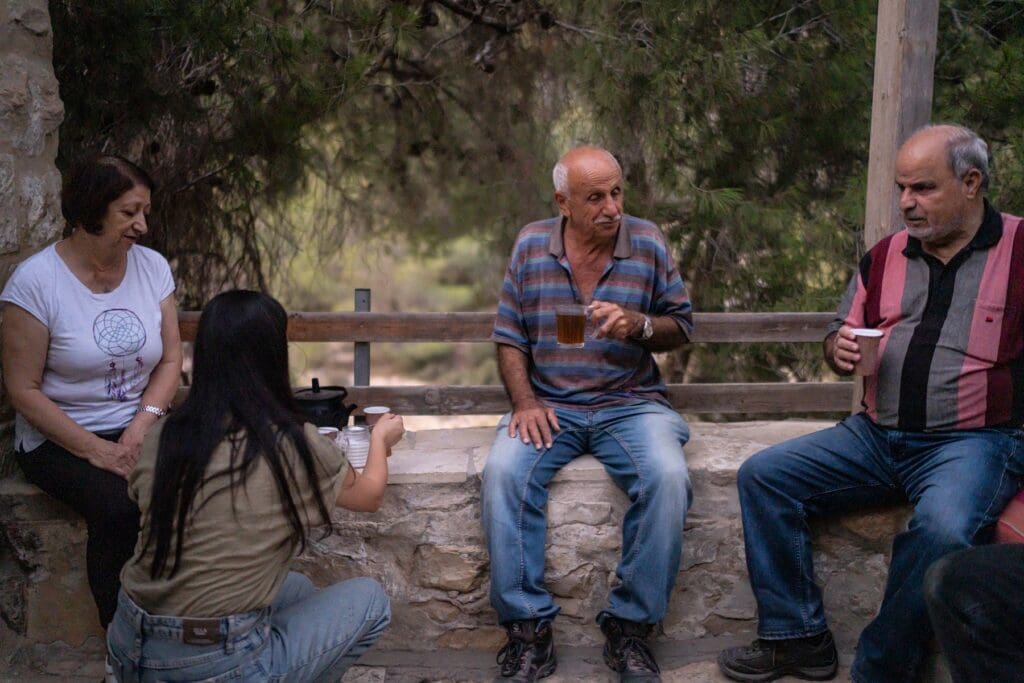
At least 23 Israeli settlements, housing more than 180,000 people, now occupy the Bethlehem governorate. The settlements are considered illegal under international law.
“We can’t move around much,” she says. “We can’t leave Beit Jala or the Bethlehem area at all.”
Her “family radius” has shrunk to just a few neighborhoods since Israel’s war on Gaza began in October 2023. Prior to the war, it was easier to drive between cities, she says.
Jerusalem is only a six-mile drive away, but it is effectively unreachable behind the separation wall and Israel’s permit regime that bars most Palestinians from entry. In the year after the Hamas invasion of Israel on 7 October 2023, many existing permits for Palestinians were revoked or suspended, and 44 percent of the 46,163 medical-permit applications were denied or left pending, a measure that has been described as collective punishment by human rights groups.
“We can’t move around much. We can’t leave Beit Jala or the Bethlehem area at all.”
By contrast, Israeli settlers move freely on segregated bypass roads, tunnels and highways that connect their homes to Jerusalem and Tel Aviv. Israel’s recently approved annexation plan, dubbed E1, will connect Ma’ale Adumim — currently the third-largest Israeli settlement — north of Bethlehem, to Jerusalem, making settler access to the West Bank easier and bifurcating the northern and southern parts of the Palestinian territory.
“The E1 plan kills even the tiny bit of hope that’s left,” Ms. Jahshan says.
Each project changes school routes, postpones visits and turns every trip into a calculation. Her days follow a similar rhythm: military raids at dawn, sudden closures, settler incursions and tear gas drifting from Dheisheh refugee camp, where she counsels children, whose parents have been imprisoned or killed by the Israeli military. The camp, established in Bethlehem in 1949 after the first Arab Israeli war, was built for 3,000 Palestinian refugees flushed from their homes in what is now the state of Israel; it now houses more than 19,000 people.
The U.N. Office for the Coordination of Humanitarian Affairs (UNOCHA) has recorded nearly 7,500 military raids across the West Bank in 2025 alone, a 37 percent increase since 2024, and restrictions have increased in the past year.
Outside the city, the last open valleys accessible to Palestinians in Bethlehem are Cremisan and al-Makhrour, where many landowners are Christian.
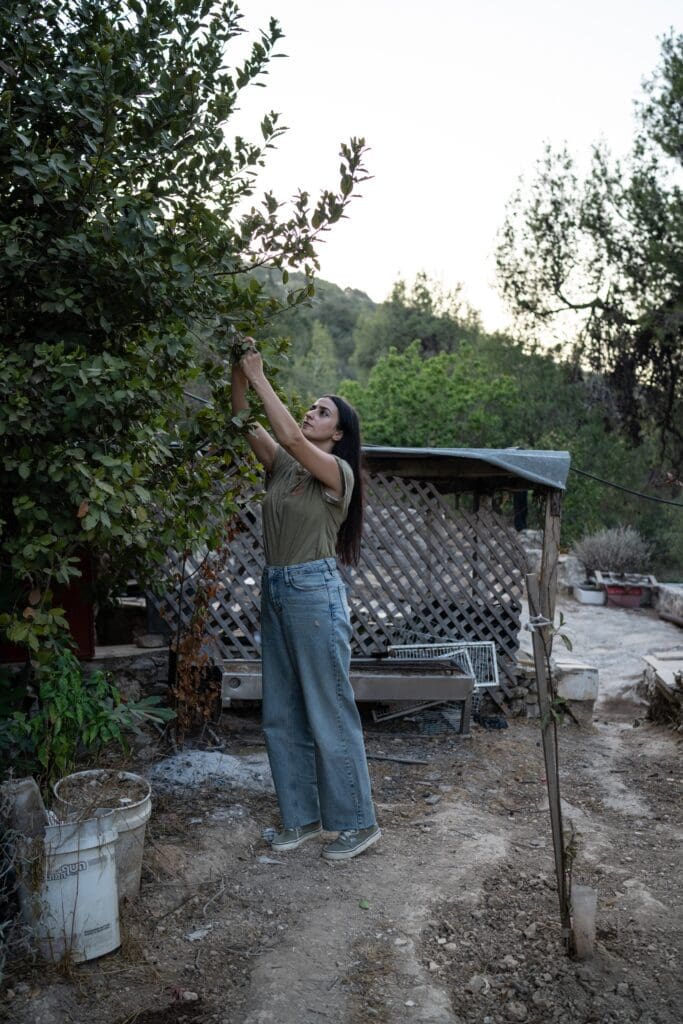
In al-Makhrour, Ms. Jahshan’s uncle, Carlos Barham, lives in a traditional stone house on nearly 10 acres of ancestral land. Every day, with pruning shears in his back pocket, he tends expansive terraces — a duty passed down from his father — with dozens of olive and apricot trees, grapevines and rows of sage, thyme and mint.
“I was born in 1947,” he says. “I’ve been going back and forth to this land for 74 years. Back then, everything was full of life. Now it’s barren. This land doesn’t serve the farmer anymore; it serves Israel’s interests.”
Mr. Barham explains how, under Israeli policy, land left uncultivated can be seized and declared state land. The United Nations reports that more than 99 percent of state land in Area C — the portion of the West Bank placed under Israeli control under the 1995 Oslo Accords — has been folded into settlement jurisdictions, not Palestinian towns.
The fear of confiscation and settler violence hovers constantly for Palestinian landowners.
“Every day I plant, water the trees, water the sage, the thyme. All of this, so the land remains for us and for others,” Mr. Barham says. “Years of work, and they can take it in one day. And once land is taken, it never comes back.”
Settlers burned the land of a neighboring family — a tactic aimed at instilling fear into Palestinian landowners and pushing them out — but the family retained possession of their land.
“If the price of safety is leaving, maybe I will go. And my soul will stay here.”
“If the fire had spread, all our olive trees would have burned,” Mr. Barham says, gesturing to the roughly 45 trees in his grove.
“Whoever violates your land is violating your honor,” he adds. “We protect the land, generation after generation.”
When Ms. Jahshan, her sons and cousins visit, he says, “it feels like a wedding, joy fills the land.”
Ms. Jahshan recalls staying at her uncle’s stone house as a child during the apricot and olive harvesting seasons, running barefoot between the patio and the trees.
“All my best childhood memories are on this land,” she says. “Its scent means everything to me. When I arrive, I feel my spirit return.”
She even started a small line of body-care products, called “Ardi,” Arabic for “My Land,” with the herbs grown there. But access to the land is no longer guaranteed, she says.
“Between Israeli legal maneuvers, military orders, settler outposts and repeated incursions, our access is shrinking,” Ms. Jahshan says.
One recent afternoon, she and her children were driving toward the grove when an army jeep blocked the road. When she asked the soldier why she was being denied passage, he pointed his rifle at her.
“Since then, we go less,” she says softly, her voice breaking.
“Years of work, and they can take it in one day. And once land is taken, it never comes back.”
Human rights groups have reported a higher incidence of settler violence in recent months. In October 2025, UNOCHA recorded the highest monthly total of settler attacks on Palestinian landowners since 2006 — 264, an average of eight incidents a day — resulting in casualties or property damage.
“We try to stay steadfast,” Ms. Jahshan says, “but until when? We’re under pressure from every side.”
During the 1948 Arab Israeli war, her father’s family was forcibly displaced from Haifa and Lydd, as part of the Nakba — the catastrophe, as Palestinians describe the displacement of more than 700,000 people during Israel’s war of independence in 1948. It is a family history that deeply influences how Ms. Jahshan thinks about her future in the West Bank.
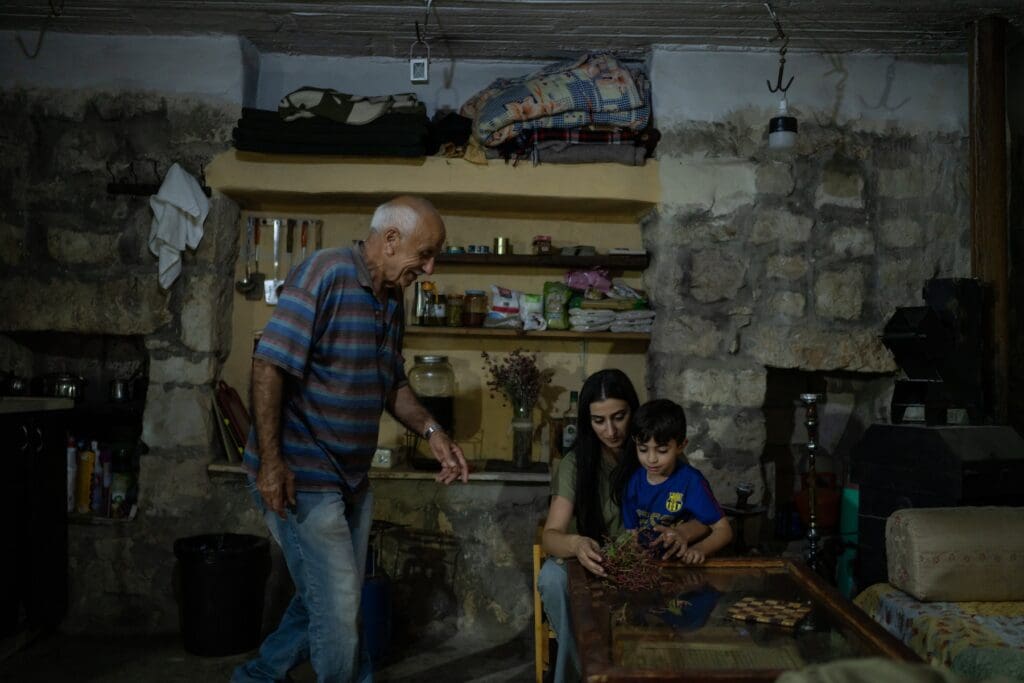
“I don’t want to leave,” she says. “If the price of safety is leaving, maybe I will go. And my soul will stay here.”
As with many Palestinians debating whether to leave, the conditions she needs to stay are simple: a road with no gate, a Scout hike without military permits, a clear path to the old stone house where her children can sleep beneath the apricot trees as she did.
“That’s not asking for much,” she says. “That’s a normal life.”