In post-war Gaza, survival is a daily negotiation, not a guaranteed right.
The airstrikes have stopped, but the consequences of two years of sustained shelling — which have killed at least 71,000 people — continue to emerge in its hospitals, clinics and overcrowded shelters.
Gaza’s health care system was already fragile before the war that began in October 2023, after Israel invaded Gaza in retaliation for Hamas’s attack on civilians in Israel, which included the killing of 1,200 people and the hostage-taking of an additional 254 people.
At that time, Gaza had 38 hospitals with approximately 3,680 beds. In mid-January, only 18 hospitals were operating on a partial basis, with about 1,700 beds — a 54 percent reduction in capacity. During the war, entire medical specialties disappeared; cardiac surgery, organ transplants and advanced cancer treatment either stopped completely or functioned at a symbolic level.
The hospitals that survived have been working with continual shortages of electricity, fuel, medical staff and supplies. More than 1,700 medical workers, including 150 specialized doctors, died during the war, and at least 700 health care professionals left, creating a lasting brain drain, according to Gaza’s Health Information Unit.
After the ceasefire took effect last October, thousands of patients returned to Al-Ahli Arab Hospital in Gaza City with health conditions that had been neglected during the years of bombardment, displacement and survival-focused care.
In an interview three months after the ceasefire, Dr. Maher Ayad, hospital director, said “medical problems are still getting worse and worse, with the shortage of medicine and supplies.
“Until now, hospitals in Gaza did not receive any medicine, or any equipment or any supplies needed for patients,” he said.
During the war, Al-Ahli — as with most hospitals in Gaza — prioritized emergency trauma cases. Airstrike injuries, wounds suffered from collapsing buildings, burns and shrapnel-related amputations consumed operating rooms and exhausted medical staff. Elective surgeries and chronic disease management were postponed indefinitely.
Since the ceasefire, Dr. Ayad has seen surviving cancer patients and those suffering from abdominal diseases, such as hernias and gallbladder conditions, returning for treatment.
The hospital was bombed several times during the war and, in mid-January, was functioning out of damaged buildings with compromised infrastructure. Entire departments required reconstruction, while others were functioning with limited equipment and improvised solutions.
“Medical problems are still getting worse and worse, with the shortage of medicine and supplies.”
“We need major repairs, new equipment and supplies, especially for patients who require daily wound dressings,” Dr. Ayad said.
As of publication, across Gaza, 73 percent of essential medicines were out of stock, including anesthesia drugs and intensive care medications. At Al-Ahli Hospital alone, more than 150 patients required daily wound care for war-related injuries that had gone untreated for months.
“We urgently need antibiotics, particularly specialized antibiotics based on culture and sensitivity tests,” Dr. Ayad said. “But advanced laboratory testing is largely unavailable in Gaza.”
This diagnostic collapse has extended throughout Gaza. Of the seven M.R.I. machines in Gaza before the war, none functioned in mid-January. Only six of 17 CT scanners operated at the time; most worked intermittently due to electricity shortages, lack of spare parts and insufficiently trained personnel.
“Our CT machine operates once every two or three days, while cancer patients wait as their conditions worsen,” Dr. Ayad said.
Gaza City resident Boshra Awad, 75, is one of many patients whose health deteriorated during the war.
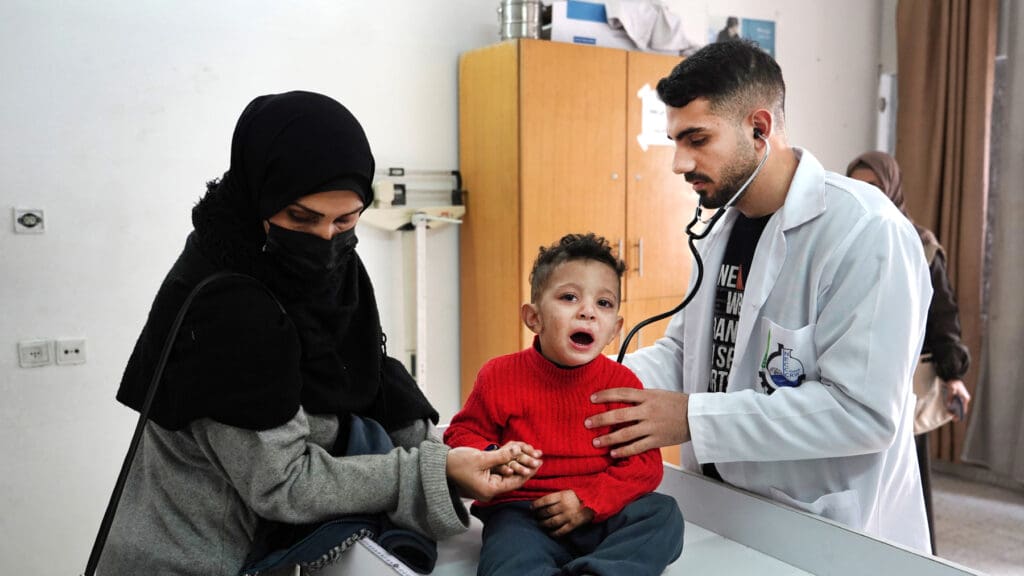
Her illness began suddenly. “I woke up with severe pain in my leg,” she recalled. “My children carried me in a wheelchair. The doctor drained fluids from my knee, but later my leg swelled, and I couldn’t walk.”
After the ceasefire, she was admitted to Al-Ahli Hospital and underwent surgery, despite her weakened heart — a risk compounded by limited diagnostic tools and medication shortages.
“Thank God we are in the hospital and our condition is stable,” Ms. Awad said from her hospital bed, her daughter at her side. “Before the war, life was much better. Now everything is harder.
“The streets are destroyed, transportation is very difficult, and the cold makes everything worse,” she continued. “Sick people cannot tolerate this, but what can we do? This is what God wrote for us.”
Her experience reflects a broader public health crisis. With 85 percent of water and sewage facilities out of service, infections, skin diseases and chronic illnesses have been spreading rapidly, especially among displaced families living in tents and makeshift shelters where hygiene has been nearly impossible.
“Without real peace, these problems will continue,” Dr. Ayad said. “Peace is the only way life can return to normal.”
“Peace is the only way life can return to normal.”
For many families, the ceasefire did not end their fear, but transformed it — from fear of sudden death to the fear of a slow but sure deterioration and painful death.
“We waited for the bombing to stop so we could do the operation,” said Mazen Sakani, whose brother, injured during the war, underwent surgery at Al-Ahli.
“He came out of surgery, and there is no medicine for him,” Mr. Sakani said. “Where do we go? Where do we get medicine?”
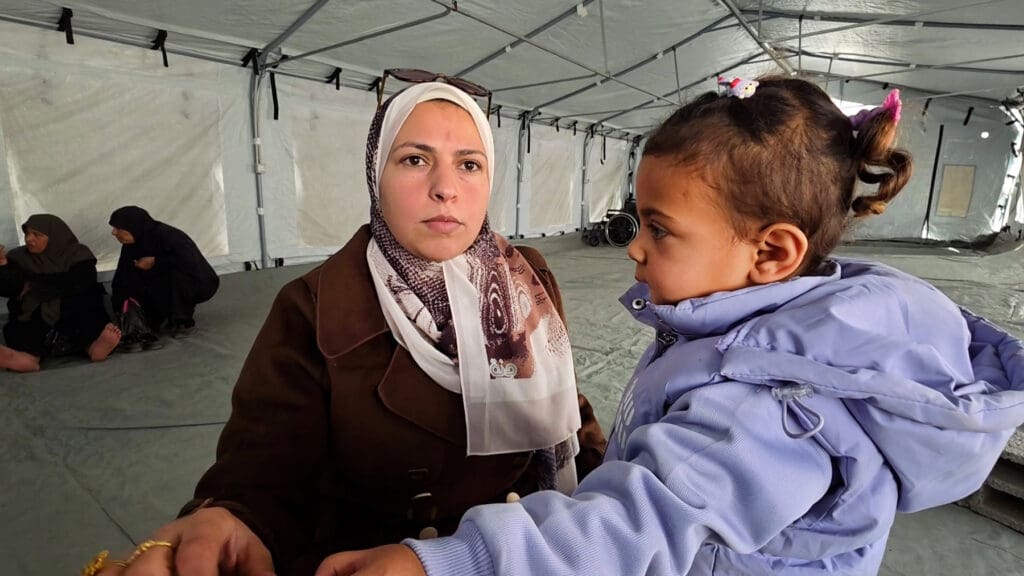
Throughout Gaza, 71 percent of medical supplies — including gauze, sutures, disinfectants and plaster — were unavailable in mid-January. Even basic wound care supplies were rationed, forcing doctors to reuse supplies.
“My nephew was killed during the war,” Mr. Sakani said. “And now we cannot even find medicine for the living.”
Winter has exacerbated conditions. “There are no blankets, no proper bedding,” he added. “They say aid is entering, but we see nothing and we are suffocating.”
Humanitarian organizations remain a critical lifeline under these conditions. Many face operational restrictions, however, that threaten their ability to function.
On 1 January,Israel announced it would revoke the operating licenses of 37 humanitarian groups working in the Palestinian Territories of Gaza and the West Bank, effective March 1, including those supporting health care. However, the Israeli Supreme Court issued a temporary injunction on 27 February blocking the ban, after 17 of these groups filed a petition to the court on 22 February.
The Near East Council of Churches (NECC), a longstanding partner of CNEWA that provides medical and humanitarian services across the region, was among the 37 groups impacted by this policy.
“We represent Orthodox, Catholic, Anglican and Protestant churches, and we have always operated transparently and legally,” said board member Moussa Ayad.
Despite the destruction of its facilities, NECC has continued to provide health care services through its three mobile clinics, which were relocated repeatedly during the war. In mid-January, these mobile clinics provided more than 1,000 medical services daily, especially to displaced populations suffering from malnutrition, respiratory illnesses, skin infections and diseases linked to cold and overcrowding.
“Now we cannot even find medicine for the living.”
The international charity Doctors Without Borders (M.S.F.) was impacted by Israel’s January decision as well. At the time, the organization was supporting one in five hospital beds in Gaza and assisting one in three births.
“In 2025 alone, M.S.F. treated more than 100,000 trauma cases and performed nearly 23,000 surgeries,” said Claire Nicolet, M.S.F. emergency coordinator.
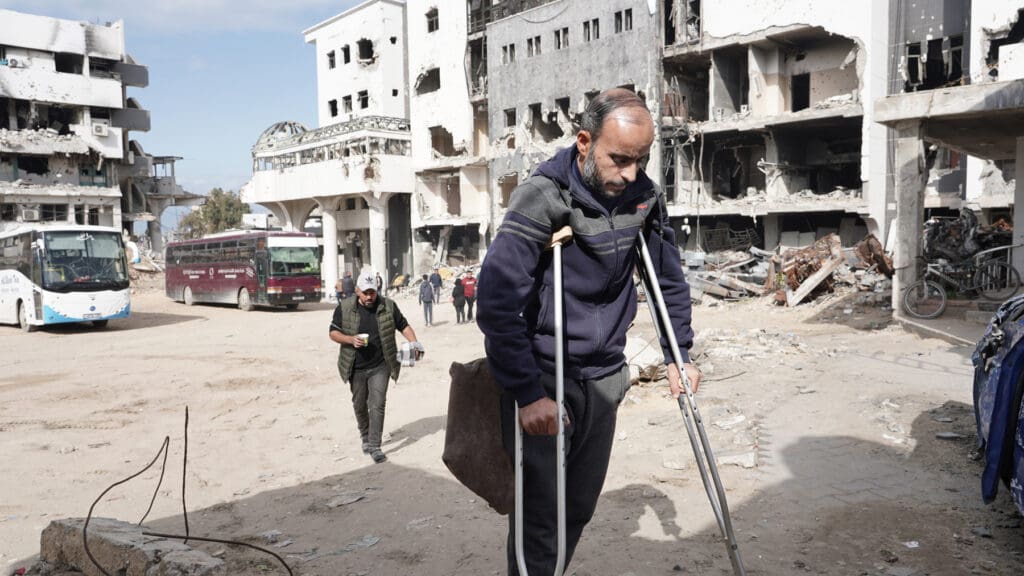
Doctors Without Borders also provided hundreds of thousands of outpatient consultations, mental health sessions and millions of gallons of clean water — essential services amid the destruction and collapse of Gaza’s weak public infrastructure.
Restricting humanitarian organizations, Ms. Nicolet said, would push an already collapsed system into irreversible failure.
“Humanitarian aid is not a favor,” she said. “It is a legal obligation.”
NECC clinics and Doctors Without Borders operate as parallel health systems, reaching communities that formal institutions cannot serve.
“When I hear the word ‘closure,’ it sends shivers down my spine,” said NECC’s Moussa Ayad.
“It is not easy at all after years of providing continuous services to the public. The health system is on the verge of collapse, and withdrawing licenses from those institutions will cause a deeper collapse.”
While major hospitals struggle to survive, Caritas Jerusalem, a member of Caritas Internationalis, the global charitable arm of the Catholic Church, chose adaptation over withdrawal.
“Caritas has been present in Gaza long before the war,” said Dr. Jihad al-Hessi, its medical consultant.
During the war, Caritas clinics were displaced repeatedly, along with the local population — from Gaza to Rafah, Deir al-Balah and Nuseirat, then back to Rafah and Khan Younis. In mid-January, Caritas was running nine medical points across Gaza — three were providing advanced care — and working in coordination with the Palestinian Ministry of Health to open a tenth center in Gaza City.
Caritas Jerusalem provides care for “infectious diseases, chronic illnesses, malnutrition and maternal health” to more than 1,000 people daily, Dr. Hessi said. Yet even this flexibility cannot compensate for the collapse of secondary and specialized care, he added.
“More than two-thirds of Gaza’s hospitals were destroyed or rendered non-operational. Primary care helps reduce pressure, but it cannot replace a functioning hospital system,” he said.
“We hope the wars will come to an end and that peace will prevail, not only in Gaza but throughout the entire world.”
“Humanitarian aid is not a favor. It is a legal obligation.”
In mid-January, more than 19,500 patients required urgent medical evacuation, and at least 1,200 were reported to have died since the start of the war while waiting for permission to leave.
The Rafah crossing between Gaza and Egypt — then the only land crossing into the Gaza Strip — was closed in May 2024 after an Israeli military invasion, intensifying the humanitarian crisis.
With the start of the ceasefire’s second phase, however, the crossing was reopened on 2 February on a limited basis and under strict supervision. Travel through the crossing for medical treatment was tightly restricted, with Israeli authorities granting permissions only to the most critical cases and under complex conditions, including that patients prove their illnesses could not be treated in Gaza. Yet, even approvals were limited and unpredictable.
During the first three days of the reopening, 150 patients were supposed to leave with 300 companions, but Israeli restrictions limited that number to 96 people — patients and companions — authorized to travel. The crossing was then closed for two days, 6-7 February, reportedly due to confusion regarding procedures, before reopening.
Shaimaa Abu Reida, whose 3-year-old daughter was wounded by Israeli rocket fragments last August, had requested permission to cross into Egypt. Her daughter suffered severe internal injuries to her liver, stomach and intestines.
“Treatment in Gaza is nearly impossible,” Ms. Abu Reida reported on 3 February as she waited at Al-Amal Hospital in Khan Younis, southern Gaza, where the World Health Organization was preparing patients for the crossing. Those who received clearance were transported by bus or ambulance to Rafah, accompanied by Israeli military vehicles.
“I only agreed to travel because my daughter needs care,” she said. “We put our trust in God and hope she can recover and come back home. Once she gets better, we will return to Gaza immediately.”
For Sabah al-Raqab, 56, returning to Gaza in February was more arduous than crossing into Egypt for treatment for a serious heart condition in March 2025. When the Palestinian Embassy in Egypt informed her that she had received permission to return to Gaza with her 17-year-old daughter, she thought her ordeal was over.
“Our joy was indescribable,” she said on 5 February from Al-Mawasi, where she was living in a temporary shelter with her husband and children among other displaced families. “I was ready to live in a tent, as long as I could come back.”
Their journey home, however, turned into a series of humiliations: long hours of waiting at the Israeli checkpoint near the crossing in Gaza and repeated searches and confiscation of personal belongings, including essential medicines and children’s toys. From there, she and others were transported to Khan Younis in a bus surrounded by military Jeeps before being interrogated.
“Gaza is my country,” she said. “Why do I need permission to enter it?”
Despite losing her home in Khan Younis and everything she owned in the war, Ms. Raqab insisted she would stay in Gaza.
“I’d rather sit on the rubble or under a tree than be a refugee outside Gaza.”
The CNEWA Connection
CNEWA, through its operating agency in the Middle East, Pontifical Mission for Palestine, works through its partners on the ground in the Gaza Strip. For years it has supported Al-Ahli Arab Hospital, Gaza’s only Christian hospital, which continues to treat patients under dire circumstances, despite being hit multiple times during the Israel-Hamas war and the chronic shortage of medical supplies and equipment. CNEWA/PMP has long subsidized the work of the Near East Council of Churches, including its now-destroyed maternity clinics, its mobile outreach and medical checkpoints.
To support CNEWA’s work in Gaza, call 1-866-322-4441 (Canada) or 1-800-442-6392 (United States) or visit cnewa.org/donate.
Read this article in our digital print format here.