The Israeli invasion of South Lebanon has created a situation that is “extremely volatile,” said Michel Constantin, Catholic Near East Welfare Association/Pontifical Mission for Palestine’s regional director for Lebanon, Syria, Iraq and Egypt.
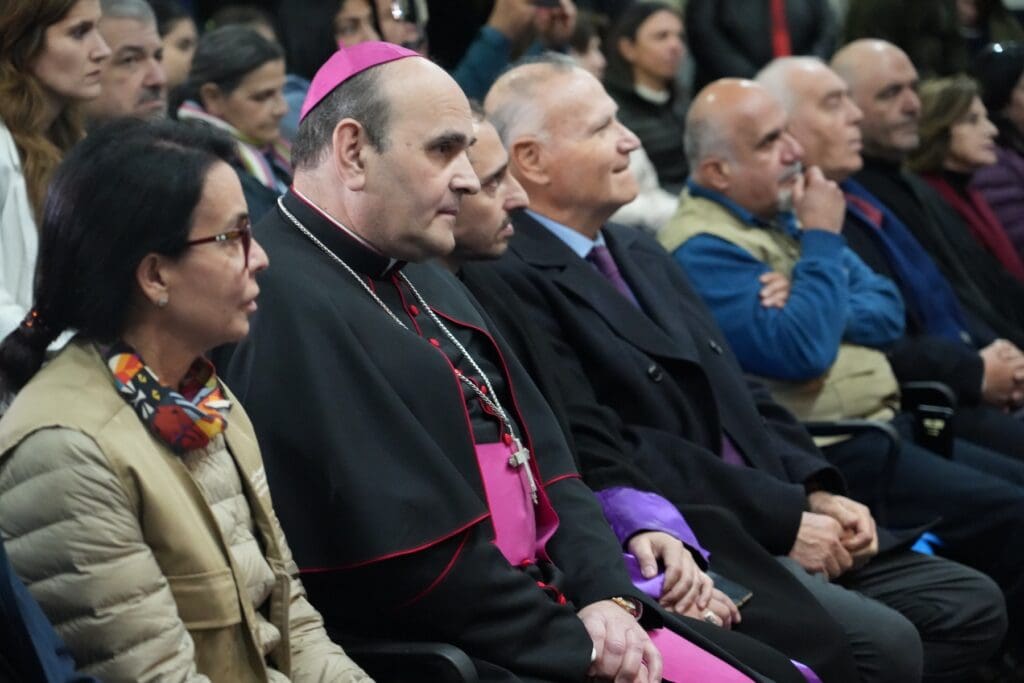
“We still believe that the worst has not arrived yet, all news predicts an Israeli large invasion with large destruction of houses and villages in order to create a security zone in the southern Litani River, which we believe has already started,” Mr. Constantin said in a situation update on 30 March, after accompanying Archbishop Paolo Borgia, apostolic nuncio to Lebanon, on a visit to families in South Lebanon in late March.
“The situation is very scary and unprecedented, especially after we saw what happened in Gaza, in terms of massive destruction, we are afraid that such a scenario is happening in the south to ensure a security zone for Israel,” he wrote. “This will mean that around 1 million displaced persons might never be able to return to their villages and homes and they will remain in Beirut and Mount Lebanon, which could really create frictions and tensions between the different religious families and disturb the [country’s] very fragile confessional and demographic balance.”
Lebanon is about 68 percent Muslim, Shiite and Sunni, and 28 percent Christian, and has an influential Druze community.
Israel began ground operations in South Lebanon on 16 March in response to attacks by the militant group Hezbollah, an ally of Iran, after the U.S.-Israeli strikes that killed Iran’s supreme leader, Ayatollah Ali Khamenei, 28 February. Lebanon did not authorize the Hezbollah attacks.
Israeli Defense Minister Israel Katz said 31 March that once the current war with Hezbollah is over, Israel would maintain in control of southern Lebanon up to the Litani River, about 20 miles from Israel’s border with Lebanon.
Lebanon, with a population of more than 4 million people, already hosts 1.5 million refugees displaced from other countries. UNICEF reports that, in March, roughly 20 percent of Lebanon’s population was displaced — “many for the second, third or even fourth time. This is a sudden, chaotic mass displacement, tearing families apart and hollowing out entire communities, with consequences that will reverberate long after the violence subsides.”
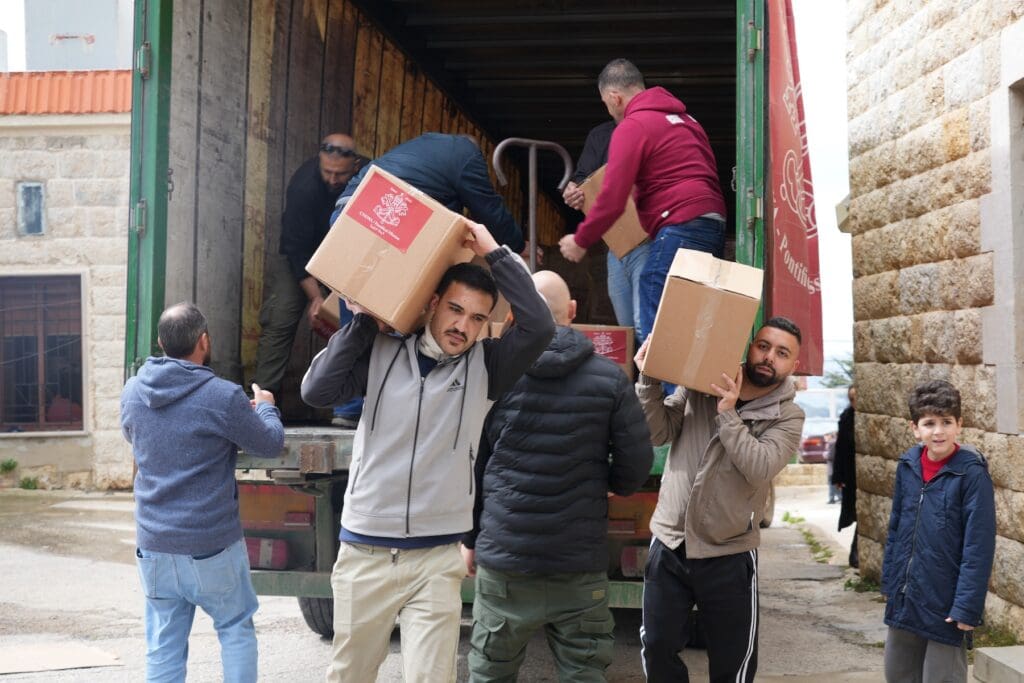
Mr. Constantin said since it was impossible to help all displaced families, CNEWA/PMP is targeting aid for three categories of people:
- More than 4,200 families who remain in villages along the border receive diesel and food.
- Food coupons for displaced families in Beirut and Mount Lebanon living in church facilities, with host families or in the Dbayeh camp.
- Support for Muslim families displaced by Israeli Defense Forces and seeking shelter in the Christian village of Deir el Ahmar in the Bekaa Valley.
Since hostilities began earlier this month, CNEWA/PMP has disbursed nearly $225,000 in emergency aid, he said.
Those who remain in South Lebanon not only need necessities, “but most importantly they need the moral support that they are not forsaken and forgotten, but rather someone out there cares for them, thinks of them and is exerting efforts for their safety,” he said.