Attempts to situate just war theory within the 2,000-year-old Christian theological tradition have not been all that successful, not least because it is difficult to find mention of anything like it in the first four centuries of Christianity. However, current world events have triggered an exploration of the definition and understanding of just war theory, which is rooted in the philosophy of Catholic theologians St. Augustine of Hippo (354-430) and St. Thomas Aquinas (circa 1225-1274).
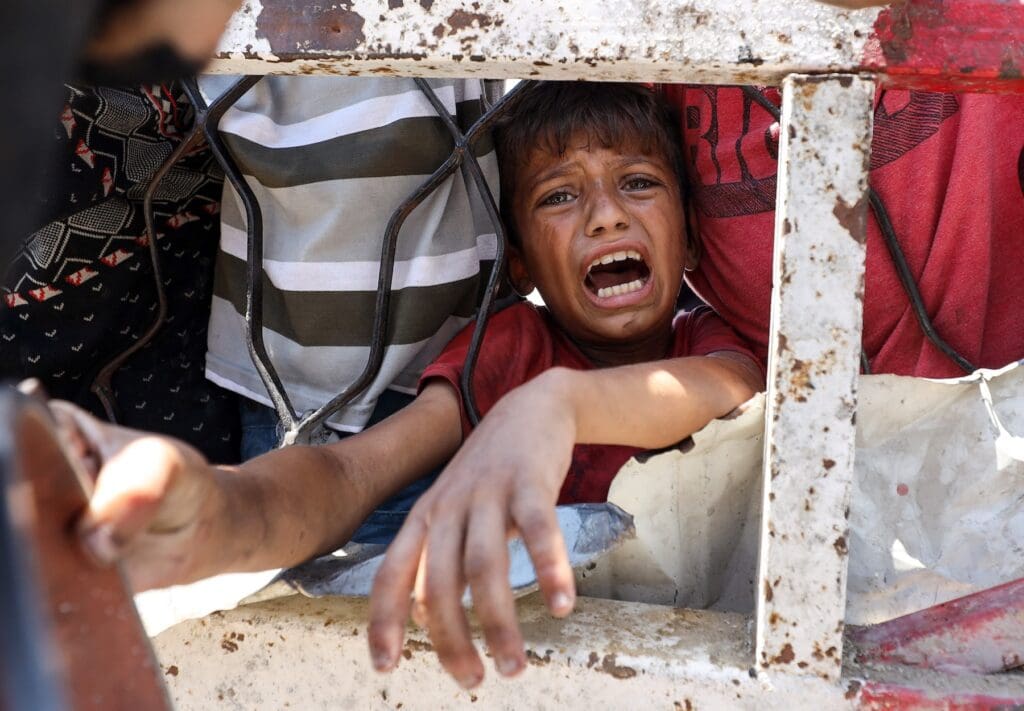
On 28 February, Israel and the United States initiated hostilities against the Islamic Republic of Iran. This conflict has been described as a war, an excursion and even as an attempt to destroy a 3,000-year-old culture and its people.
Despite U.S. government insistence that the violence is justified, Catholic leaders, such as Archbishop Timothy Broglio for the Military Services and former president of the U.S. Conference of Catholic Bishops, have questioned the morality of the war.
Repeatedly, Pope Leo XIV has spoken forcefully on the inadmissible and unjust nature of the conflict, calling for dialogue to advance a just peace. These public criticisms of U.S. and Israeli foreign policy prompted U.S. Vice President J.D. Vance, who converted to Catholicism seven years ago, to warn the pontiff to “be careful [when he] opines on matters of theology.”
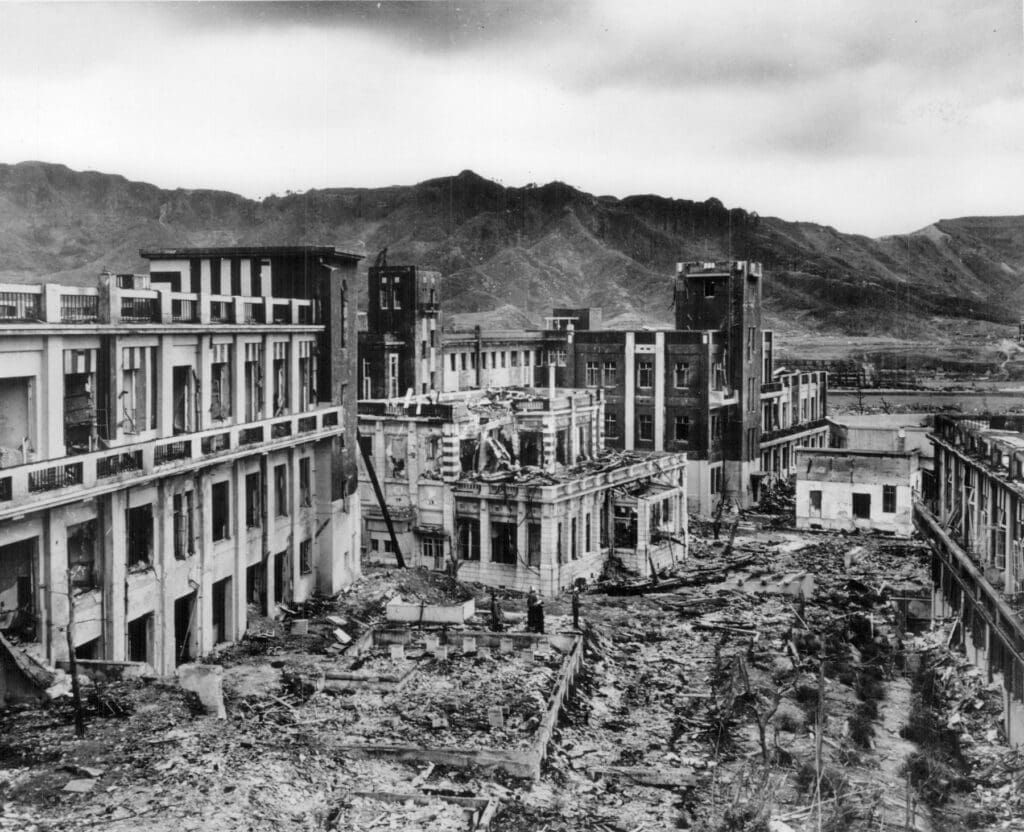
In this very brief attempt to look at just war theory, I would like briefly to look at three periods: Christianity of the first three centuries; Christianity after the Edict of Milan (313); and Christianity after World War I (1914-1918) and II (1936-1945) — and specifically since the use of an atomic bomb, first in Hiroshima in 6 August 1945, and then in Nagasaki three days later.
Before Constantine
There have been ongoing attempts to trace Christian nonviolence to the early church. Their success depends on how one poses the question. If the question refers to nonviolence in general, Jesus in the Synoptic Gospels of Matthew, Mark and Luke — and Christianity in general — abhors and forbids violence and bloodshed. Deeply imbedded in the Gospel life and ethic, there was no need to codify the obvious.
When it comes to Christian participation in state violence, such as military service, the evidence is scattered. There have been many excellent studies on Christians, war and military service before the time of Roman Emperor Constantine. Cecil J. Cadoux’s “The Early Christian Attitude Toward War,” and Lisa Sowle Cahill’s “Love Your Enemies: Discipleship, Pacifism, and Just War Theory” are two examples. What is clear is that pre-Constantinian Christianity was pacifist in varied ways.
While some Christian thinkers, such as Tertullian and Origen, were totally opposed to Christian involvement in war, the prohibition seems not to have been observed as strictly in all Christian communities. Reasons vary. For example, pre-Constantinian Christianity was not nearly as centralized as it would later become. If nothing else, churchwide proclamations lacked efficient means for promulgation until after the Council of Nicaea in 326. In addition, Roman emperors rarely conscripted soldiers. Slaves and women could not be conscripted; Jews were exempt. Baptized Jews, slaves and women comprised a significant part of the Christian community. Primarily drawn from the lower social classes, Christians simply might not have had the option of a military career. Hence, the lack of references to early Christian engagement in war may not be as meaningful as it initially appears.
When Christianity gained legal recognition in the Roman Empire in 313, radical changes were set in motion. The Council of Nicaea, for example, convoked and presided over by the unbaptized Emperor Constantine, marked the first time Christians employed the power of the state against other Christians.
By the year 380, under Emperor Theodosius I, Christianity became the official religion of the empire, which was fracturing into two: one center was in Rome and the other in the East, in Constantinople. The next centuries of barbarian attacks and on-and-off conflict between Persia and the empire’s eastern flank provided opportunities for Christians to join the armies of the Christian emperors.
From Augustine to Hiroshima
In 380, Augustine of Hippo, who became one of the most important thinkers of early Christianity, was already 25 years old. A prolific writer and a deep, although at times controversial, thinker, he has been far more influential in Western Christianity than in Eastern Christianity.
Augustine lived in a time of great upheaval. The Christianized Roman Empire of his day, seen by many Christians as the vindication of their faith, was under attack and seemed ready to fall to the “horde of barbarians,” that is, non-Christian tribal communities. Christians, who previously had a negative or ambiguous attitude toward state violence, were now fighting to defend the empire, which was tantamount to their faith. A “just war theory” would help ease whatever qualms a Christian soldier might have.
Even from the outset, the theory had its weaknesses. It was by nature binary: just versus unjust war. However, it is not clear that every war is entirely just or unjust. A greater and more practical problem was almost immediately apparent. If a war is widely regarded as unjust, what legal and practical import does that carry? Threats of excommunicating an unjust aggressor were rarely, if ever, effective. For the observant person, just war theory might have clarified a problem. However, it did little or nothing to solve it.
Subsequent to Augustine, Thomas Aquinas (1274) and other pre-Reformation theologians discussed just war theory. For several centuries, beginning in the Carolingian period (989), practical measures were taken to limit violence. The two ecclesiastical decrees, the “Peace of God” (989) and the “Truce of God” (1027), are examples. The former protected church property and personnel from violence, while the latter limited the days and seasons during which violence was allowed.
Not surprisingly, these two movements enjoyed support among the noncombatant populace into the 13th century.
Nevertheless, the weaknesses of just war theory remain; the primary weakness is that it has never been enforceable. Even in the 21st century, when religious leaders, political scientists and scholars of ethics declare a particular war unjust, such as the war between the United States, Israel and Iran, it carries little moral and no legal weight.
After Hiroshima
The first use of nuclear weapons on human beings changed the whole context of just war theory. It is widely, if not universally held, that a just, nuclear war is impossible, if only taken from the condition of proportionality — and proportionality is by no means the only argument. Many theologians, philosophers and ethicists hold that any war that has the threat of going nuclear is an unjust war. One notices a clear and similar evolution of the church’s teaching authority — the magisterium — on war in a nuclear age.
Every “nuclear age” pope (with the exception of the short-lived John Paul I) has spoken out against the use of nuclear weapons: Pius XII in his 1955 Christmas message; John XXIII in the encyclical “Pacem in Terris”; Paul VI called for a “total ban on nuclear weapons” in June 1968; John Paul II, in Hiroshima in February 1981, warned of “nuclear annihilation”; Benedict XVI in May 2010 called for progressive disarmament leading to the elimination of nuclear weapons; and Francis, in Hiroshima in November 2019, called nuclear war a “crime against the dignity of human beings [and] any possible future for our common home.” Pope Leo XIV, faced with an increased threat of nuclear war, has in one year repeatedly condemned the use of nuclear weapons.
Rarely has the magisterial teaching of the Catholic Church been as clearly — to say nothing of as frequently — articulated as it has with the teaching on the use, stockpiling and morality of nuclear weapons.
We are then faced with an uncomfortable truth. If the traditional just war theory, well thought out as it may be, is simply not an adequate response to the challenge of nuclear annihilation, what alternatives do humanity, and its leadership, have in the 21st century?
The preventative force the just war theory once had has eroded; it is not an exaggeration to state that traditional just war theory has a negligible impact on the geopolitics of today. Even attempts by the United Nations to prevent war and promote nuclear disarmament and proliferation have proven ineffective when faced with the veto of the Permanent Five on the Security Council, all of which are nuclear powers. And the inability or unwillingness of Russia and the United States to extend the Strategic Arms Reduction Treaty (START) in February 2026 is more than ominous.
However, there is some hope. As we have seen, just war theory over the course of two millennia has evolved in response to specific historic realities. Almost always, there have been pacifist, passivist and nonviolent opponents of war and of the use of violence to solve conflicts. In recent years, the notion of nonviolent resistance as a strategy has been emerging. Many see its roots in Mahatma Gandhi (1869-1948) and Martin Luther King (1929-1968).
Walter Wink (1935-2012), a Methodist professor at Union Theological and Auburn Seminaries in New York, was a practitioner, observer and theologian of nonviolent resistance. His work is both descriptive and prescriptive: descriptive in his attempt to describe — and promote — a new movement that is not merely passive resistance but active resistance against violence and evil; prescriptive in his acute recognition that righteous causes can become romanticized with the belief that a righteous end justifies any means.
Nonviolent resistance is rarely a spontaneous response to an unrelated event, nor is it restricted to any faith tradition. Rather, it is a disciplined strategy and strategic alternative to violence for solving or transforming conflicts — because nonviolent resistance is neither passive, pious resignation nor wild-eyed crusaderism. Nonviolent resistance also does not guarantee success and usually incites violent resistance. However, Mahatma Ghandi, Martin Luther King, Nelson Mandela, Dorothy Day, the people of Minneapolis in the recent anti-immigration raids, and countless unnamed groups and individuals may be providing a new, hopeful and effective reading, application and alternative to St. Augustine’s just war theory. The effectiveness of nonviolent resistance in complementing the weaknesses of just war theory remains to be seen. In an age of nuclear weapons, however, the options are limited and the alternatives horrifying