This edition of ONE features the second in a series highlighting CNEWA’s 100-year history. These articles will be assembled into a special commemorative book titled, “A Century of Healing and Hope,” to be published in 2027.
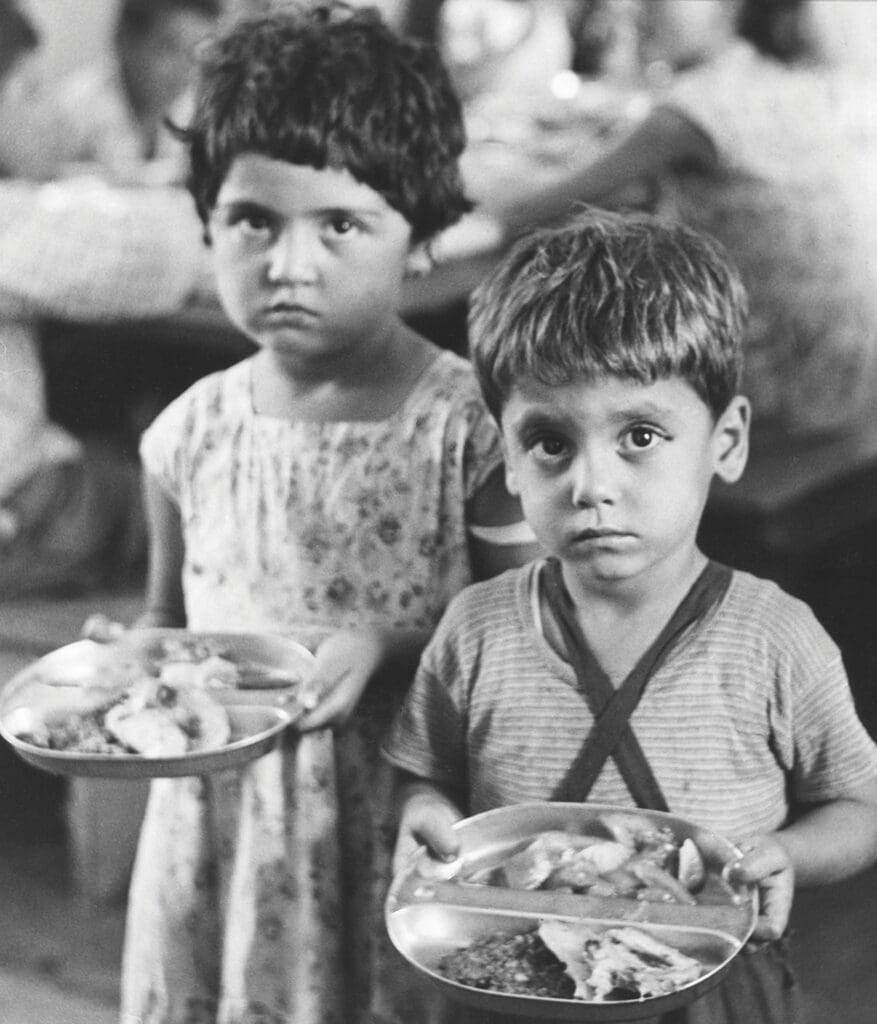
A decade after the violent expulsion of Palestinians that followed the founding of Israel in May 1948, more than a million survivors (of whom nearly half were under the age of 15) of the Nakba — or “Catastrophe,” as it is known in Arabic — remained in camps in Gaza, Jordan, Lebanon and Syria. Unable to work legally, they depended on international aid for their survival. With no diplomatic settlement between Israel and the Arab world in sight, nor any resolution for a peaceful return to their homes, the international aid community was confronted with the permanence of instability in the Holy Land, rising hostility toward the presence of refugees by host nations, and the subsequent social, economic and political impact.
These realities in the Middle East significantly altered the course of Catholic Near East Welfare Association (CNEWA), to which Pope Pius XII had entrusted the leadership and administration of Pontifical Mission for Palestine when he launched this emergency response effort in 1949. Through the 1950s, the affairs of the two had become inextricably intertwined, culminating with the appointment of Msgr. Joseph T. Ryan as CNEWA’s national secretary in January 1961, after serving as head of Pontifical Mission’s field operations in Beirut since June 1958.
When the priest of the Diocese of Albany, New York, first arrived in Beirut, he encountered the nation of Lebanon embroiled in civil strife, a prelude to the 15-year drama that began in earnest in 1975, the effects of which remain to this day. Msgr. Ryan was no stranger to violence: He served in the chaplaincy corps of the U.S. Navy during World War II and participated in the Marine landing at Okinawa, Japan. Eventually, he became chancellor of the U.S. Catholic Military Ordinariate, then under the leadership of the archbishop of New York and chair of CNEWA, Francis Cardinal Spellman.
In Beirut, Msgr. Ryan wasted no time in getting to work, reorganizing the complex financial and administrative functions of the operation, which had administered projects for the United Nations Relief and Works Agency for Palestine Refugees in the Near East (UNRWA), Catholic Relief Services (C.R.S.) and the International Catholic Migration Commission. It also had carried out CNEWA-coordinated funding for the support of schools, health care facilities, food and clothing distribution, and the provision of pastoral care for Palestinian Catholic refugees, most of whom had fled their Melkite Greek Catholic communities in Galilee.
His understanding of the situation on the ground and his broad interpretation of what kind of aid was needed, however, set CNEWA-Pontifical Mission for Palestine on a new path. In 1959, in a letter to Jean J. Chenard, a C.R.S. representative in Geneva, Msgr. Ryan wrote that the goal of CNEWA’s Pontifical Mission was to “render every possible assistance to all refugees irrespective of race or creed.”
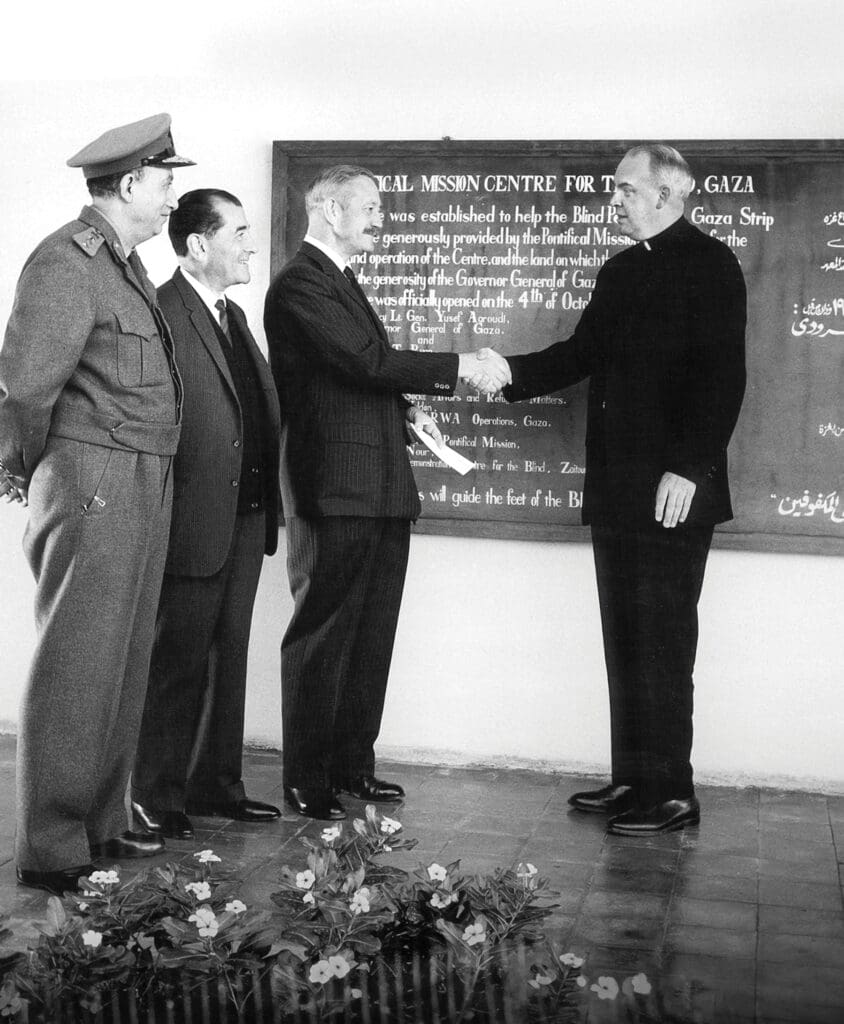
Despite the successes of CNEWA’s coordination of global Catholic aid in support of refugees, Msgr. Ryan found wanting resources and solutions to address the long-term needs of the permanently displaced.
In the same letter, he continued, “Thousands of refugee children receive primary and secondary education in free schools specifically organized by the Pontifical Mission or in existing schools subsidized by the Pontifical Mission. It is, however, unfortunate that some of the refugee students, specially gifted, cannot pursue their education beyond the high-school level.”
He recognized the existing health care facilities subsidized by Pontifical Mission provided medical care to thousands of refugees annually, but noted that funds were inadequate for specialized treatment:
“We have at present several young people — paralyzed, blind — who have good chances of recovery should funds [and treatment] become available.”
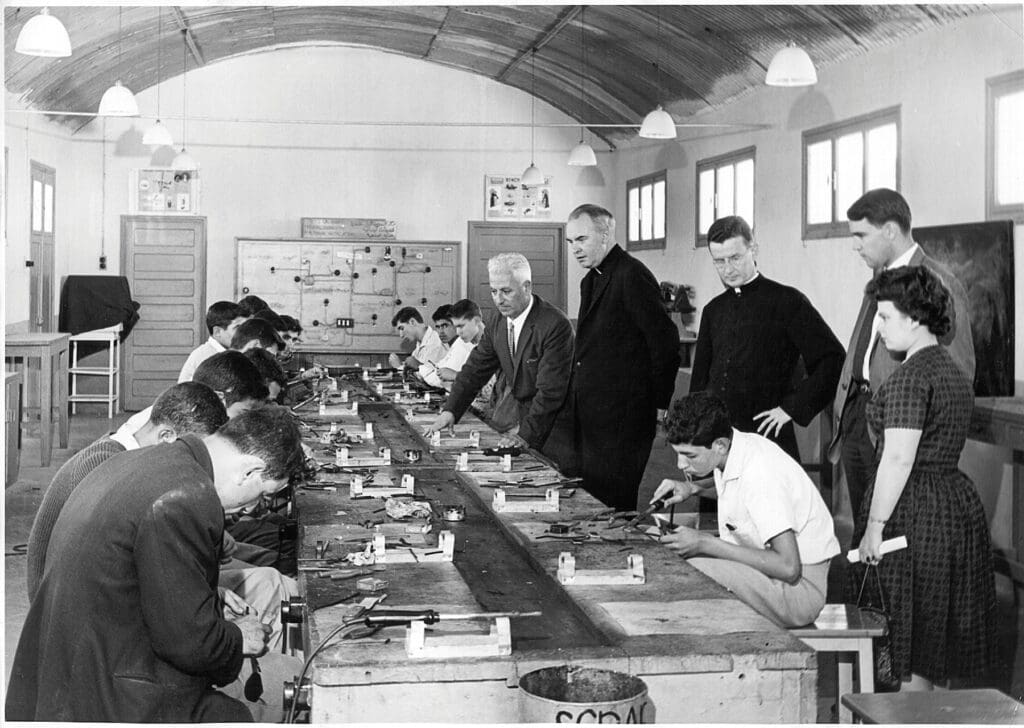
Finding permanent employment for the refugees, especially in countries where governments forbade refugees from working legally, also concerned the priest. He concluded that for heads of households to care for their families sustainably, charities would need significant funds “to provide the necessary machines and tools (tailoring, shoemaking, carpentry, etc.) … to a larger number of deserving cases who will then become self-supporting.”
Illness cut short Msgr. Ryan’s tenure in Beirut. He was succeeded by a priest of the Archdiocese of New York, Msgr. Stephen J. Kelleher, who, as Msgr. Ryan recuperated in New York, continued his predecessor’s assessment of the work of Pontifical Mission in letters to Cardinal Spellman, all while shepherding through projects and programs.
“There is very little indication of any effort on the part of the church to alert the Moslems, the overwhelming proportion of the population, to her charitable presence by assisting them in their social, educational and economic development,” he wrote in one letter. “It would be of considerable value if there was some coordination … of the money spent in the Middle East through the Oriental Congregation, the Franciscan Commissariat of the Holy Land, the Pontifical Mission and numerous other Catholic organizations.”
When Cardinal Spellman secured from the Holy See Msgr. Ryan’s appointment as national secretary of CNEWA and president of Pontifical Mission for Palestine, the two monsignors quickly got to work.
“For the last five years, the operation of the Pontifical Mission has been more or less static,” the new president wrote to Cardinal Spellman in early 1961. “This is not to say that no good work has been done for there has been much charity … there could be more done, however, by a broadening of our relief and welfare programs. An extension of operations in Jordan to include all Jordanians … would be a very fine thing. I would also like to see an extension of our program in Gaza.”
CNEWA’s national secretary concluded his letter suggesting the work of Pontifical Mission for Palestine be clarified by the Congregation for the Eastern Church, expressing his hope that such a clarification “would concern itself directly with relief work in a variety of concrete forms.”
“With specific aims and a competent man in the field (and we have one in Monsignor Kelleher),” he added, “programs could be initiated to give material aid that would benefit all the underprivileged of the countries concerned.”
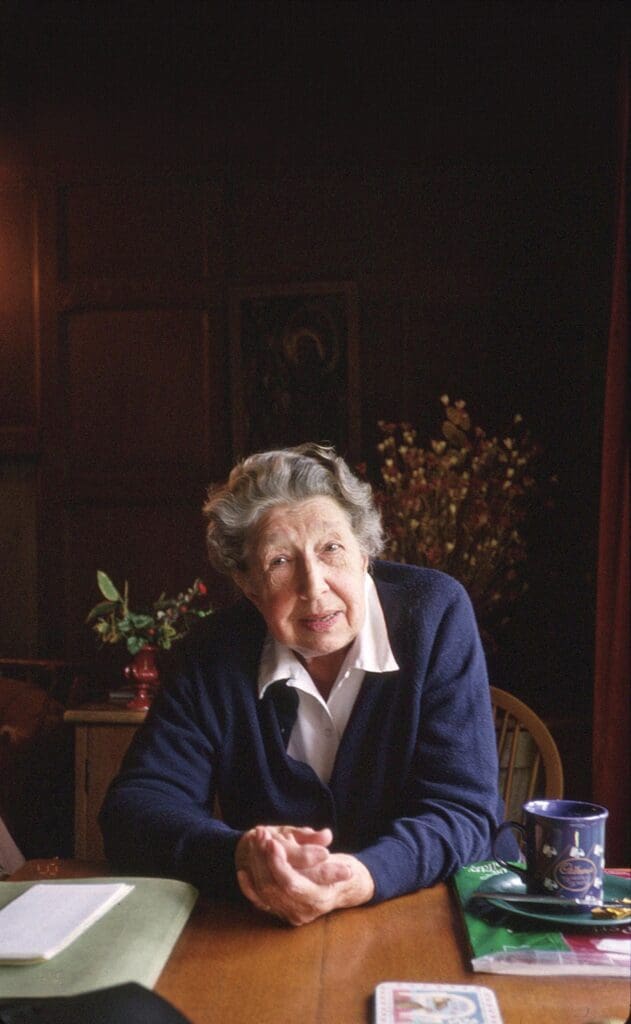
In an interview in 1993, Carol Hunnybun — whom Msgr. Ryan had recruited in 1963 with her colleague Helen Breen to serve CNEWA-Pontifical Mission — noted that in the beginning, “Pontifical Mission was established to work for ‘Arabs in need as a result of war.’ Originally this meant Palestinian refugees, but of course afterwards it included the local population.
“Need not creed was our yardstick, and the Pontifical Mission would have nothing to do with Catholic cows and Catholic meadows producing purely Catholic milk.”
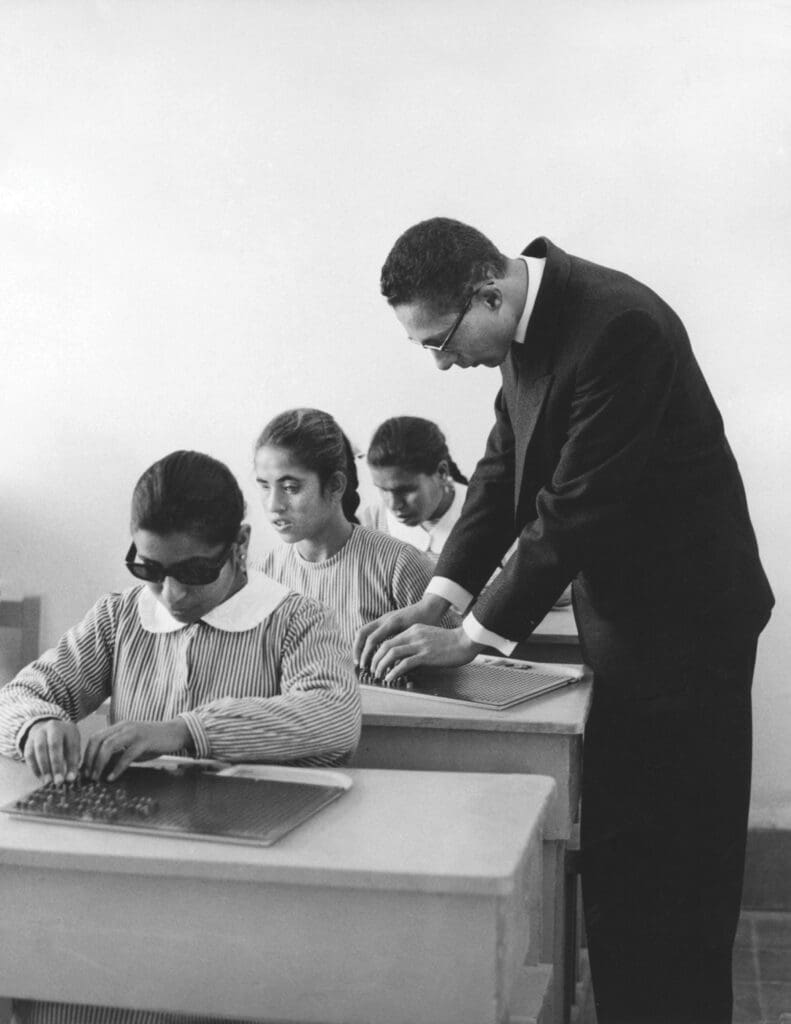
CNEWA’s establishment of the Pontifical Mission Center for the Blind in Gaza in September 1961 became its first human development project in the Middle East to reflect the strategy of the new administration. The center, which combined primary schooling with job training, was a joint project of CNEWA-Pontifical Mission, UNRWA and the government of Egypt, which had occupied Gaza until it lost to Israel during the Six-Day War in 1967.
Having secured the necessary support on the ground, Msgr. Ryan launched a fundraising campaign in North America, writing as CNEWA national secretary to every Catholic school for the blind in the United States and to members of the American Federation of Catholic Workers for the Blind.
“Blindness is a curse throughout the Near East,” he wrote. “The percentage of blind people in Gaza is extraordinarily high. With few exceptions, the blind in Gaza are not equipped to earn their own living. The Pontifical Mission for Palestine proposes, accordingly, to erect for the blind a vocational school. Under Catholic auspices, in this area that is almost 100 percent Moslem, the blind will be taught to read, to write, to do carpentry, make baskets, weave baskets, etc.”
Thanks to his weekly CNEWA column in the Catholic press and his direct appeal to Catholic apostolates for the visually impaired, enthusiastic responses enabled CNEWA-Pontifical Mission to open the center within months of launching the campaign.
“At one time,” remarked Ms. Breen, who, with Ms. Hunnybun, administered the CNEWA-Pontifical Mission office in Jerusalem from 1966 to 1982, “the only way a blind man could make any money was to sit on a street corner and beg. Now those blind adults are trained to work in the refugee camps at special ‘service centers’ run from the Pontifical Mission Center for the Blind.”
Over time, 99 percent of the graduates, who first enrolled in the program at the age of 5, found employment. Girls learned to weave and knit, boys learned carpet-making and cane work. Many continued their academic studies, enrolling in secondary schools and universities.
In 1987, CNEWA-Pontifical Mission passed on the administration and operation of the center to UNRWA. The U.N. agency continues to operate the facility — now known as the Rehabilitation Center for the Visually Impaired — which the Israeli Defense Forces destroyed in the Israel-Hamas war.
In seeking additional European Catholic support, Msgr. Kelleher reached out to the relief and development agency of the German Catholic bishops, Misereor, suggesting they use Pontifical Mission as its “agent and liaison” in the region. He also forged ties to Swiss Caritas, which began construction of a specialized pediatric facility in Bethlehem, Caritas Baby Hospital, for which CNEWA-Pontifical Mission provided financial support toward its founding.
Entrusted to and subsidized by Kinderhilfe Bethlehem, a Swiss and German Christian organization that has long supported CNEWA-Pontifical Mission’s mother-and-child programs, Caritas Baby Hospital remains the only pediatric center in the West Bank, providing more than 50,000 children with quality inpatient and outpatient medical services.
Following through on their concern for the host nonrefugee populations, Msgr. Ryan and Msgr. Kelleher partnered CNEWA-Pontifical Mission with Misereor and the Near East Foundation. Together, in 1962, they launched a rural development program among the Bedouin who hailed from ancient nomadic Christian families and settled in the Kerak Governorate of central Jordan in the late 19th century. Named for the four participating village communities of Judayyda, Ader, Smakieh and Hmoud, JASH introduced the Bedouin to new livestock breeds and crop varieties — such as grapes, figs and drought-resistant vegetables — and provided women with literacy, sewing and embroidery courses.
“One of the important benefits of this project since its inception has been the development of local leadership,” said project manager James E. Johnson in 1965. “One of the major factors contributing to poverty in this area was the lack of leadership.”
CNEWA-Pontifical Mission has remained active in the region ever since. “Many Catholic priests have come from the Hijazine family, at least 16, and many sisters over the last several decades,” Ra’ed Bahou, CNEWA-Pontifical Mission’s regional director based in Amman, said in an interview in September 2017. Ader, Hmoud and Smakieh in particular, he added, have supplied historically the bulk of Latin and Melkite Greek Catholic and Orthodox priests and religious for Jordan, Israel and the Palestinian territories.
In Jerusalem, Msgr. Ryan invited members of an international Catholic association of the laity, commonly known as the Teresians, to administer a lending library that began in the back room of Pontifical Mission’s office in the Old City. In 1956, French Canadian Brother Eugene Bilodeau, O.F.M., who directed Pontifical Mission’s Jerusalem office, began a reading and music program for students living near the Old City, then under Jordanian control.
“Everybody read and studied because that was the only thing [a Palestinian refugee] could do in the camps,” he recalled in 1994. Word of the program, then the only one of its kind for the refugee community, spread, and eventually Pontifical Mission libraries opened in Amman and Bethlehem. The latter two facilities remain important community centers administered by the Teresians.
As CNEWA’s program development efforts in the Middle East — centered on its teams running Pontifical Mission offices in Beirut and Jerusalem — gathered steam, its sponsorship of Eastern Catholic liturgies and conferences that began during the 1940s contracted to the observance of an annual liturgy at St. Patrick’s Cathedral in New York City. Donors, however, continued to sponsor Eastern Catholic novices and seminarians through the Congregation for the Eastern Church, which also forwarded “mission pages” that listed the needs of the various churches outlined by the Holy See’s legates in each country.
Using the Catholic media in North America, CNEWA raised awareness and funds to cover these needs, sending the monies to the congregation to build and furnish churches and chapels, support orphanages, and provide liturgy stipends. In December 1964, Msgr. Ryan visited the southwestern Indian state of Kerala, calling on the leaders of the Syro-Malabar and Syro-Malankara Catholic churches and visiting the many churches and chapels, schools and convents built, furnished or renovated by CNEWA’s donors.
One event during Msgr. Ryan’s pivotal tenure dramatically affected CNEWA-Pontifical Mission for Palestine: the election in June 1963 of Giovanni Battista Cardinal Montini of Milan as bishop of Rome.
Before being named the archbishop of Milan in 1954, Msgr. Montini served as substitute secretary of state for Pope Pius XII. In that role, he helped shape the church’s work with the vulnerable and the marginalized. He organized relief efforts as well as the rescue of political refugees and members of the Jewish community during World War II. He also assisted with the founding of Caritas Internationalis, the International Catholic Migration Commission and Pontifical Mission for Palestine, entrusting it to CNEWA for its leadership and administration.
Not long after his election, the new pope urged Msgr. Ryan in a letter to continue his work with Pontifical Mission, reminding him of his own role in creating this unique initiative of the Holy See.
“We esteem highly the efforts and admirable achievements of that Mission, which we helped establish, and which you, beloved son, now direct with the aid of selfless collaborators,” he wrote.
“For the past fourteen years, the Pontifical Mission for Palestine has carried on this noble apostolate, by providing spiritual and material relief for the victims of war in the Holy Land. We exhort relief agencies everywhere to assist your Mission in accomplishing its important work,” he continued. “And, in this regard, we address particularly those bodies to whom this appeal was made from the beginning: Catholic Near East [Welfare] Association, Catholic Relief Services-National Catholic Welfare Conference, the Custody of the Holy Land and the Equestrian Order of the Holy Sepulchre.”
Later, in December, the pope announced his intention to begin the first full year of his pontificate with a “pilgrimage of prayer and penance” to the Holy Land, stating just hours before he left, on 4 January 1964, that “we will bring to the Holy Sepulchre and to the Grotto of the Nativity the desires of individuals, of families, of nations; above all, the aspirations, the anxieties, the sufferings of the sick, the poor, the disinherited, the afflicted, of refugees, of those who suffer, those who weep, those who hunger and thirst for justice.”
Msgr. Ryan joined the pontiff when he arrived in Amman, the capital of the Hashemite Kingdom of Jordan, and accompanied him as he visited the holy sites in Bethlehem, Galilee, Jerusalem and Nazareth, including his now famous greeting and embrace with the spiritual head of the Orthodox communion of churches, Athenagoras I, ecumenical patriarch of Constantinople, on the Mount of Olives.
“The pace of the whole thing was so terrific that we all [the staff of CNEWA-Pontifical Mission in Beirut and Jerusalem] returned to Beirut completely exhausted,” he later recalled. “All in all, the Holy Father’s pilgrimage was a triumph.”
The staff worked closely with the media, some 1,800 of whom registered for access to the many stops on the pilgrimage. “We who were there find it hard to imagine how anybody could have written a news story on it,” Msgr. Ryan later said.
Ms. Breen worked with Ms. Hunnybun in the press office located in the basement of the National Hotel. Ms. Breen recalled later, before her death in 1993, that the journalists were “absolutely, desperately tired. Most had just left Cyprus, where there were troubles [civil war]. And prior to that, they were in Rome covering the Vatican Council.
“One man came into the press office, sat down at one of the tables, and went fast asleep. … I felt so sorry for this man that I pounded away on a typewriter, too, and made a story in which we gave his byline,” she said, laughing. “I do not think he ever knew who had done it.”
Before the pope left Jerusalem, he received Msgr. Ryan and his team at the residence of the apostolic delegation on the Mount of Olives. “He opened his arms,” Msgr. Ryan remembered, “and said, ‘I have been waiting to see you.’ ”
“We cannot but recall the pilgrimage we made to the land of Jesus in January 1964,” the pontiff wrote in his apostolic exhortation “Nobis in Animo” more than 10 years later. “Nor can we forget the meeting with those Christian religious leaders, including the Greek Patriarch and the Armenian Patriarch of Jerusalem, and with the crowds of the faithful who pressed about us in, as it were, an exuberant embrace of faith and charity.”
That embrace of faith and charity was soon to be returned by the Holy Father — through his special Pontifical Mission for Palestine — to the people of the land of Jesus.
Read the next installment in the September edition.
Read this article in our digital print format here.