Going to Ukraine is always a risk.
War rages, cities are indiscriminately bombed daily, and this year adds a cruelly cold and snowy winter.
Yet when you meet Tetiana Dubyna and the residents of the House of Mercy in Chortkiv, in the Ternopil region, you cannot help but be warmed and inspired by the love, solidarity and heroic service with which Ukrainians embrace one another to overcome fear and frost, trauma and a sense of abandonment.
Nine years ago, Tetiana, together with her local bishop, Bishop Dmytro Hryhorak of Buchach, a small eparchy in southwestern Ukraine established in 2000, began a ministry for children with autism and other developmental challenges. Initially, it was a response to the needs of her school-aged son, since Chortkiv — a town of 30,000 residents — had no such services. Today, the ministry they run together has three locations. Its central site is a five-story building welcoming children with disabilities and orphans, people struggling with alcoholism and homelessness, and single mothers. The war added internally displaced people, families, and maimed soldiers and civilians.
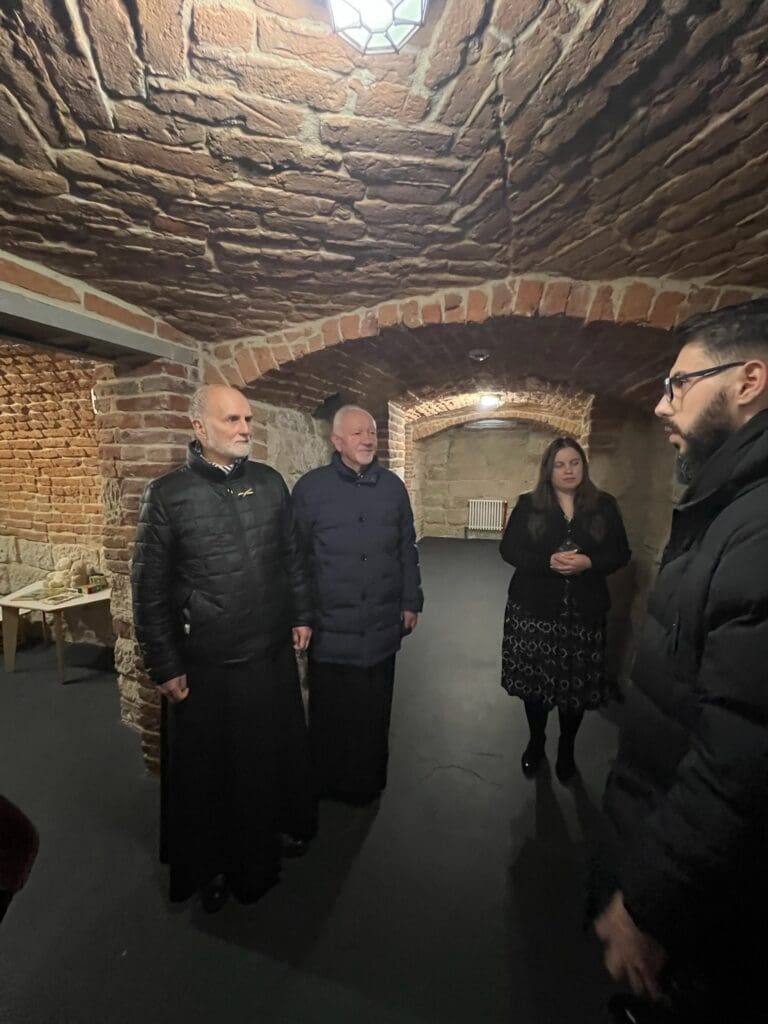
The premises are simple but immaculate — tightly packed, yet serene in atmosphere. Residents meet our small delegation — two bishops, two American women and one French visitor — with smiles, open faces and an obvious sense of communal fellowship. They are eager to share their achievements and to grieve their losses. It is still Christmastime, so we sing carols together. Singing is something Ukrainians haven’t lost even amid this devastating war. They suffer, and yet they sing.
The same smiles and openness greet us at the family-type foster home run by Sister Josaphata. As we enter, the house goes dark. Due to Russia’s attacks and the destruction of the power grid, Ukraine has lost 60 percent of its capacity to generate electricity, and rolling blackouts prevail. And yet the children are not afraid. They know the drill. They feel safe. They help us to adjust.
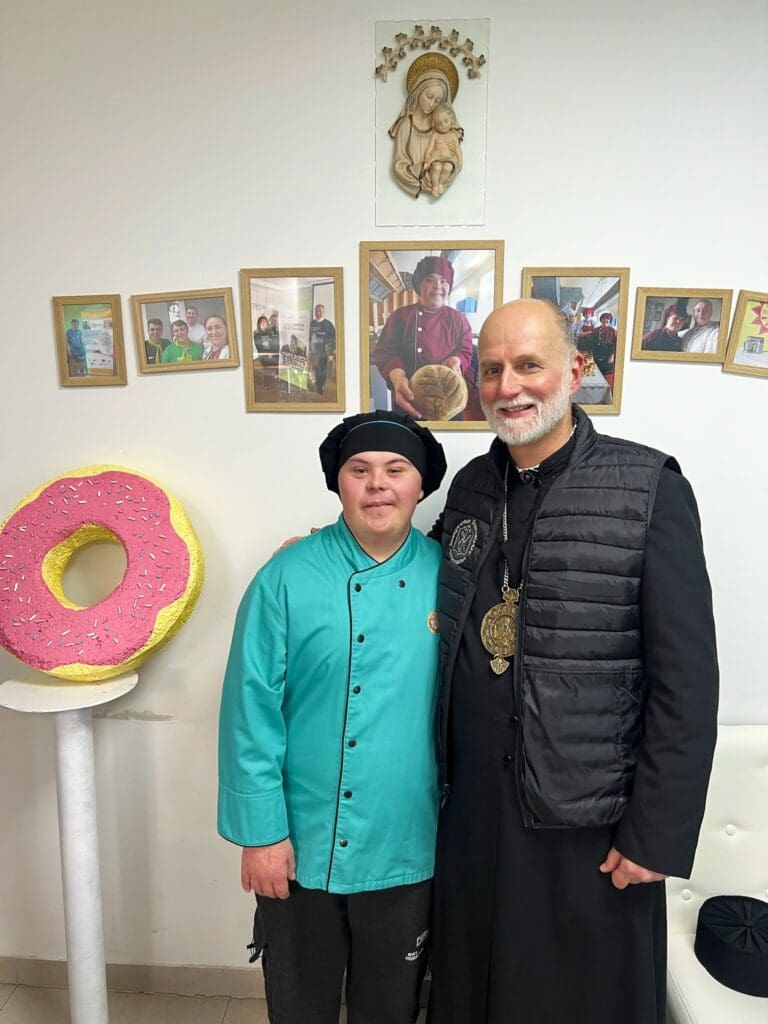
The day’s 12 site visits in four towns were sweetened by fresh poppy seed rolls from a diocesan social bakery providing bread, jobs and hope to an otherwise forsaken village. We were shown a dilapidated hospital destined to accommodate internally displaced people and a humanitarian hub in an abandoned Soviet-era building that, day and night, amasses food, clothing, spare auto parts and just about anything else necessary during the deprivations of war.
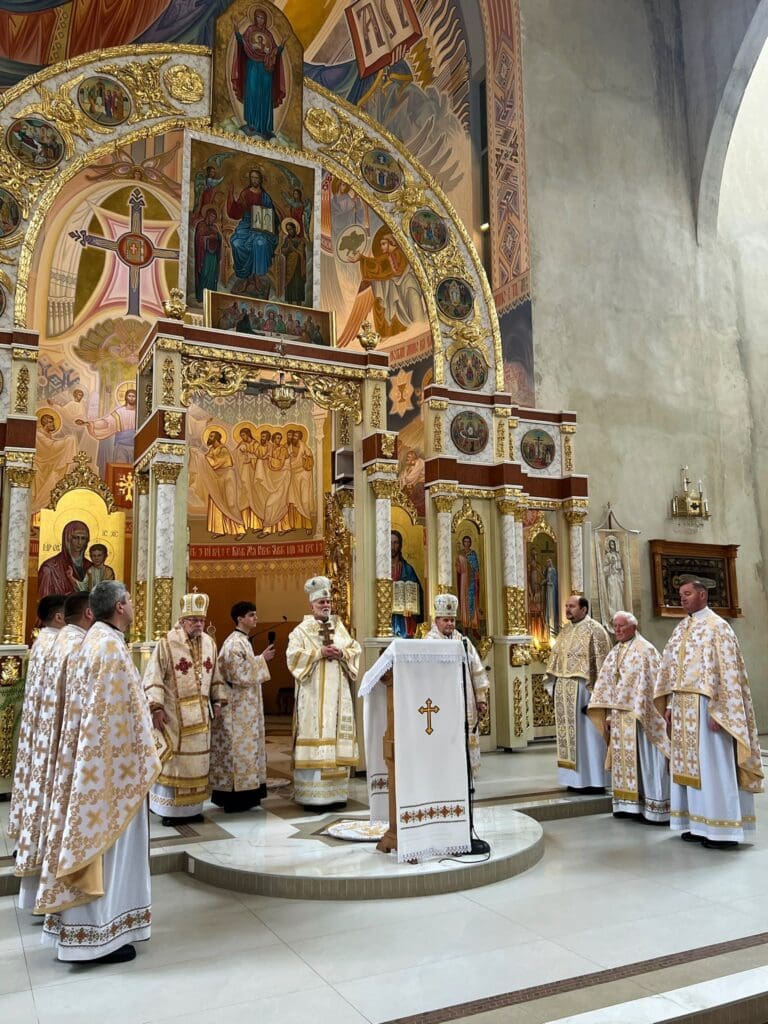
Prayer throughout the day — first at Bishop Hryhorak’s contemporary cathedral, then at an ancient church that houses magnificent sculptures by 18th-century master sculptor Johann Georg Pinsel, a Basilian monastery and boarding school for boys, which has provided many vocations and formed important national leaders — culminated with an exuberant encounter at Zarvanytsia, the Lourdes of Ukraine. There the Mother of God covers thousands with her mantel.
The shrine is surrounded by 27 depopulated villages; only 4,000 people are left in the county. And yet, despite the frigid and foggy darkness, 53 Scouts, ages 7-17, and their leaders awaited us patiently at 9:30 p.m. For an hour, they engaged us. Not one of the children was looking into a phone! They shared with us a rural simplicity and directness, unspoiled by the ever-spreading malaise that saddens many young people globally. They remain undaunted by 12 years of war that have been the story of their lifetime. I was quietly elated: Here, despite aggression with genocidal intent, the good, the true and the beautiful prevail. For me, this “kalokagathia” was the best of bedtime stories.
Since the beginning of the war in February 2014, I have visited Ukraine some 55 times. My trip in January was the 15th in the past four years, marked by the full-scale Russian invasion. Each visit, each encounter is special. Meeting war-torn Ukraine has a cumulative effect, as does war itself, as does the witness of valor.
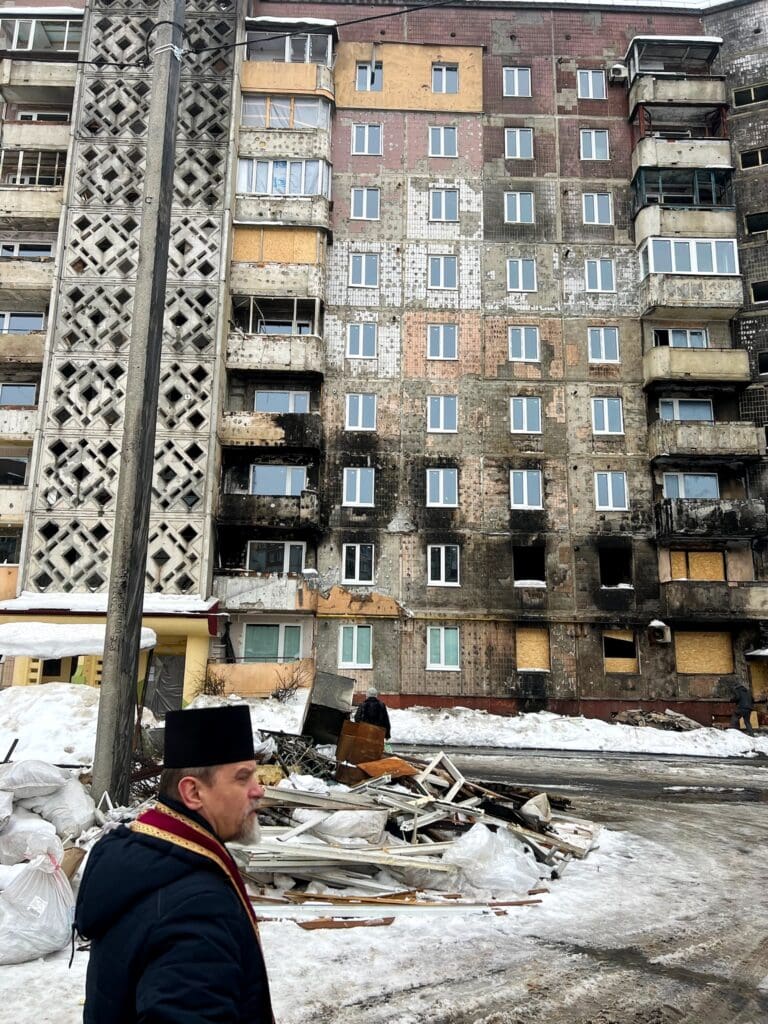
Any visitor who steps into wartime Ukraine is almost immediately confronted by the paradox of contending opposites: devastation and death, destruction and displacement. More than 4,400 educational institutions have been struck by aerial attacks and shelling — over 4,000 damaged and 408 reduced to ruins. By November 2025, at least 2,530 medical facilities had been damaged or destroyed, including 327 that were completely wiped out.
The war has reached deeply into everyday life: Nearly 13 percent of the country’s housing stock has been affected, leaving roughly 2.5 million households with damaged or destroyed homes. The assault is also moral, spiritual and ecclesial: Everywhere the Russians come, the Ukrainian Greek Catholic Church is liquidated. It was true under the tsars and under the Soviets. It’s happening today in Russian-occupied territory.
And yet, having visited in two weeks a dozen towns and villages and over 40 humanitarian sites and church institutions; having had the grace of listening to His Beatitude Sviatoslav Shevchuk, at least 10 other bishops, the mayor of Kyiv — former heavyweight champion Vitaly Klitschko — scores of priests and religious, Ukrainian Catholic University professors and students, politicians and public servants, journalists and business owners, N.G.O. representatives, widows and mothers of fallen soldiers, ordinary citizens, teenagers and children, I am once again awed by the resilience and matter-of-fact resolve to continue the struggle and fight to the end.
And the end is the defense of God-given dignity, liberty, independence, freedom of the press, freedom of religion, and national and cultural self-determination. And the end is life itself. Because Russia’s war is not about territory; it is about Ukraine’s very existence as an independent state, as a free nation. Ukrainian Orthodox and Catholics, Jews and Muslims, agnostics and so-called atheists stand together to defend the truth about God-given human dignity, about their very being.
Resilience and determination do not negate fatigue and exhaustion. Wounds are ever-present and deep, and yet the solidarity, sacrificial love and mutual service are awe-inspiring. In a country that regularly experiences attacks of 400, 500 or 600 drones and ballistic missiles per night, targeting civilian infrastructure, apartment buildings, train stations, energy grids and heating hubs — during a winter, with temperatures below zero degrees Fahrenheit, leaving hundreds of buildings in major cities without heat for days or weeks — the people endure. Sometimes with a smile, often with tears, like the woman we encountered in Ternopil at the site of a residential building struck by a rocket. She lost her daughter and her 7-year-old granddaughter in that attack. She and her loved ones need not only compassion, they need restorative justice.
Not a single person in any of the places I visited spoke of surrender, defeat, submission or capitulation.
From the outside, hearing this, someone might think that Ukrainians are fanatical in their defense. Such an assessment is far from the truth. Ukrainians are very realistic, and they understand the balance of powers and the cruel combinations of geopolitical bargaining. But in a world and an age, which Pope Benedict described in terms of the dictatorship of relativism, Ukrainians speak clearly about what is good and what is evil, what are lies and what is truth. And for that difference, they risk their lives.