For the first time in three years, the bells of Holy Family Catholic Church in Gaza City rang out for Easter. Inside the church, parishioners were not only celebrating a holy day but recapturing a fundamental expression of their faith that had been missing for two years.
About 300 people attended services Easter weekend. This number was lower than attendance before the Israel-Hamas war, during which more than half of Gaza’s Christians fled the territory, seeking safety.
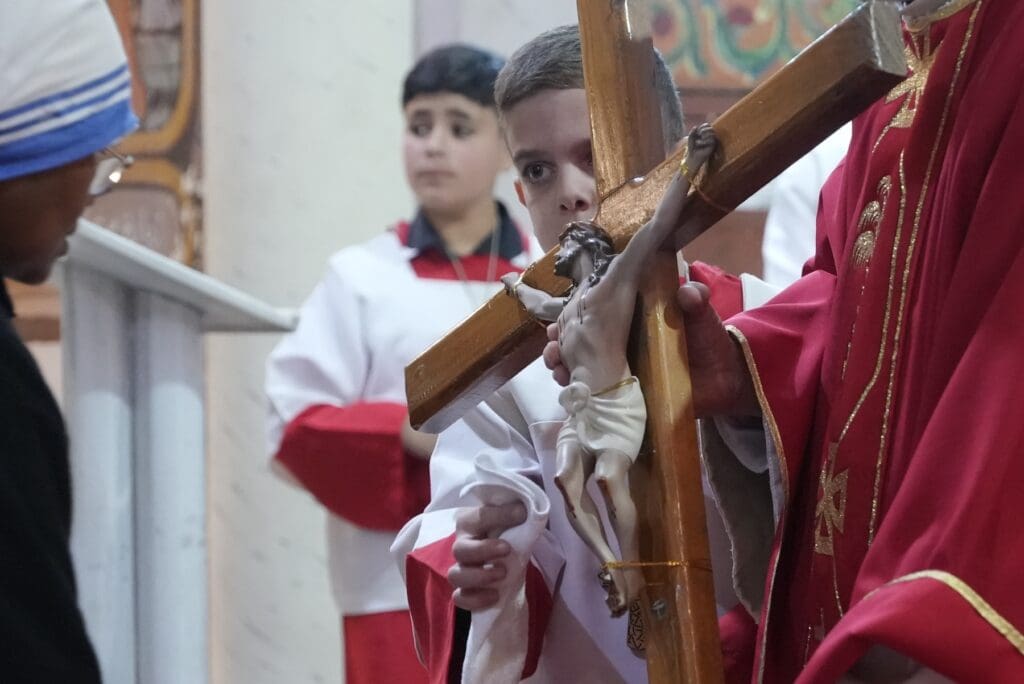
On 3 April, Good Friday, worshipers reenacted the Way of the Cross, carrying a statue of the body of Jesus. They moved through the church and around the church courtyard in a procession known locally as “the tour,” following the tradition in Jerusalem.
Their prayers were slow, the voices low, and the focus deep. Faces reflected a shared experience of pain and mourning. Some people stood still, fully focused on prayer. Others looked tired. The silence between the prayers said as much as the words themselves.
The next day, Holy Saturday, brought a noticeable shift. Women came dressed in elegant clothes, men greeted each other with soft smiles, and the children ran through the church courtyard, laughing, playing and filling the space with energy.
The bells rang long, celebrating the resurrection of Jesus Christ. Many parishioners described the atmosphere as something they had not felt in years. The sound of prayer rose clearly from inside the church. The Lord’s Prayer was steady, strong and calm, as if pushing against the fear outside.
Due to the church’s proximity to the eastern parts of Gaza City, explosions in the distance could still be heard — loud, sudden, unsettling. At times, the children stopped playing, looked around in fear, then slowly returned to their play.
In addressing the faithful, Father Gabriel reminded the congregation that their lives as Gazans mirrored the suffering endured by Jesus. He emphasized that Christ rose from the dead and that their lives would blossom again after the darkness that had lasted for more than two years.
He stressed that despite the uncertainty in Gaza and ongoing war, they must remain patient, confident and believe in salvation.
“During the war, it was very difficult to hold these ceremonies in this way,” George Anton, operations manager for the Latin Patriarchate of Jerusalem in Gaza, told ONE magazine. “We were under bombardment and surrounded. There was no real joy. People were living in shelters, and it was hard to even feel the meaning of the holiday.
“But this year is different. There is some stability, and people can celebrate again, even if the sadness is still there,” he said.
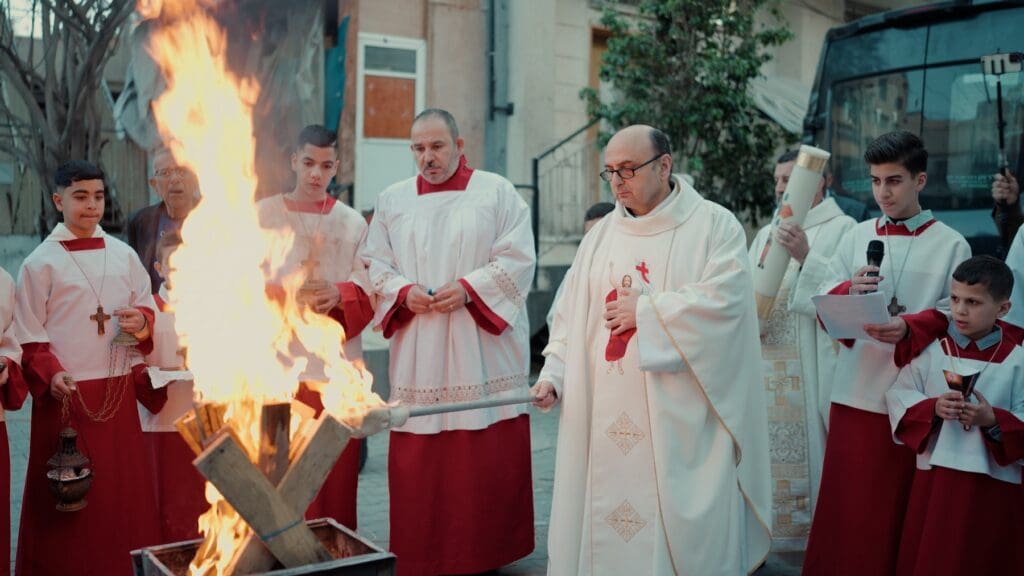
Before the candles were lit for the Easter Vigil service on Holy Saturday, the pastor, Father Gabriel Romanelli, told those gathered that Easter is a celebration of new life and a sign of hope. He spoke about the reality people are living: Lives are still being lost, even with a ceasefire. He called for peace and justice and said people in Gaza deserve to live with dignity. His message was simple: Hope is still possible.
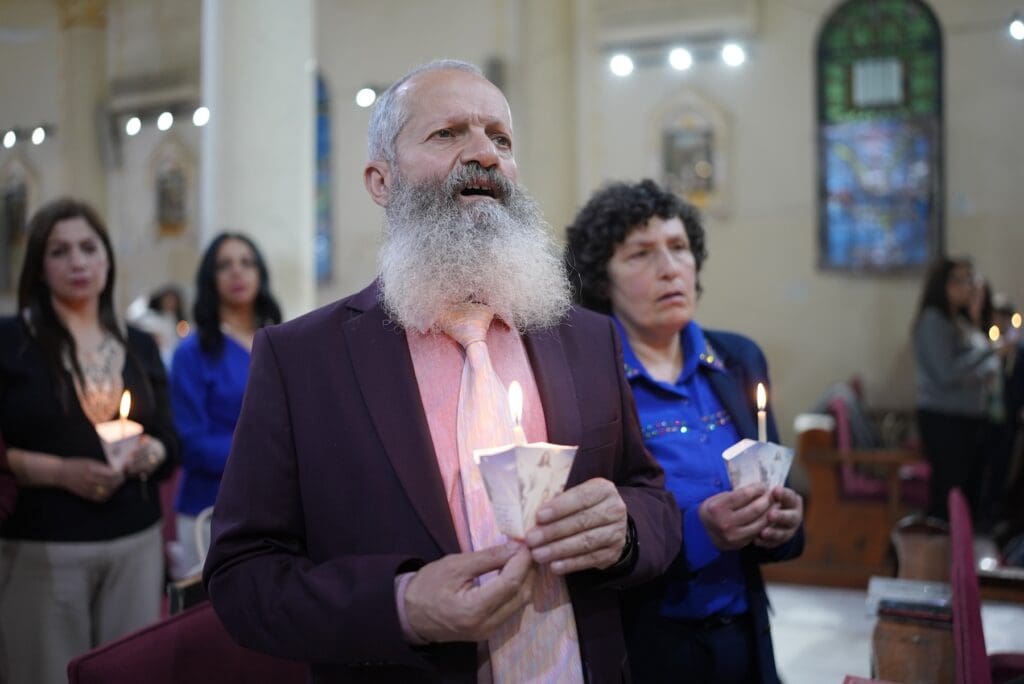
As the candles were lit, the church slowly filled with light. One flame passed to another, until the whole space glowed. Faces softened. The mood became profoundly prayerful, and life in Gaza felt quieter, warmer.
In one corner of the church on Holy Saturday, Lina Masoud, a local pharmacist, lit a candle. She lifted her hands slightly and whispered a prayer, asking God to bring light into her life, just like the small flame in front of her. Then she smiled. It was a simple moment, but it felt important.
“During two years of war, celebrations were almost nonexistent. Only the Mass was held, and even greetings were limited,” said parishioner Milad Ayad. “Today, we are trying to bring back the celebration, even in a simple way. There is some joy, but the number of people we lost still hurts.”
Elias Al-Jalda shared a similar feeling.
“We feel like we are walking the path of suffering again, as if the story of Christ is happening in our time,” he explained. “This is a moment to call on the conscience of the world. We have the right to live a normal life, like everyone else.”