This year marks the 30th anniversary of Caritas Armenia. So much has changed since our early days.
When I look back at my 28 years with Caritas, I recall our first attempts to assist those who had lost all that was dear to them. A magnitude 6.8 earthquake hit in northern Armenia on 7 December 1988, killing up to 60,000 people, injuring about 130,000 more, and taking down homes, workplaces and places of worship.
People had lost trust and hope for the future, but they still preserved a sense of pride and dignity that prevented them from asking for help, despite the long list of debts they incurred trying to provide basic necessities for their families.
It took enormous effort for Caritas Armenia staff to explain that charitable organizations, such as ours, were founded specifically to help them out of a hopeless situation.
Armenia declared independence from the Soviet Union in 1991, and two years later Azerbaijan imposed a blockade, causing additional hardships.
At that time, Caritas Armenia was still learning how to respond to sudden poverty and social exclusion, and how to help people cope with their struggles and care for their everyday needs for food, medicine and warm clothing. More importantly, we were still learning how just to be with those in need and to listen.
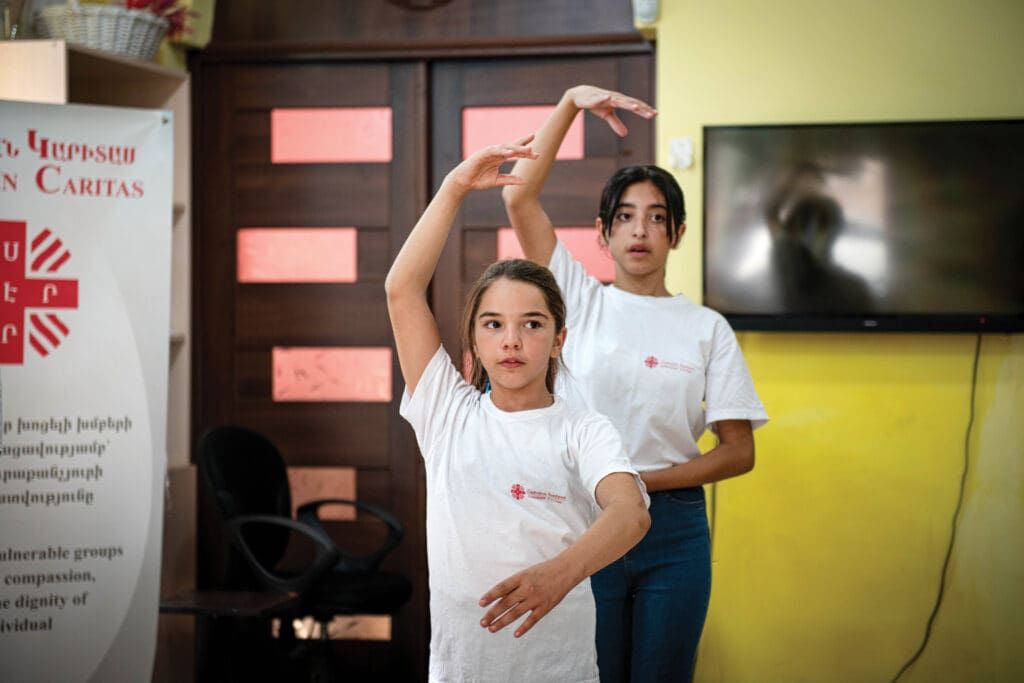
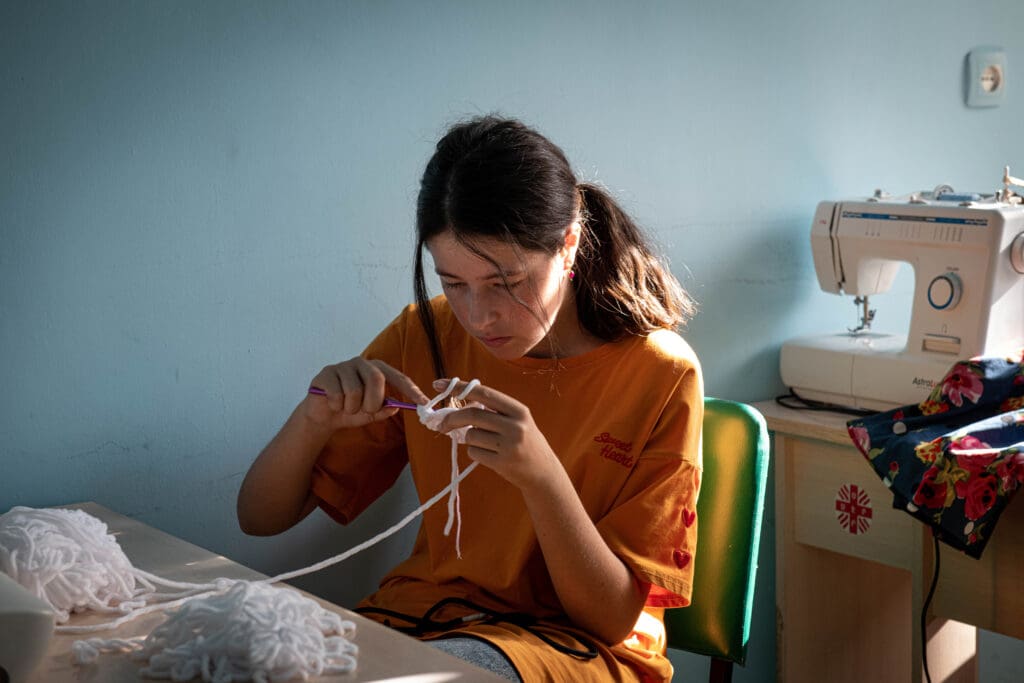
Over time, we understood our efforts would not be sustainable by offering emergency relief alone. With the support of our partners, we worked toward organizational development, introducing guidelines and regulations for project management and accountability. We developed long-term strategies and secured budgets for project implementation. We created durable programs: day centers and home care for the elderly; after-school activities and psychosocial support for children; tuition support for students whose parents fell ill or were unemployed.
The needs have shifted over the decades. However, the call for the charitable arm of the Catholic Church in Armenia has remained the same: to promote the dignity and development of people and communities, especially the most vulnerable, with love and compassion.
We coordinate our activities with the local church, so that a family in a border village is not invisible and a grandmother living alone in a city is not forgotten. Our parishes are small gateways of mercy; the priest knows the names and needs of every villager, and devoted young adult volunteers check on neighbors who live alone.
We collaborate with the wider Christian family [most Armenians belong to the Armenian Apostolic Church] and with local authorities and civic groups, because love does not ask for exclusivity; it asks for effectiveness. The first knock on a struggling family’s door is often from a Caritas staff member or volunteer of the local parish, carrying not only assistance but also the assurance, “You are not alone.”
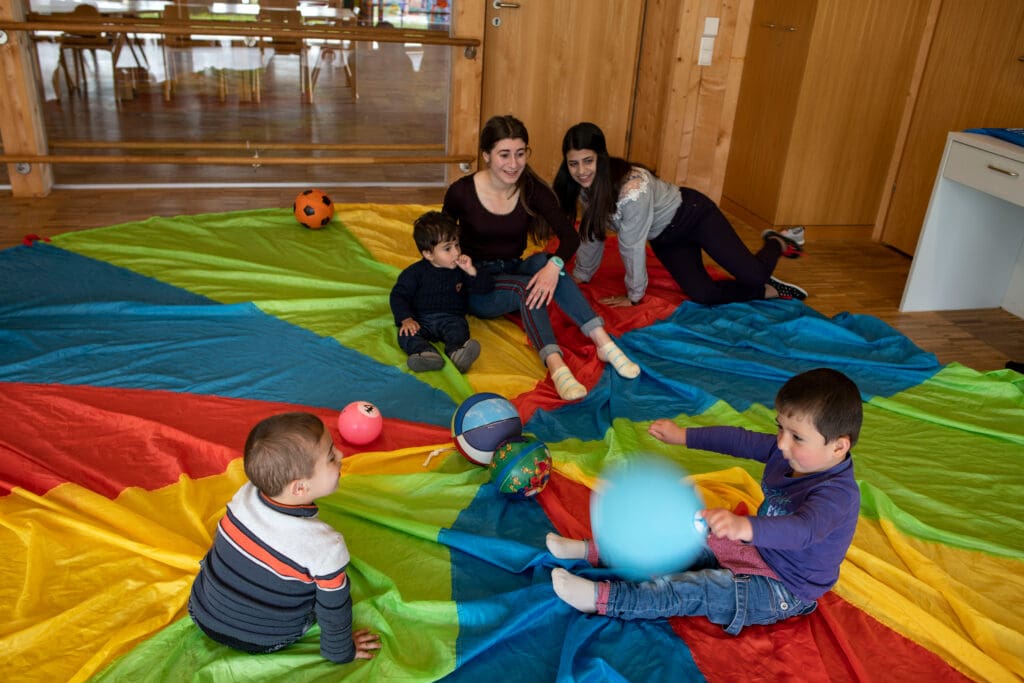
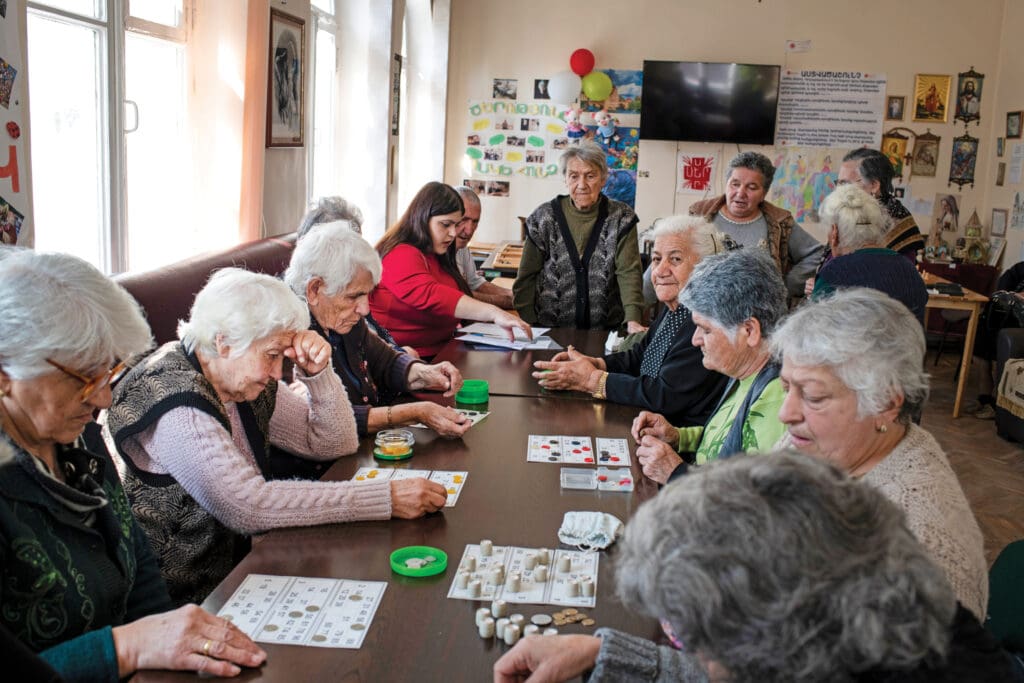
Our day centers and home care services for seniors have taught me that “care” often means restoring the ordinary. We help with medications and meals, but we also rebuild daily rhythms that illness and isolation erode: a hot lunch at the same table, light exercise and a craft class, a blessing from the pastor on religious feast days and warm conversations on Christian and human values.
In home care, our nurses and caregivers carry not only bandages and glucometers; they offer a listening ear and empathy to a lonely senior. An elderly man once told me: “You bring the clinic to my living room — and you bring the light, too.”
It is humbling to witness how a reliable visit, a safe space heater or an evening phone call can turn anxiety into peace. The elders we serve built this country through hardship. They should not have to choose among medicine, heat or food. Much of our work is simply making that choice unnecessary.
Another Caritas project — The Little Prince Center — is where my hope is renewed again and again. When children first come to the after-school center, they are often quiet, sometimes withdrawn. Over months they find their voice, their equilibrium, their way of learning. Our team blends therapies with play, invites parents to learn alongside their children, and works with schools, so that inclusion is not a theory but is made concrete, with a timetable and a seat at a school desk. I think of a boy who would not enter the classroom without holding his mother’s hand. After several months of coordinated work by the multidisciplinary team, he now enters by himself, saves the chair next to him for a new friend, and shows interest in the program and trust in his teachers.
Education weaves through much of our work. The tuition program rarely covers large amounts, but it can have a decisive impact. I often think of these grants as gifts of time: We buy the student’s family a little time to regain its balance, so a child’s future is not sold to pay today’s bills.
Winters in Armenia are severe and demanding, and our “warm winter” program undoubtedly has saved lives — what began as emergency deliveries of coal and firewood have become a broader effort to reduce energy poverty. In some homes, we help install insulation and fund simple energy-related repairs; in others, we pair assistance with paying the utility bills.
Our improved case management in recent years has ensured that when someone comes to Caritas with a problem, we take a comprehensive approach to assessing the wider picture, and we walk with them across programs, instead of handing them a phone number and wishing them luck. We have expanded psychosocial support, because trauma and loneliness rarely show up on an intake form.
In Armenia, we say to those who stand with us during hardships, “You brought light to my house.”
Thirty years on, our three most urgent needs include protecting the dignity of our elders, a growing number of whom live alone on fixed incomes, while prices rise and their children emigrate for work abroad. We must ensure their homes are warm, their medicine is taken as prescribed, and their days include companionship.
Second is the inclusion of children and youth who risk being left behind, especially those with disabilities, from vulnerable families or in rural areas where services are limited or absent. Inclusion requires therapists, trained teachers, adaptive materials and a patient community.
Third is the quiet crisis of mental health. Anxiety, grief and isolation are widespread. The church has a unique capacity to respond here, joining professional care with spiritual companionship.
Alongside these, we face organizational challenges familiar to many church-run social service charities, namely keeping trained staff when salaries elsewhere are higher, serving hard-to-reach communities with consistency, and balancing urgent aid with the long work of prevention.
Through it all, the church’s answer through Caritas remains the same: presence, prayer and practical love, shaped now by three decades of learning. We design programs by listening to families and communities; we measure results, because accountability honors our donors and our people, and we invite those we serve to be part of the solution.
In addition to describing our work, I also write this letter to thank the CNEWA community, which has stood with us for many winters and many new beginnings. Because of you, a widow in a border village will receive a nurse’s knock at her door tomorrow morning; a young girl will sit at her desk in a classroom and find her voice; a university student will register for another semester; a family will greet the cold with confidence instead of dread.
The needs are real, but so is the grace that meets them. In Armenia, we say to those who stand with us during hardships, “You brought light to my house.”
Your light has multiplied hope in countless homes. For that — and for your prayers — we are deeply grateful.
Read this article in our digital print format here.