In the heart of what remains of Gaza City’s Old Quarter, St. Porphyrios Greek Orthodox and Holy Family Catholic churches have sheltered hundreds of displaced people — Christians and Muslims alike — who had nowhere else to go.
After the war began between Israel and Hamas in October 2023, these churches became more than religious spaces. They became homes and havens.
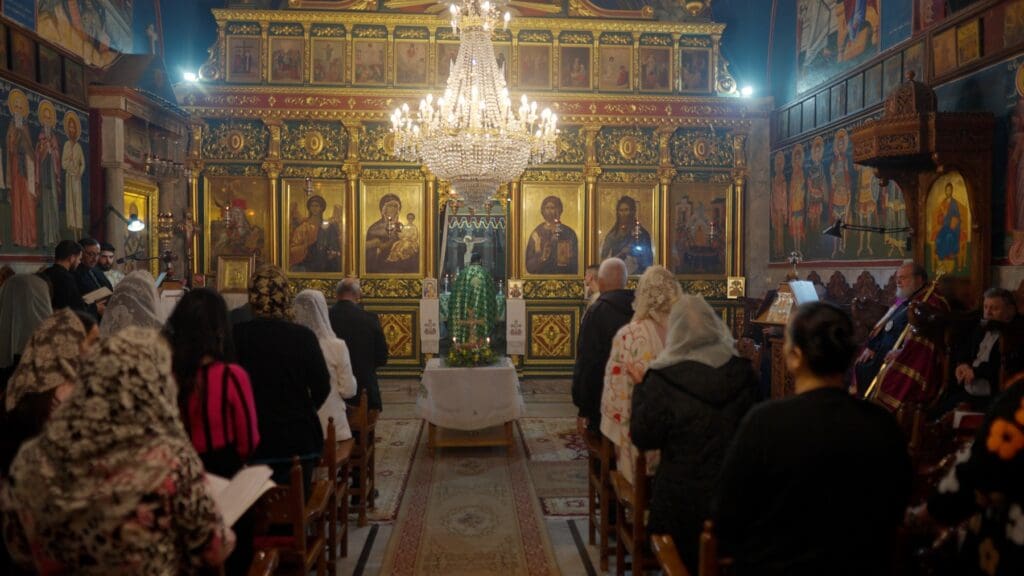
The ancient stones of St. Porphyrios have witnessed more than 16 centuries of history. It is the third-oldest church in the Holy Land, after the Church of the Nativity in Bethlehem and the Church of the Holy Sepulchre in Jerusalem. It has endured empires, wars and generations of worshipers who came seeking prayer and peace.
“The church was built between the years 402 and 407,” said Tawfiq Khader Al-Amash, who works in the office of the patriarchal vicar. “At first it was known as the Church of Queen Eudocia because she donated the stones, materials and workers for its construction.”
St. Porphyrios served as archbishop of Gaza for 25 years and died in 420. He is buried in the church, which took his name after his death.
The building is modest in size — about 2,300 square feet — with thick stone walls about six feet wide. Over centuries its historic structure has been restored several times. Yet its importance extends far beyond its architecture.
“The church is a house of prayer and a house of love,” Mr. Amash said. “Anyone who asks for help — Muslim, Christian or anyone else — if we can help them, we do, because God is love.”
The tradition of openness is more visible in times of crisis. During previous conflicts in Gaza — including wars in 2008, 2012, 2014 and 2021 — the church also opened its doors to displaced families. The latest Israel-Hamas war, however, drew the greatest number. At the war’s height, about 450 people — Christian and Muslim — took shelter inside the church compound.
Families slept in rooms, along the monastery corridors, in halls and inside available church buildings. Mattresses lined the floors, and children played between the stone walls that once echoed only with prayer. Food was scarce across Gaza, and the church struggled to provide basic necessities.
“We were all eating from the same plate and living the crisis together,” Mr. Amash said.
“There was little flour, little bread and limited food.”
Despite the shortages, the church organized daily meals through a small kitchen run by volunteers. Whatever ingredients could be found were cooked and distributed equally among everyone. Young people helped prepare food. Women worked together in the kitchen. Others cleaned, carried water and supported elderly displaced inside the church. The church also created a small medical area for those who needed care.
“We provided a doctor and a nurse for the elderly and opened a small pharmacy to distribute medicines according to what was available,” Mr. Amash said.
Aid from churches abroad, humanitarian groups and other organizations, including CNEWA/Pontifical Mission for Palestine, reached the compound sporadically — when conditions permitted the aid to enter — although supplies remained extremely limited.
Even in these difficult circumstances, life continued. During the long months of displacement, babies were born in the church compound, and elderly people died from illness and natural causes. For those who had lost homes and relatives, those small moments of life carried deep meaning.
“The church is a house of prayer and a house of love,”
“Two Christian babies were born here, and also a Muslim baby,” Mr. Amash said. “When a new child is born, it brings joy and hope.”
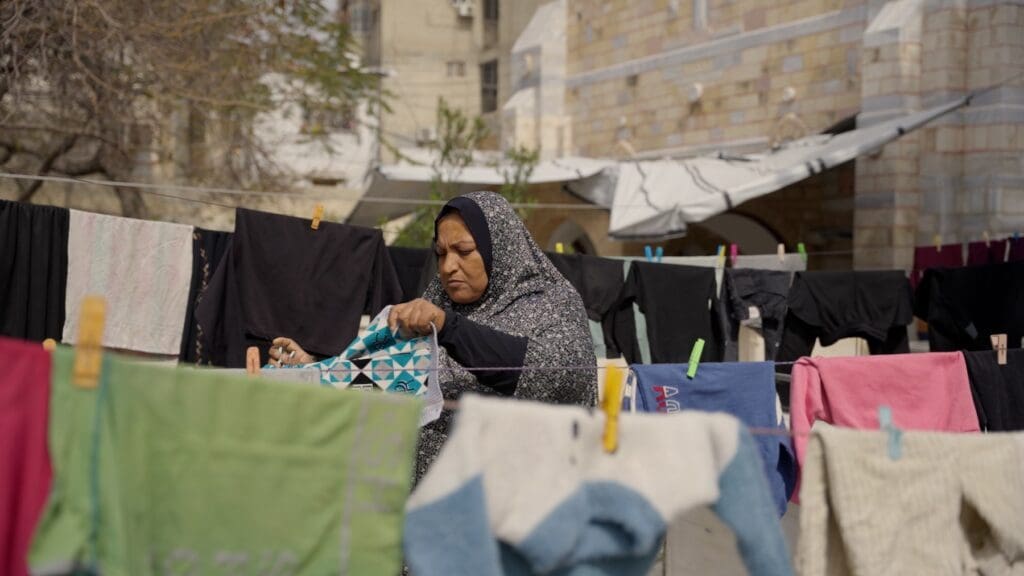
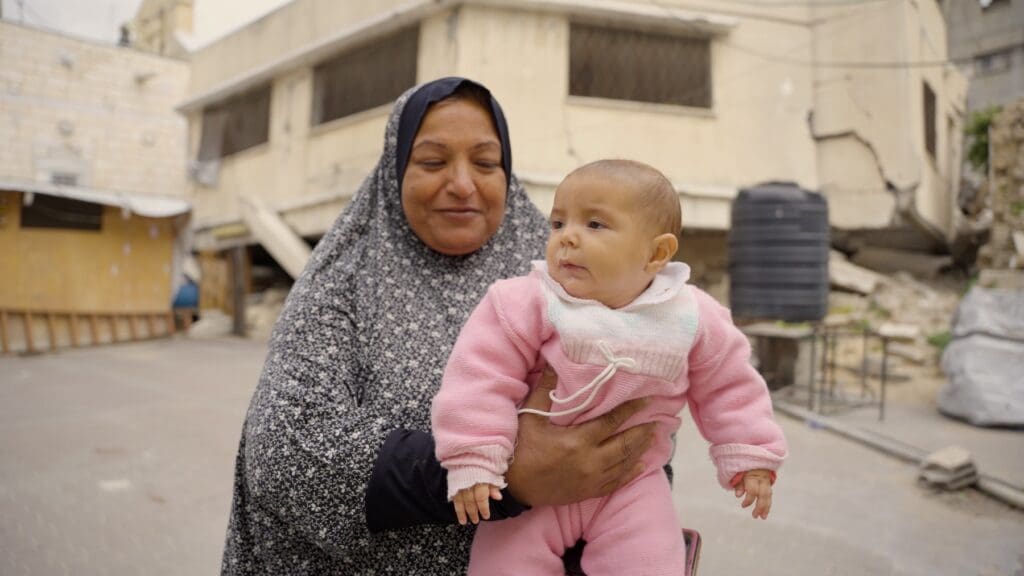
Um Mohammed Al-Azazmeh is among the numerous Muslim families who sought shelter at the church on the very first day of the war. She and her family fled their home in Tuffah, an eastern neighborhood of Gaza City.
“I have been here since the beginning of the war with my married children and grandchildren,” she said. “In previous wars I also came here, and they always welcomed us.”
At the start of the war, food was more available, she said, and priests would distribute supplies to the children.
“Our priest, Archimandrite Father Silas, brought rice, biscuits and chocolate for the children,” she said.
As months passed and supplies dwindled, residents had to improvise. Flour ran out at times, forcing families to experiment with alternative grains.
“I tried baking with corn flour and barley flour,” she said. “Barley worked, but corn flour did not.”
She once left the church to search for flour and eventually succeeded in finding several pounds. “I called Father Silasand told him I found flour,” she said. “We went together to bring it back.”
Beyond food and shelter, what she remembers most is the spirit of cooperation. “We were not Muslims and Christians here,” she said. “We were all one.”
She recalled a time when panic spread among the displaced during an airstrike near the compound. Dust filled the air, and people ran in fear.
“Father Silas came running down the stairs calling out, ‘Are you safe? Is anyone injured?’ ” she said.
In another incident, a tank shell exploded near the building where families were sheltering. Fragments injured a Christian woman. Residents spent the night sleeping inside the church until the danger passed. Despite these terrifying moments, Ms. Azazmeh says the sense of solidarity never faded.
“We felt that we were all one family,” she said. “There was no difference between anyone.”
Yet the church itself has not been spared from the violence. In October 2023, an Israeli strike hit a building within the church compound that was sheltering displaced people. Eighteen Christians, all civilians, were killed and dozens more, injured.
The compound of Holy Family Church was also struck by shells, killing three people and injuring the pastor. Another strike damaged the outer wall of the church compound.
Despite the shelling, Gaza’s Catholic and Orthodox parishes continued to offer shelter, their pastors and community leaders steadfast in their commitment to remain in Gaza, despite the war.
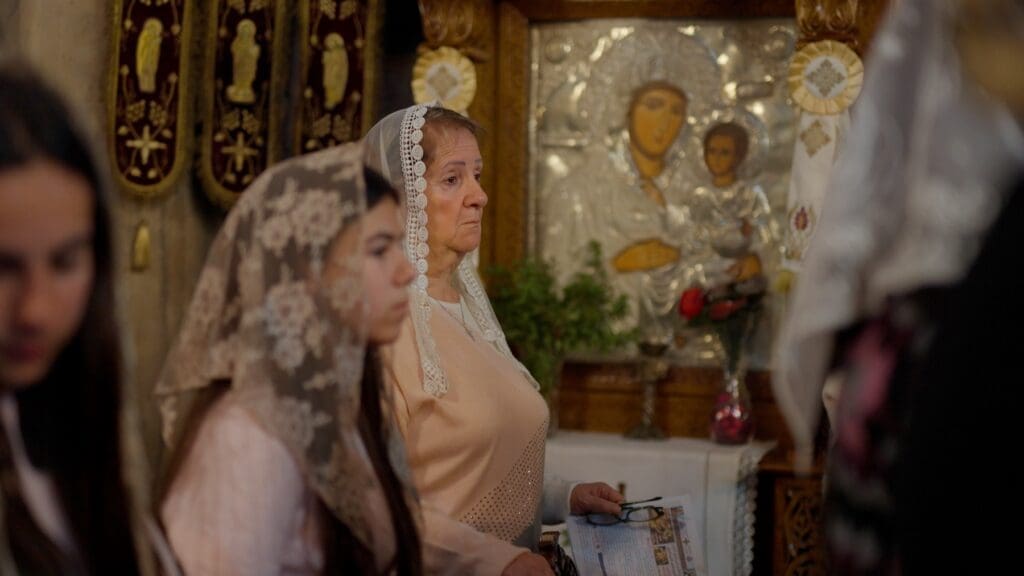
For Gaza’s Christian community, the experience of war and displacement has reshaped how they observe the liturgical seasons of the church.
This year, the period of Lent — the Great Fast, as it is called in the Christian East — coincided with Ramadan, the holy month of fasting observed by Muslims. Throughout the Great Fast, Eastern Christians traditionally abstain from meat and dairy products while focusing on prayer and acts of charity.
The overlap created a unique environment in the church compound, where Muslim families broke their fast together in the evenings, and Christians gathered for Lenten prayer and the liturgies of the presanctified gifts.
“Fasting is not only about food,” Mr. Amash said. “It is also about humility, love and helping other people.”
Despite the Israeli-Hamas ceasefire and observances of Ramadan and Lent, the United Nations Office for the Coordination of Humanitarian Affairs reports Palestinians continue to suffer. Airstrikes hitting civilian areas have continued, and a severe sandstorm in mid-March damaged many of the temporary shelters housing displaced families. Israel restricts most crossings in and out of Gaza, citing security concerns because of the war with Iran, the U.N. said, noting fluctuating prices of some food and the high price of cooking gas.
“We were not Muslims and Christians here. We were all one.”
The U.N. has reported that the Hamas-run Gaza Ministry of Health noted that between 6 and 17 March, at least 35 Palestinians were killed, and more than 680 Palestinians have been killed in Gaza since the October ceasefire.
Inside the compound of St. Porphyrios Church, daily life continues with quiet resilience. Children play in courtyards. Women prepare food in the kitchen. Men gather for conversation in shaded corners of the ancient stone walls. The church also runs educational activities for the children. These small efforts helped to preserve a sense of normalcy amid extraordinary hardship, such as the lack of food, electricity and housing.
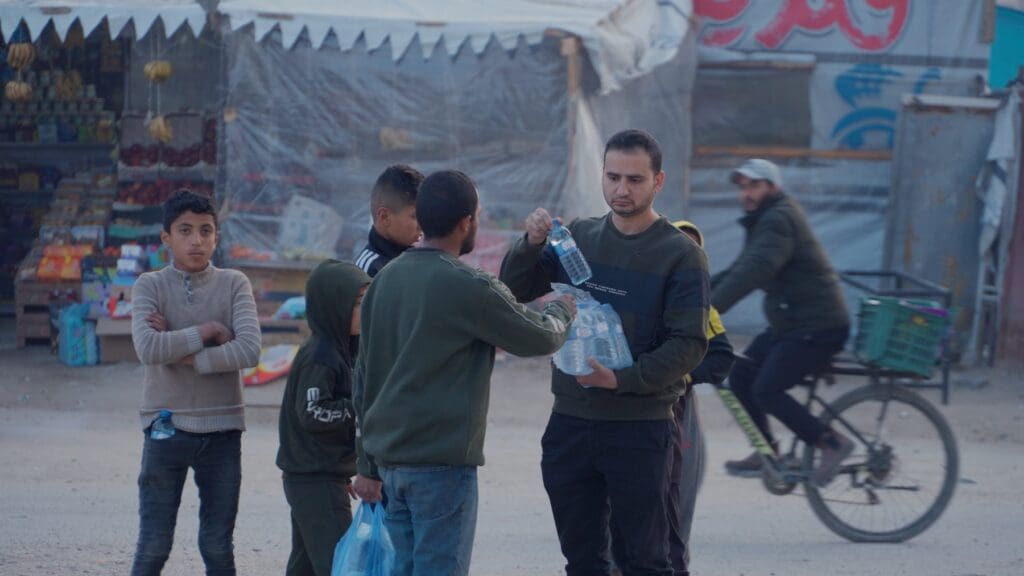
Outside the grounds of St. Porphyrios, another example of Muslim-Christian solidarity unfolded each evening during Ramadan.
Montaser Tarzi, a displaced Christian living in the parish compound, continued a personal tradition he began years ago: distributing water to Muslims just before the sunset call to prayer.
Mr. Tarzi, an accountant with a master’s degree in accounting and finance, stood at an intersection each afternoon of Ramadan with bottles of water, offering them to Muslims preparing to break their fast.
“I do this because it carries a human message,” Mr. Tarzi said.
For him, the act represents empathy and shared experience.
“Giving water to people before iftar is a way of sharing in their fasting and their fatigue,” he said. “It is a message of solidarity.”
Mr. Tarzi said the experience of displacement inside the church strengthened bonds between people of different faiths.
“During the displacement we lived together as Muslim and Christian brothers,” he said. “We supported each other and stood together.”
Whenever supplies arrived, the church also distributed humanitarian aid to surrounding neighborhoods — to all residents, regardless of creed.
“Everything that reached the church was shared with the people of the Old City,” Mr. Tarzi said.
The war revealed something deeper about Palestinian society, he said. “Even if religion or belief is different, we are all people of this city. Our blood is one.”
“Our message is a message of love and peace. We do not believe in violence,” Mr. Tarzi said.
“The money used for war should be used to treat the sick and educate children.”
For many residents, the experience has reinforced the role of faith in sustaining hope and has reshaped relationships among neighbors who once barely knew each other.
“People here learned more love,” Mr. Amash said. “Many did not know each other before, but they came to know one another by living together.”
In a city deeply scarred by war, the ancient Church of St. Porphyrios has become something more than a historic sanctuary. It has become a living symbol of solidarity.
And for those living within its walls, it is — above all — a place where faith and humanity meet.
Listen to the audio
The CNEWA Connection
During the 2023-2025 Israeli-Hamas war in Gaza, CNEWA/Pontifical Mission for Palestine delivered essential services to affected populations, particularly displaced families and vulnerable groups. Hot meals were prepared and served regularly to people sheltering at St. Porphyrios Greek Orthodox Church and Holy Family Catholic Church in Gaza City, which has continued to host hundreds of displaced people, whose homes were destroyed during the war. CNEWA/PMP’s response also included displaced communities in northern Gaza. U.N. authorities say that five months after the ceasefire, Gaza residents still live in precarious conditions; CNEWA/PMP continues to provide help with shelter, health care and food.
To support CNEWA’s work in Gaza, call 1-866-322-4441 (Canada) or 1-800-442-6392 (United States) or visit https://cnewa.org/what-we-do/emergency-middle-east-in-flames/