One year after the end of a 14-year-civil war, Syrians are struggling to rebuild their country that remains in ruins, with economic uncertainty compounding security concerns.
Even before the Islamist militant group Hayat Tahrir al-Sham (H.T.S.) overthrew Bashar al-Assad on 8 December 2024, the World Food Program (W.F.P.) estimated 3.1 million Syrians were severely food insecure, and at least 10 million did not have access to sufficient safe and nutritious food for proper growth and development. In 2025, the W.F.P. reported more than half of Syria’s 25 million people endured food insecurity.
“The humanitarian situation in southern Syria has deteriorated sharply” since the escalation of hostilities in the Sweida Governorate in mid-July, and severe drought and renewed wildfires have “devasted agriculture and worsened food insecurity,” reported the W.F.P., adding that “ongoing insecurity and sectarian tensions fuel displacement, straining host communities.”
Currently, more than 7 million people remain displaced within Syria, and more than 4 million Syrians are registered as refugees in neighboring countries.
Catastrophic inflation has impacted Syrians throughout the country, where a single $50 bill is exchanged on the streets for a heavy brick of Syrian banknotes. More broadly, the corruption inherited from the previous regime and the economic toll of war have left Syrians exhausted and on edge.
The World Bank reports that extreme poverty now affects “one in four Syrians, while two-thirds live below the lower middle-income poverty line.”
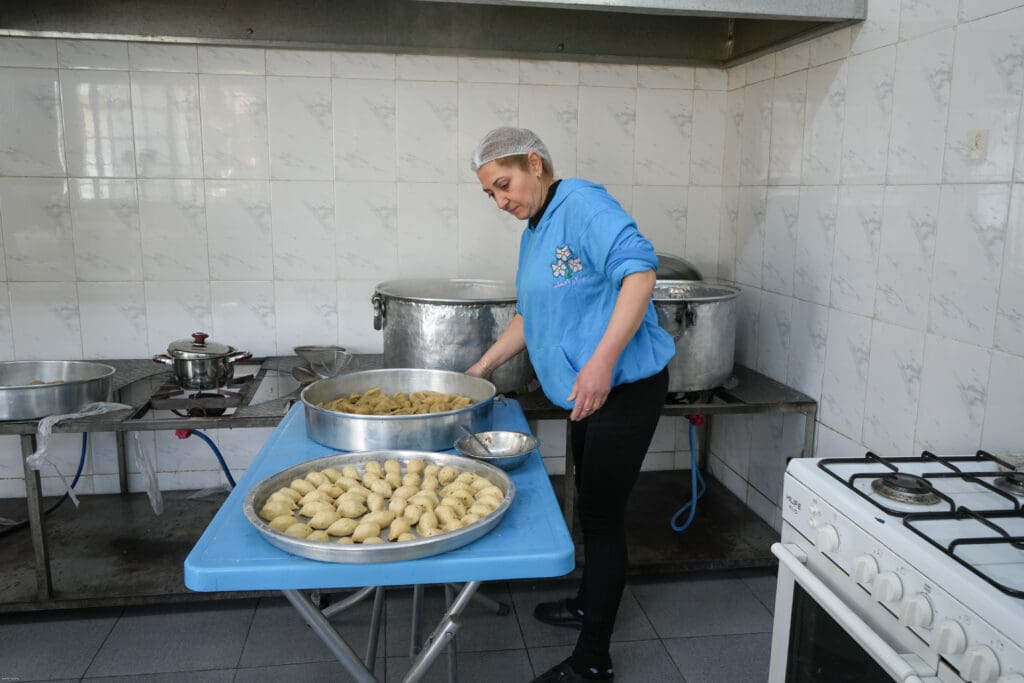
Lines in front of subsidized bakeries stretch across city markets as low-income individuals wait for their share of bread. Even with the regime change, many men and women still attempt the perilous journey to Europe in search of a better future.
A young mother in Aleppo who receives support through a CNEWA-funded health care program said, after the fall of the regime, her husband left for Germany, hoping work there could support his family’s needs and lead to future immigration opportunities.
Gilberte Janji, who helps to run a home for the elderly, which also receives funds from CNEWA, said Christians were historically perceived to be wealthier than the average Syrian, but the horrors of the past years have laid bare the struggles all Syrians have endured. In the aftermath of the 2023 earthquake, a Muslim laborer told her that he never knew Christians lived in such poverty.
After the fall of the Assad regime, some cities established de facto curfews, with shops closing an hour earlier than normal so people could get home before nightfall to reduce their exposure to robberies and harassment. A woman in Aleppo commented that, at first, as members of the new government tried to consolidate their authority, its members did not wear a common uniform, making it hard to distinguish between them and fraudulent actors at checkpoints along the main thoroughfares.
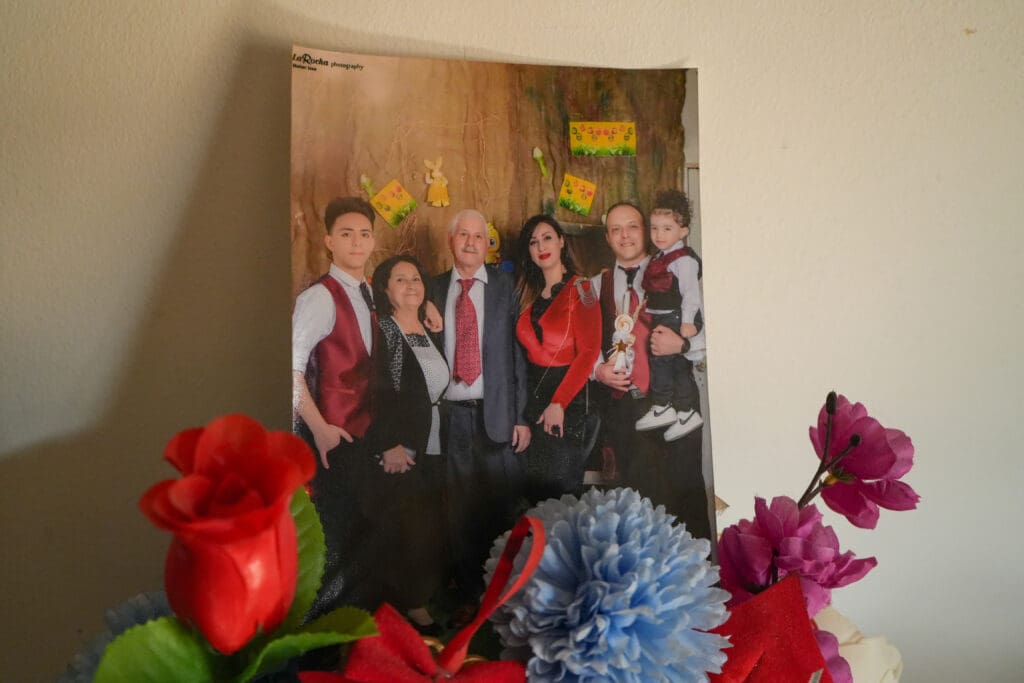
Syrian Christians are in a perilous position. Initially assured protection and religious freedom by Syria’s new government, massacres earlier this year prompted many more to leave. By November, Syriac Catholic Archbishop Jacques Mourad of Homs warned that the “church in Syria is dying,” as more Christians fled sectarian violence.
Many Christian Syrians who remain are unable to afford their medical bills and have turned to church-run programs, such as those supported by CNEWA, to subsidize or pay for necessary medicines, treatments and surgeries.
Syrian Christians are a minority that now make up about 2 percent of the population. Under the Assad regime, their rights were largely respected, as long as they refrained from dissent against the family’s rule. Before the civil war, Christians constituted about 20 percent of Syria’s population.
When the H.T.S. came to power last December, the party announced its intention to guarantee religious freedom, prioritizing coexistence to diplomats and foreign journalists. In late December 2024, Archbishop Mourad met with the local leaders of the new regime, and they expressed the mutual goal to create harmony among all Syrian people.
Over Christmas 2024, local leaders sent security guards to churches to provide a greater sense of protection. Maronite Bishop Antoine Chbeir of Tartus echoed this, saying officials of the new government came to his office to extend Christmas greetings. It was a welcome change after years of suppression during the 14-year civil war, during which some churches were damaged or closed for safety. According to the Syrian Network for Human Rights, 120 churches were fully or partially destroyed during the civil war.
In a symbolic gesture of support and confidence in the safety of the “new Syria,” Cardinal Claudio Gugerotti, prefect of the Vatican Dicastery for the Eastern Churches, embarked on a pastoral tour of the country in mid-January 2025. Standing before the congregation in Aleppo on 27 January and speaking through a translator, he expressed his vision for a future Syria where all communities could live together in peace.
He also paid tribute to the Christian nongovernmental organizations that had played a vital role in providing humanitarian relief during both the conflict and the 2023 earthquake, underscoring the enduring contributions of Syria’s Christian community. Young Syrian Christians in the packed church had expressed their hope to remain and help rebuild their country.
However, by June, at least two dozen people were killed, and 60 others injured in a suicide bombing attack on the Greek Orthodox Church of the Prophet Elias in a Damascus suburb. Syrian authorities blamed the Islamic State.
In mid-July, the Melkite Greek Catholic Church of St. Michael in Al Sura was burned. In a separate incident in the same region, the homes of 38 Christian families were burned; about 70 people took refuge in a church hall in Shahba. In Al Kharibat in western Syria, residents and security agents managed to prevent a plot to bomb the Maronite Church of Mar Elias.
Prior to this violence in the summer, in mid-March, forces believed to be linked to the new government lashed out violently against Alawite communities in the Latakia region, claiming to be enacting revenge against attacks by Assad loyalists. Several days of violence killed nearly 1,500 people, among them 800 civilians, according to the Syrian Observatory for Human Rights. The killings included a small number of Christians, with many families taking refuge in their Sunni neighbors’ homes as theirs were looted.
Although Syrian President Ahmed al-Sharaa vowed to punish those who participated in the massacres and established a committee to seek out perpetrators and “preserve civil peace and reconciliation,” thousands of Alawite survivors fled across the border into Lebanon.
After the massacres of March, in the middle of Lent and Ramadan, Cardinal Mario Zenari, apostolic nuncio to Syria, called on Syrians of all faiths to lean on prayer and fasting to rekindle hope for a peaceful Syria. Like many Syrian leaders, he has been encouraging Christian Syrians to return, particularly professionals, such as engineers, doctors and experts in constitutional law.
“I’m telling them work and see, work and see. We need Christians on the front lines,” he said.
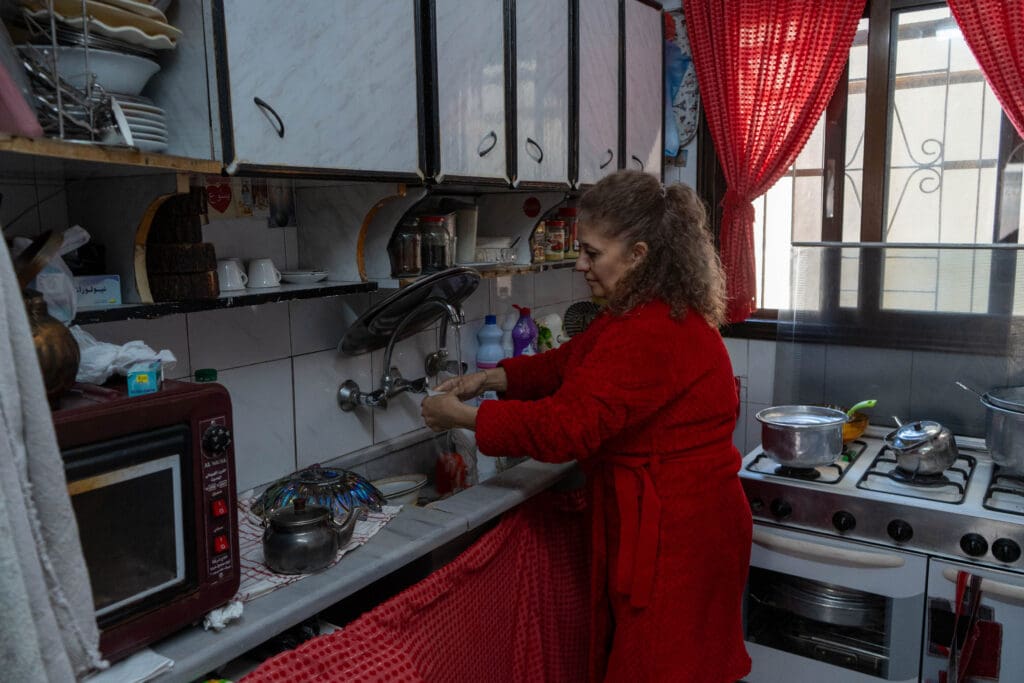
Church leaders followed with a joint statement, condemning the killings, calling for “the swift creation of conditions conducive to achieving national reconciliation among the Syrian people.”
Franciscan Father Bahjat Karakach of St. Francis of Assisi Church in Aleppo joined these calls for reconciliation, adding that Syrian Christians must act as a “bridge of peace” in their communities.
“We immediately offered the new rulers our collaboration, to ensure peace and safety for the population and the stabilization of the country,” he said. “At the same time, we are inviting our young people to join in political and social life to be ‘the light of the world and the salt of the earth.’
“This is our job, to give flavor to life in Syria.”
The international community has put pressure on the new government to guarantee an inclusive government that will ensure women’s rights and freedom of religion in a society composed of Sunni Muslim, Shiite Muslim, Alawite, Christian, Druze and Kurdish groups, as well as the tiny community of fewer than 10 Syrian Jews who remain in Damascus.
Syriac Father Jihad Youssef of the Deir Mar Musa monastery said Christians are still leaving, but those who stay “want to be the cement, or the paste of the mosaic of the new Syria.”
Meanwhile, Syrian President Ahmed al-Sharaa has been working to gain credibility. In September, he traveled to New York to participate in the annual meeting of the U.N. General Assembly, marking the first time a Syrian president has attended this gathering since former President Nureddin al-Atassi took part in a special session of the General Assembly in June 1967. After al-Sharaa met with President Donald Trump at the White House in November, the United States announced it would lift sanctions on Syria for six months.
Al-Sharaa has said presidential elections will take place in “three to four years.” However, he has also made unclear statements, telling The Economist, “in our region there are various definitions of democracy.”