A class of 7-year-olds lined up for their end-of-year school recital in Jabbouleh, a small village in Lebanon’s Bekaa Valley, in June. They stood proudly in their shirts, ties and skirts, clapping to songs about the four seasons and celebrating the end of a particularly challenging academic year.
Earlier this year, on 2 March, a second escalation in the war between Israel and Hezbollah erupted. The Ministry of Education immediately closed schools for a week, and classes did not resume evenly across the country.
According to Unicef, more than 400 public schools across Lebanon became shelters for the 1.2 million people displaced from the most-affected areas, which include southern Lebanon, the Bekaa Valley and the southern suburbs of Beirut. Three hundred public schools located in these areas were also closed for safety concerns.
“We mustered the courage to reopen,” said Mother Jocelyne Jomaa of the Congregation of Our Lady of Good Service, a Melkite Greek Catholic community of religious women dedicated to serving children and religious houses. Mother Jocelyne heads the school of the Archeparchy of Baalbek in Jabbouleh.
“Teaching online is almost useless, because the internet connection is very weak,” she said, drawing on the experience during the first escalation of the war in autumn 2024.
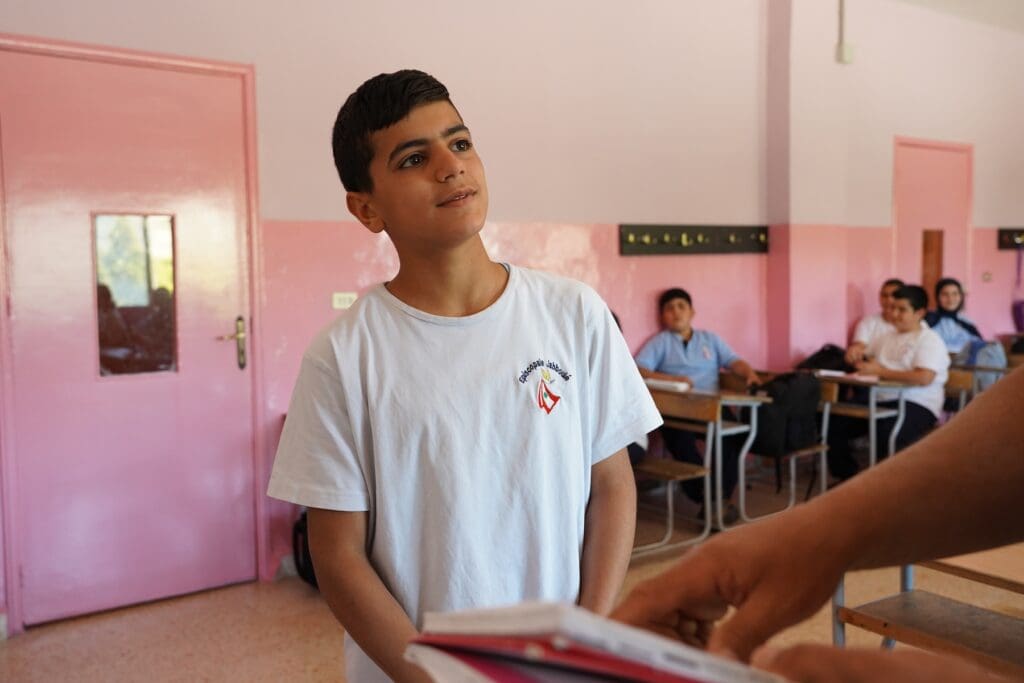
Here, “we created an atmosphere of safety and joy, because our pupils had a profound need to escape this anguish and sadness,” she said of the reopening.
By 9 July, Lebanon’s Ministry of Public Health said more than 4,300 people had been killed by Israeli attacks and more than 12,000 had been wounded. Half a million people were still displaced, due to the Israel military’s ongoing occupation or forcible evacuation of several hundred square miles of Lebanon — roughly 19 percent of country’s territory — according to L’Orient-Today.
Farah Nazha, a mother of four whose son Ali was in the school recital, said: “As long as my son is at school, he is safe. I was only scared that the school bus would be targeted by an airstrike.”
The bombed buildings en route to the village confirmed her fears were well-founded.
The school has 805 students; the majority are Shiites and Sunnis from nearby villages.
“I am scared, and I feel for the people who have had to flee their homes. We need to help them and remain united,” said Youssef Bazzal, a Shiite Muslim. The 14-year-old student wants to become a physician.
He and his family lost all their belongings when an airstrike destroyed their home during the 2024 escalation. They were among the 850 people who lived at the school during that period, when the sisters converted the school into a temporary shelter.
Since 2023, observers report the Israeli army has been targeting Hezbollah members and civilians alike, and displacing families, many of them from the Shiite community. Many landlords and local community leaders have thus refused to shelter Shiite Muslims, for fear of being targeted by Israel by association.
“We have to be cautious,” Mother Jocelyne said, describing the climate in which she and the sisters continue to aid all. “Divine power is protecting us.”
Father Youssef Nasr, secretary general of Catholic schools in Lebanon, said the war shattered hopes for a “normal school year” and an improved economy.
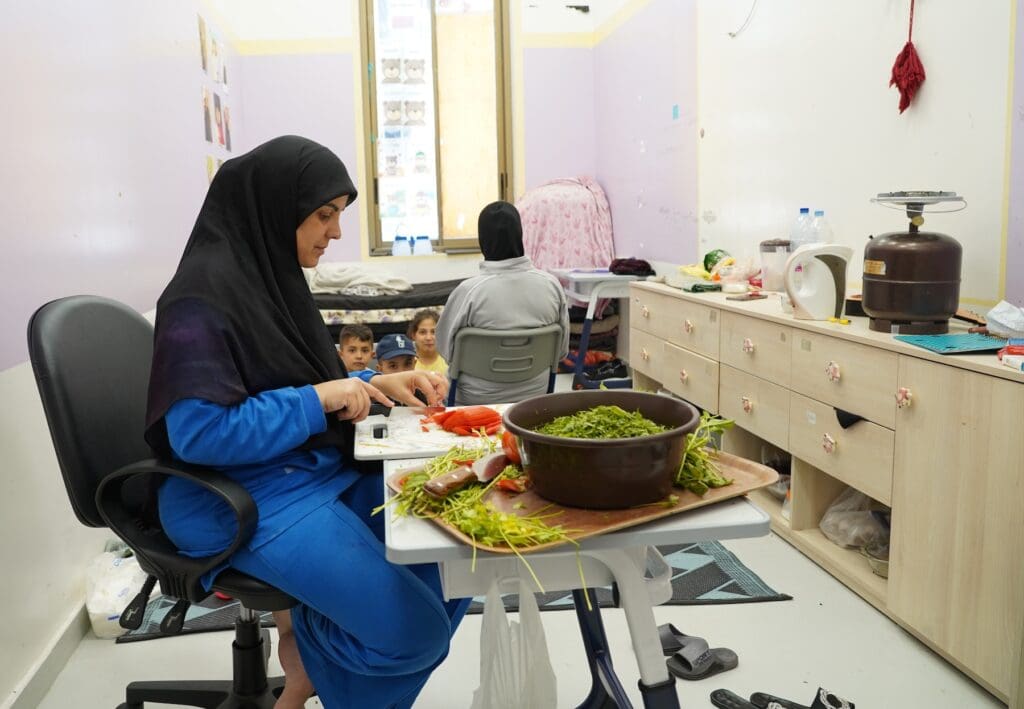
Across Lebanon, 320 Catholic schools educate 175,000 pupils. In early June, Father Nasr said 90 percent of schools had resumed classes online or in-person, depending on their proximity to airstrikes.
In Mashghara, 70 miles south of Jabbouleh, in the Bekaa Valley, the Sisters of the Sacred Hearts of Jesus and Mary could offer classes only online, after their school’s windows and doors were shattered by the force of an Israeli airstrike on 2 March.
However, online classes have many challenges, especially for younger students, said the school’s director, Sister Colette Moghabghab, S.S.C.C. The near-daily bombardment also makes online schooling difficult.
“Today, we have no electricity … yesterday, the Israelis bombarded electric poles,” Sister Colette said on 1 June. She had tried to reopen the school on 16 April, when a 10-day aerial ceasefire was announced.
“I saw my friends and my teachers again,” said student Charbel Ibrahim, 15. But the ceasefire was never implemented fully, and the school closed again two days later due to Israeli bombardments.
Charbel said online classes have had “negative consequences” on his education. “It is hard to understand chemistry or physics online,” he said.
As with most of the town’s 25,000 inhabitants, he and his family were displaced by the war. In late March, an airstrike destroyed their home. He said he missed his bedroom, his laptop and his PlayStation.
“More than 100 housing units are damaged, including 50 that are entirely destroyed,” said Iskandar Barakeh, the president of the municipality.
The town has two public schools, the school of the Sisters of the Sacred Hearts of Jesus and Mary and a private school with ties to Hezbollah.
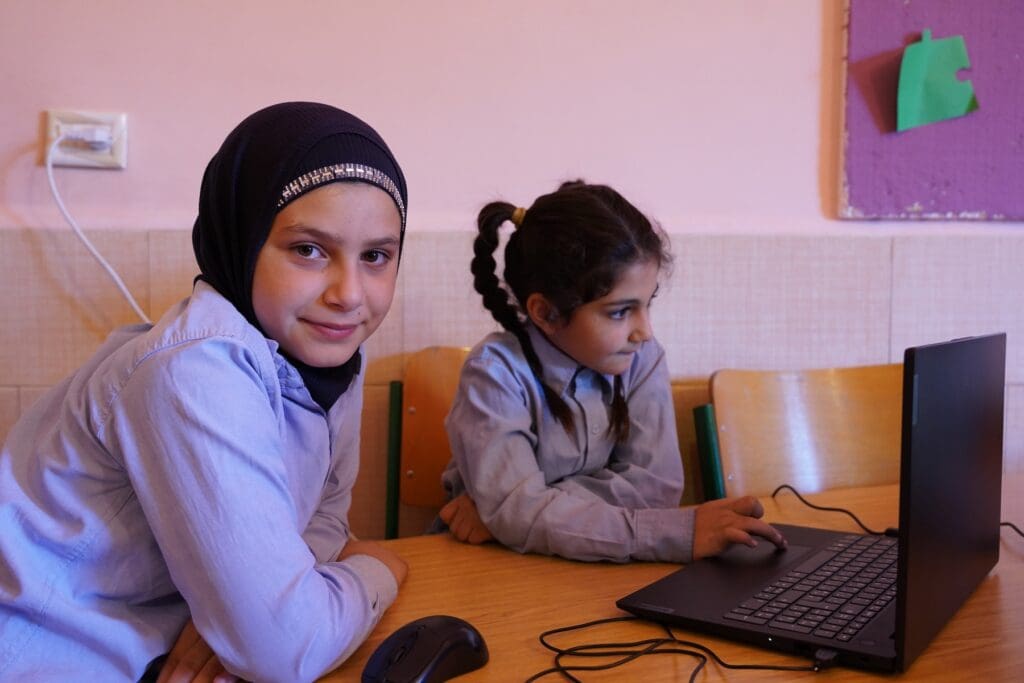
Children across the country “have had six years of interrupted education, fueled by a multitude of reasons,” said Ramzi Kaiss, a Lebanese researcher for Human Rights Watch. These reasons include “the social situation during the 2019 uprising, the COVID-19 pandemic, but also the economic crisis that led to teacher strikes, and more recently, the hostilities,” he said.
The fragile situation in Lebanon means “there are no reassurances that access to education will go back to what it was prior to 2019,” he said. Many schools were “damaged or destroyed” during the Israeli occupation, he added.
Upon the Israeli military’s withdrawal from Lebanon in 2025, it was “clear that they had used the schools for military purposes and that they had destroyed parts of the buildings, particularly in border villages,” he said.
Father Nasr said at least two Catholic schools were destroyed by the Israeli army in the south of the country, and at least seven suffered significant damages.
The wars have compounded the economic difficulties Catholic schools face. In Jabbouleh, only 200 families can afford tuition, said Mother Jocelyne.
Between 2023 and 2025, CNEWA-Pontifical Mission gave $10,000 in assistance to the sisters’ school in Mashghara that faced the same difficulty and earmarked an additional $115,000 for assist six other schools facing similar hardships.
Whether schools in Lebanon can welcome students back after the summer break will depend on the extent of the Israeli occupation in southern Lebanon; the outcome of negotiations between Lebanon and Israel under the auspices of the United States; developments in the war between Israel, the United States and Iran; and the ability of schools to fund necessary repairs.
To help the church respond to crises in the Middle East and beyond, please visit Where Hope Persists.