Pope Leo XIV broke a Lebanese taboo when he visited “the forgotten” at one of the largest psychiatric hospitals in the Middle East and the only one in Lebanon.
The Hospital of the Cross in Jal el‑Dib, Lebanon, cares for 800 inpatients across a psychiatry and mental health department, an addictions treatment department, and the Saint-Dominique department, dedicated to children with special needs — whom Pope Leo visited privately.
The patients and medical staff greeted Pope Leo warmly upon his entrance to the hospital theater on 2 December. Some waved Lebanese flags enthusiastically. One said, “Ahlan wa sahlan b Lebnan” (“Welcome to Lebanon”).
Mother Marie Makhlouf, superior general of the Franciscan Sisters of the Cross, who run the hospital, welcomed the pope.
This hospital “does not choose its patients, but embraces with love those whom no one has chosen,” she said.
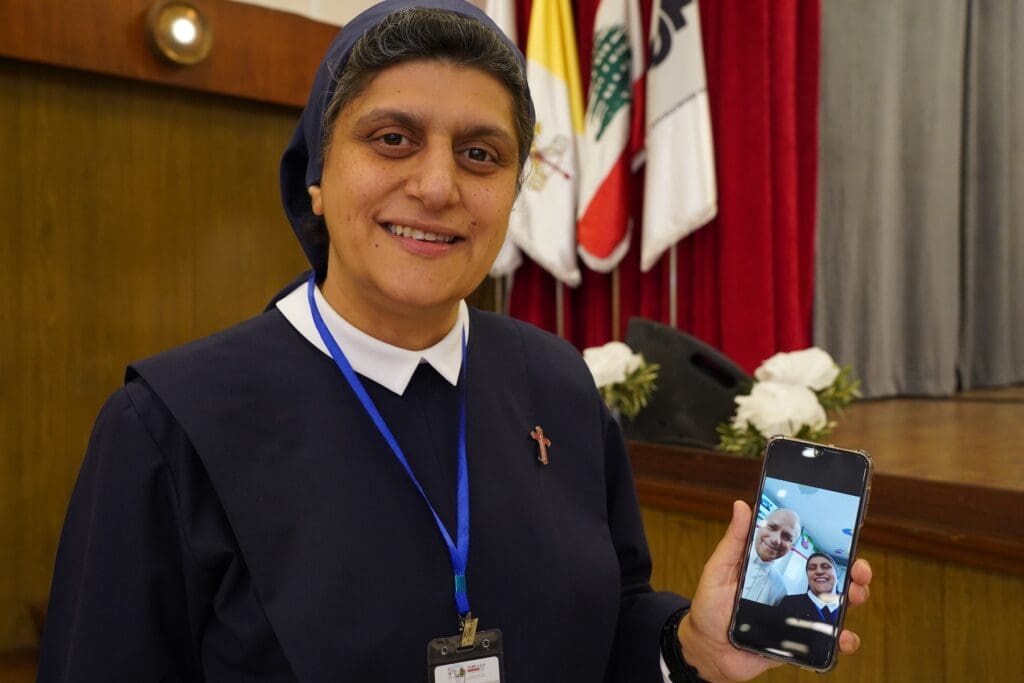
Mother Makhlouf thanked Pope Leo for his visit, “which tells the world that these forgotten people are not a burden on society, but the treasure of the church.” Tears and emotion caused her to pause her speech several times.
“Our mission is a daily miracle,” she said. “How do we continue without support and yet open our doors wider whenever the world closes its doors to those who knock?” she said. “Heaven alone knows the answer.”
She also conveyed the hope that Blessed Khalil Haddad, who founded the hospital in 1926, will be canonized.
Pope Leo told the hospital patients: “You are in the heart of God our Father. He holds you in his hands, accompanies you with his love, and envelops you with tenderness through the hands and smiles of those who care for you. To each one of you, Jesus says today: ‘I love you.’”
Addressing the medical staff, Pope Leo encouraged them “not to lose the joy of this mission.”
“What we witness in this place is a lesson for everyone, for your land, and even for all humanity,” he said.
Michel Constantin, director of CNEWA-Pontifical Mission’s regional office in Beirut, said the papal visit shed light on the crucial work of the church in Lebanon.
“The sisters are the only options for the poorest of the poor who live with physical and mental disability in the country,” he said.
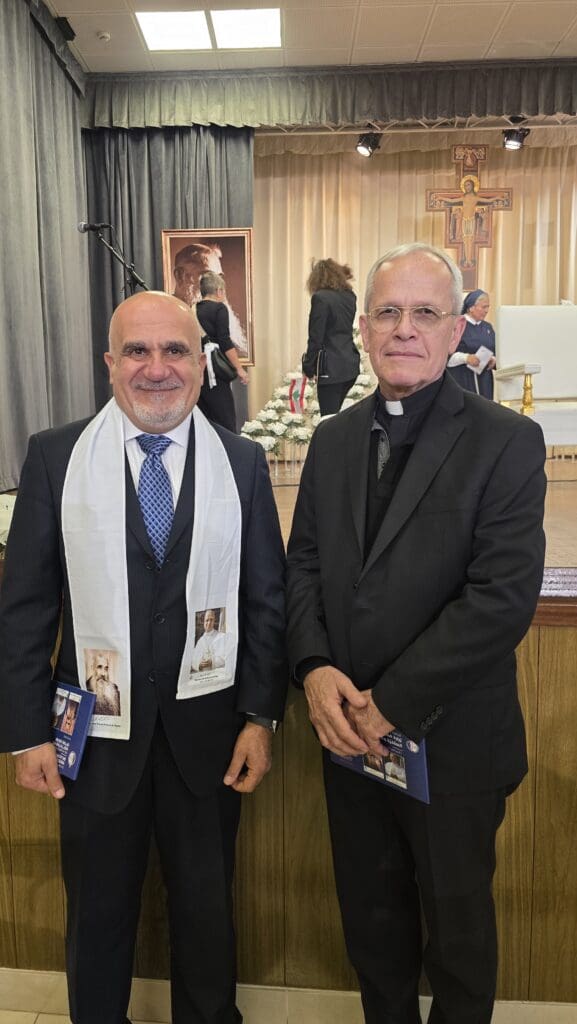
“During the peak of the economic crisis, the hospital faced closing down,” he added.
Triggered by a nationwide Ponzi-style collapse centered on the Central Bank, the 2019 economic crisis hit the hospital hard. The crisis led to staff shortages, depletion of the hospital’s savings and a breakdown in state institutions that crippled the Health Ministry.
Franciscan Sister Rose Hanna, who heads the facility, said “the situation is now better in terms of accessing the medicines and shortage of staff,” but she noted that the staff is aging, and few young people are willing to undertake such sensitive work.
“If we offered higher salaries, we could attract and retain them,” she said.
Pope Leo addressed staff challenges: “Your professional presence and your care for the patients are a tangible sign of Christ’s love and compassion.”
“You are like the Good Samaritan who stopped at the wounded man and cared for him, helping him and healing him,” he said.
“Despite the challenges, keep before your eyes the good that you can accomplish. It is a great work in the eyes of God,” he added.
Although the crisis has eased and Health Ministry payments have resumed, the hospital remains financially fragile, Sister Hanna said. Annual staff costs reach $6 million and operating expenses $4.6 million.
CNEWA–Pontifical Mission has supported the hospital since 1997 with subsidies and equipment. In 2024, it contributed $220,000 for a solar installation expected to save $90,000 a year.
“Hopefully, Pope Leo’s visit will bring more funding and charitable people who are willing to support the vital work of this hospital,” Mr. Constantin said.
Prior to the pope’s visit, Sister Hanna shared another hope with CNEWA’s ONE magazine: “Many of our patients never receive visitors, as there is still a taboo about psychiatric illnesses in Lebanon, but the visit of the Holy Father could encourage families to visit them.”