The residents of Beirut’s southern suburbs have been fleeing by the tens of thousands since the Israeli army issued an evacuation order on 5 March, with Israeli Finance Minister Bezalel Smotrich warning these suburbs would soon look “like Khan Younis,” the devastated city in the Gaza Strip.
The designated evacuation areas are home to more than 700,000 people.
The order led to scenes of panic and massive traffic jams in Beirut, the capital of Lebanon, as people fled to areas usually spared bombardment. It was the third wave of displacement in a week.
Families have been sleeping in cars or on mattresses on the pavement since 2 March, when Hezbollah launched rockets into Israel in response to the Israeli-U.S. bombing of Iran and assassination of Iranian Supreme Leader Ali Khamenei on 28 February. Israel retaliated with missiles targeting southern Lebanon, the Bekaa and Beirut’s southern suburbs — all areas with substantial Shiite Muslim inhabitants.
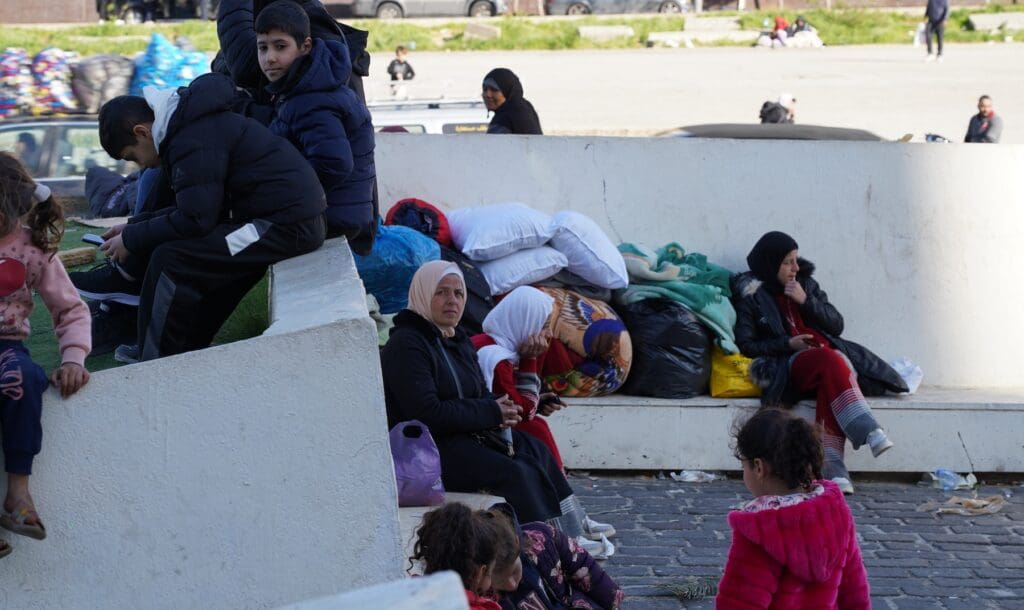
“It was a night of pure horror,” said Ali Soueida, a resident of Beirut’s southern suburbs, where he, his wife and their 18-month-old child, Hussein, were awakened by Israeli missiles. Since then, the family has been sleeping in a car they borrowed from a friend.
“I cannot sleep, I cannot fast and I cannot eat,” his wife, Roubna, on 5 March, two weeks into Ramadan.
Around them, families were sitting on chairs, on the ground or in their cars, their essential belongings packed in plastic bags.
Across Lebanon, more than 500 shelters had opened as of 8 March, hosting about 110,000 displaced people in dire conditions, with limited access to bathrooms or kitchens for cooking.
Bassam Younes took refuge in Dekwaneh, an eastern suburb of Beirut, with his wife and four children. They fled their home in Dibl, a village three miles from the Israeli border. The 70-mile journey took 24 hours.
“The roads were packed with people fleeing,” he said. “We were afraid Israel would bomb us. In moments like that, you only have God.”
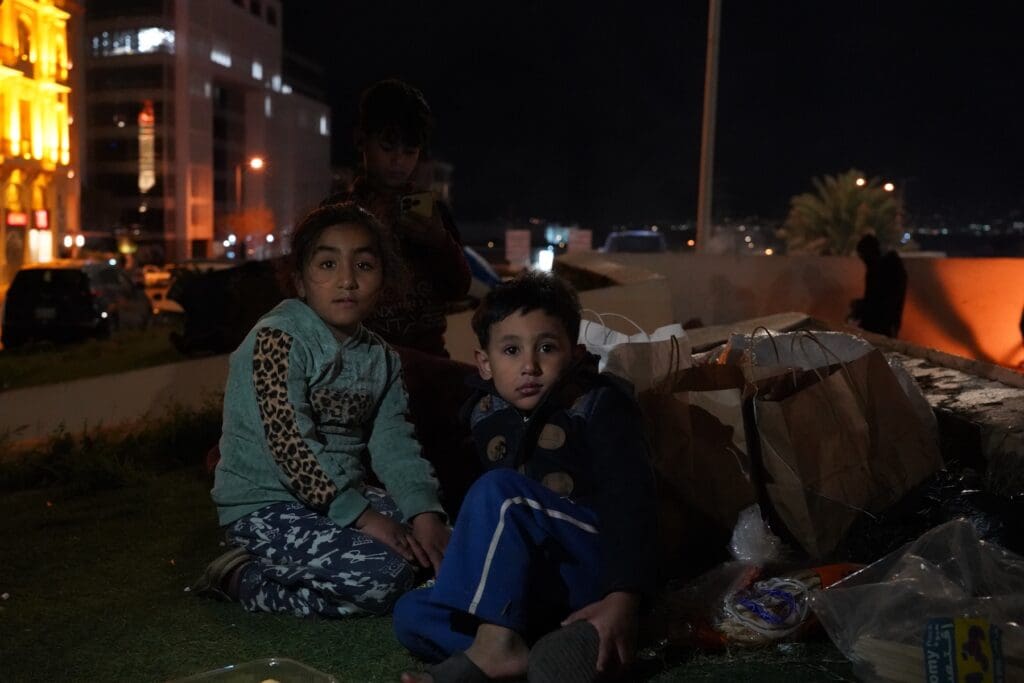
“For now, we are staying with relatives. I found a flat to rent that costs $500, but I do not know how I will pay,” said Mr. Younes, whose family was displaced by war in 2023 and again in 2024.
On 5 March, Mr. Younes sought assistance at the center of the Sisters of Charity of St. Jeanne-Antide Thouret in the Beirut suburb of Nabaa.
In crises, Lebanese families rely on one another; the state offers little help. However, said Sister Feryal Karam, who heads the sisters’ social work program in Nabaa, “even when the displaced people are hosted by relatives, they are poor and they cannot afford the costs of hosting in the long term.
“So far, 25 families reached out to us. It is the same families who fled the south to Nabaa during the escalation in 2024,” she said.
“This new escalation was so sudden that we have nothing to support them. The organizations funding the relief response are currently assessing the needs.”
On 4 March, CNEWA’s regional office in Beirut estimated the cost of supporting at least 6,000 families with blankets, mattresses, food packages, fuel and cash assistance at $1 million.
Beyond housing, Mr. Younes said he urgently needs cash for medicine and fuel for his car.
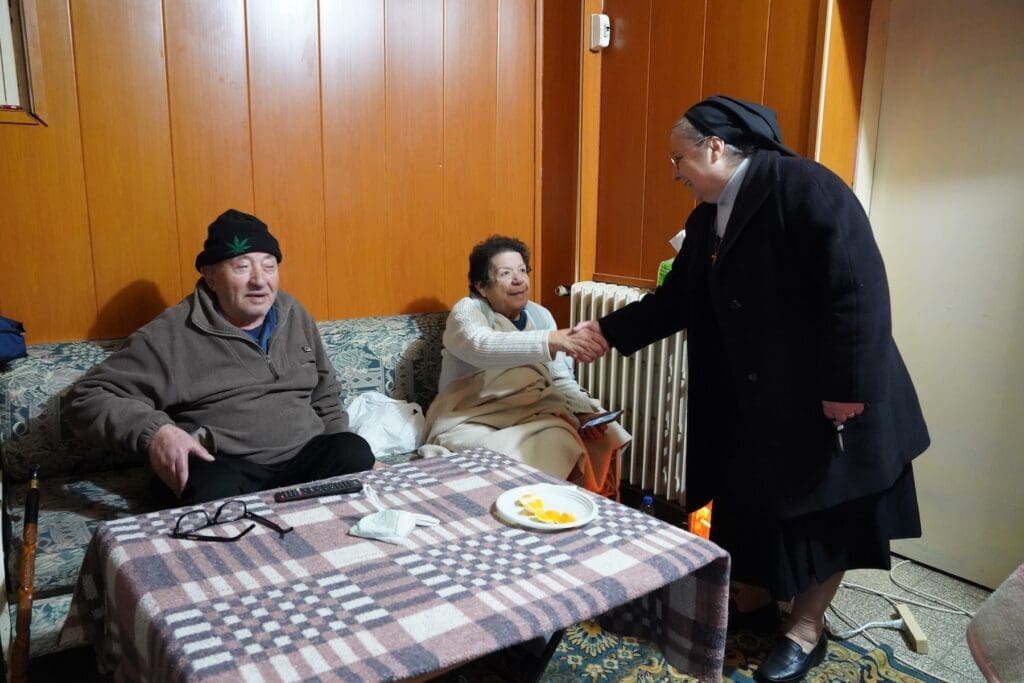
May Karam fled her home in Hadath on 5 March, after Israel issued evacuation orders, and took refuge six miles away at the convent of the Antonine Sisters in Roumieh, where her daughter is a member.
Ms. Karam shares a one-bedroom unit in the convent basement with eight members of her family, including her in-laws and three grandchildren.
“We hope that tomorrow will be better,” Ms. Karam said.
The religious community also opened its doors to four sisters of the congregation, who run the Antonine Sisters high school in Nabatieh, one of the largest cities in southern Lebanon.
“I cried when we left the school,” said Sister Marie Touma, superior of the Antonine Sisters.
“We went to the classrooms to open the windows, so they would not break under the bombardments, which was heartbreaking,” she said. The school has 1,100 students; the majority are Muslim.
For most of the 66-day war in 2024, she and another religious sister stayed at the school to help those who were displaced.
“This time, the bombardment was immediately very heavy, so we left,” she said.
Since the ceasefire in November 2024, the sisters had returned to the school, despite more than 15,400 ceasefire violations by the Israeli army, constant presence of war planes and drone surveillance.
“We don’t know when we will be able to come back,” she said.
By late 9 March, the Qatar News Agency reported more than 480 people had been killed in Lebanon. Among the dead was the Maronite pastor in the Christian village of Qlayaa, the Rev. Pierre al-Rahi, who had refused to leave his community located a few miles from the Israeli border.
Father Pierre was killed when attending to a parishioner who had suffered wounds from an earlier Israeli attack on the village.