The road to Njarakkode — a small village in southwestern India’s state of Kerala — is lined with cashew trees in full bloom, laden with fruit. Hundreds of ripe cashew apples have fallen, and their fermented smell is perceptible a mile away. Passers-by pick up a few, wash them and eat the fruit’s sweet juicy flesh. Driving through this forest of fruit trees, fallen mangoes are for the taking, too, with flesh tender enough to bite into. Summer is a season of plenty in Kerala.
In the distance is the house of a man who was killed by a wild elephant that came down the hill at night and gored him. Deadly encounters with wildlife, tigers, elephants and wild boars, are real fears among the locals, including Anu K. Saju and her family.
Ms. Saju is studying to be a nurse. She is in the third year of her course at Sanjo College of Nursing and Allied Sciences in the town of Vellappara. The school, administered by the Syro-Malabar Catholic Eparchy of Palghat, was established four years ago and accepts 60 students annually. It sits on 45 acres, along with a college of pharmacy, an elementary school and a high school.
“I chose to study nursing because the parish priest advised it would be a good career choice,” Ms. Saju says.
“My father is a daily wage worker,” she says of her father, Saju K. Abraham, who works 24-hour shifts at Coimbatore railway station in the neighboring state of Tamil Nadu. “If he doesn’t work, he doesn’t earn,” she says. Her older brother works at a garage nearby.
“My plan is to finish the course and get a job abroad. That’s the only way we can pay off our loans,” she says.
Coconuts lie around the family’s compound. “The monkeys climb up coconut trees, throw the coconuts off the trees, drink all the water,” says Smitha Saju, Ms. Saju’s mother. As a result, the shell of the coconut, and its meaty interior, cannot develop and grow, and the meat is where the family derives coconut oil for its additional income.
Kerala is considered India’s most developed state, with near universal literacy, parity among men and women in education and the highest life expectancy in the nation. Once a largely agrarian society, the state of 36 million people has changed dramatically in the past few decades. Social reforms and its robust educational systems, public and private, have driven Kerala’s economic successes, which has been called the “Kerala Phenomenon.” However, poverty continues to plague millions of families.
The Rev. Jeejo Chalakkal, who manages the nursing school, says the needs of the people in the eparchy have changed over the years.
“The livelihood of the people was more agriculturally based,” he says of the recent past. “But young people want to move away from that and have more professional careers.”
Loans keep people in the poverty loop, and the level of education is low compared with neighboring districts, he adds.
“The entire focus is to uplift women and the economically underprivileged, irrespective of religion and caste,” he says. Christians account for only 4 percent of the district’s population of 2 million, according to the latest national census taken in 2011. Muslims account for about 30 percent of the population while Hindus make up the majority.
Ance Jiboy also studies at the nursing college and hopes to go abroad, either to Europe or the Gulf states, so she can support her parents. Her older brother, Alfie, is studying for priesthood in the seminary.
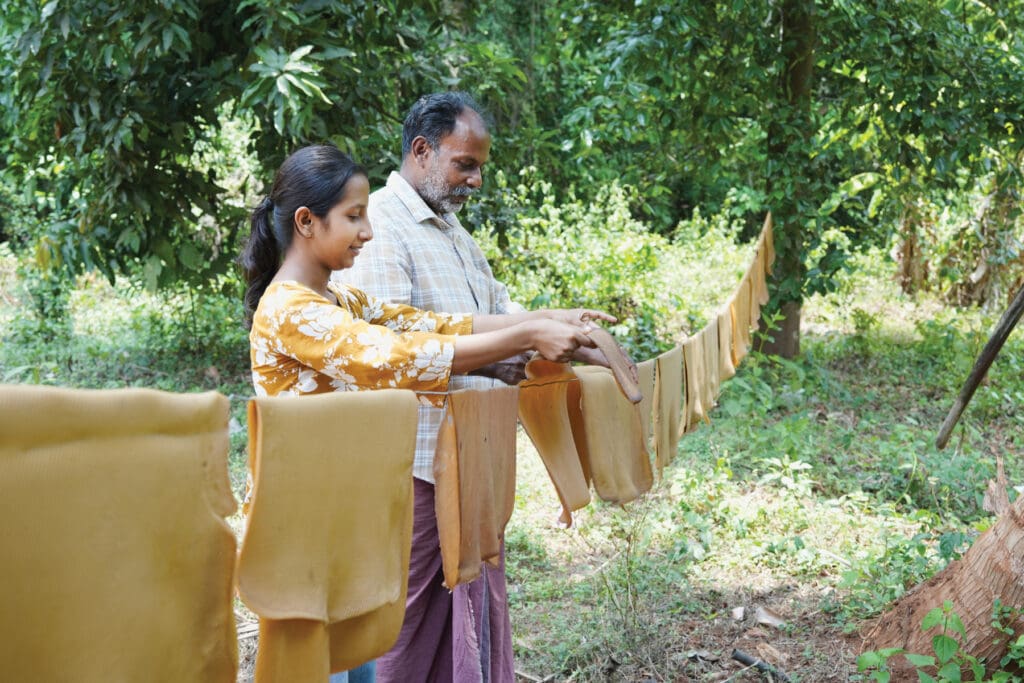
Her father, Jiboy Joseph, is a daily wage worker who taps rubber from trees in the nearby forest. Last year, one of his friends was killed by an elephant. He had set out for rubber tapping early in the morning — as days get hot and humid in this part of Kerala and the temperature climbs up to 113 degrees Fahrenheit — and the elephant came up quietly, without announcing its arrival.
“We’ve taken a few loans that need to be paid off,” Mr. Joseph says. There’s a crack on the entrance to the house, where lightning struck.
“The entire focus is to uplift women and the economically underprivileged, irrespective of religion and caste.”
“We’ve not had the money to get it repaired,” he says.
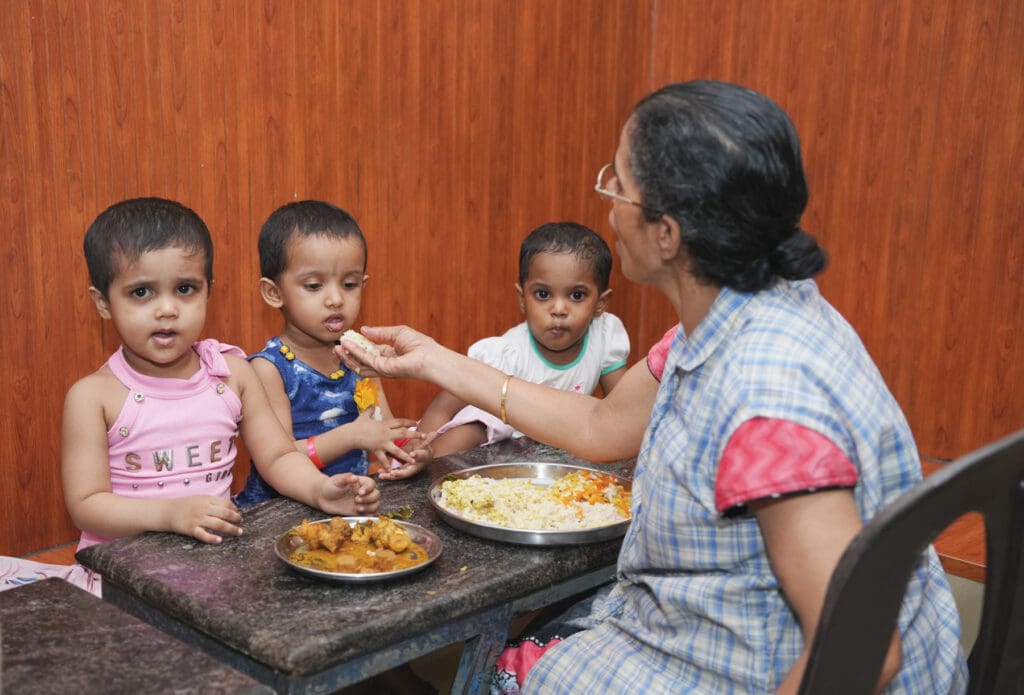
Donia Poulose, a second-year nursing student, is following in her father’s footsteps. He had worked as a nurse throughout India in the government’s Border Security Force. When his parents got sick, however, he took voluntary retirement and returned to Kerala, where he now farms.
“I wanted to do nursing because of my father and because I like serving people. I like talking to patients and understanding their needs,” says Ms. Poulose, who has three siblings.
“There’s four of us, so providing for all of us is hard for my parents.
“I want to do post-graduate studies and teach in a nursing school,” she adds. And “I want to be able to help people here in Palakkad.”
Nearly 80 miles up the Kerala coast, in the village of Pulluvazhy, Sister Jisa Paul, I.J., is the director of Snehajyothi Charitable Society, which she founded 18 years ago to house children in need.
“Every child is an orphan here,” she says. “They’ve either never known their parents or, if their parents are around, the parents have chosen not to see their children.”
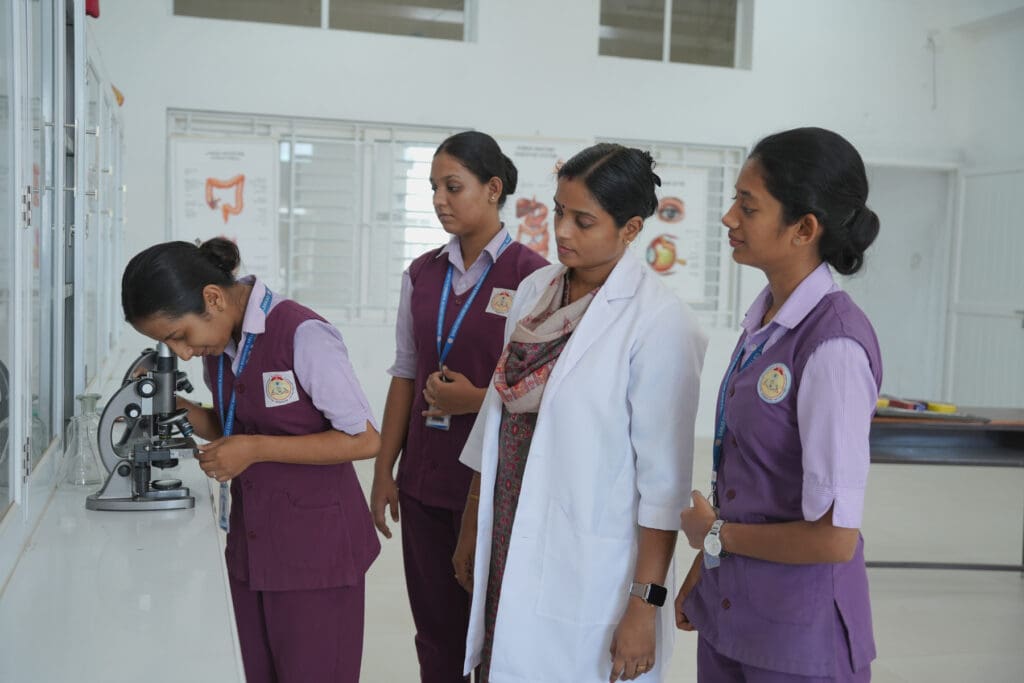
She runs three homes: one for children under 5, another for girls ages 5 through 18, and another, located a few miles away, for boys ages 5 through 18. A team of 32 people care round the clock for the 102 children living in these homes.
“I used to be a teacher,” Sister Jisa says. “Then I resigned and decided to set up Snehajyothi in 2008. Since then, it’s just grown.”
Sister Jisa is a member of the Infant Jesus Sisters, founded in Rouen, France, by Blessed Nicolas Barre. These sisters are dedicated to educating poor children and serving local communities.
“We sisters have over 350 years of history of social work and pastoral care in more than 18 countries,” Sister Jisa says.
India has an estimated 30 million orphans and abandoned children, but only a fraction receives care in an organized program. The majority are homeless or in informal foster situations. The number of registered child care institutions or orphanages in the country is between 9,500 and 10,000; they assist up to 470,000 children.
In Kerala, there are about 239 registered orphanages, according to research done by a private enterprise, but nonprofit organizations estimate more than 1,000 facilities, caring for up to 75,000 children under the age of 18. Many of these children have living relatives but receive care at these institutions because of poverty and family hardship.
The government provides some aid toward food, but support comes primarily from local families and some foreign grants. With the Indian government’s laws limiting foreign funds into the country, however, orphanages and child care institutions are struggling.
The church plays a significant role in child care in the state, and Sister Jisa says church-run orphanages are seen as dependable. However, the exact number of church-run child care institutions is not available.
Sister Jisa’s program is legally recognized under India’s Juvenile Justice (Care and Protection of Children) Act of 2015. As such, each home follows a basic standard of care as stipulated by the Indian government regarding space, dormitories, regular medical checkups and segregation of children based on age.
Nonregistered orphanages in India can face closure at any time and face fines.
“We have children from all religions in our orphanages,” she says. “We also run these institutions according to government rules and regulations, even if it means that it is hard on us [financially].”
“The children here have gone through so much at such a young age.”
“The children here have gone through so much at such a young age,” Sister Jisa says and, changing their names for privacy, shares a few stories of some of the children in the home.
Mona was left on a train as a newborn by her teenage mother. A passer-by heard her cry and found her. He then took Mona to the police, who brought her to Sister Jisa.
Lisa was sexually abused by her father until she was 7 years old. Her mother had mental health challenges. Lisa told a neighbor about the abuse and her father was reported to the police and jailed. Lisa is now 19 and is studying social work.
John’s father died when he was 9 months old. His mother started a relationship with another man and did not want John with her. She gave him up. Today, he is 18 and wants to pursue a career in law.
Nibin’s father remarried after his mother passed away. His stepmother beat him so severely she fractured his arms and legs. Police were called, and social services brought him to Snehajyothi. He has chosen not to have any contact with his family.
Jiya’s mother, born blind, was raped by her neighbor. When she gave birth, her family sent her to a home for women with disabilities and sent Jiya to Snehajyothi. Jiya is now 10 and does not know about her biological parents.
Sister Jisa says her program does not receive government support and relies on donations from CNEWA and the local parish.
“Jesus looks after all those he brings into this world. I leave everything in his hands.”
“Parishioners donate a meal on special occasions, such as birthdays and anniversaries. Some donate money, too,” Sister Jisa says.
Children from Snehajyothi are on the register for adoption. “So far, 66 children have been adopted,” Sister Jisa says.
India has a rigorous adoption process, regulated by the Central Adoption Resource Authority. The process involves online registration, a home study report and a waiting period, ranging from six months to more than four years. There are no shortcuts in this system. Any direct adoption from hospitals or individuals is illegal and carries a prison sentence.
“Jesus looks after all those he brings into this world,” Sister Jisa says. “I leave everything in his hands. He always takes care of the children in Snehajyothi.”
The CNEWA Connection
CNEWA has deep roots in the care of children in need in India. Generations of its donors have supported the church’s many child care programs there, helping to propel the development and growth of the state. CNEWA donors continue to provide scholarships that help pay tuition and lodging for 77 students from underprivileged families at Sanjo College of Nursing and Allied Sciences in Kerala. These scholarships make the lives of these families slightly easier, says the Rev. Jeejo Chalakkal, manager of the nursing school.
Resources from CNEWA’s donors also allow Sister Jisa Paul, I.J., to acquire infant formula and diapers for newborns at Snehajyothi Sisubhavan, the orphanage she founded in southern India. “Newborns are expensive to look after, and the money from CNEWA is a huge help,” she says.
To help fund CNEWA’s work in India, call 1-866-322-4441 (Canada) or 1-800-442-6392 (United States) or visit cnewa.org/donate.
Read this article in our digital print format here.