Editors’ note: The publication of this article coincides with the third anniversary of the 7 October terrorist attack on civilians in Israel, in which Hamas killed 1,200 people and took 254 people hostage, and the start of Israel’s retaliatory invasion of Gaza, which has killed more than 80,000 people, displaced up to 2 million people, and razed entire communities. Despite the October 2025 ceasefire, attacks on Gaza continue, and the humanitarian situation continues to deteriorate, as aid remains restricted and people’s basic needs cannot be met.
When the main generator at the Al-Ahli Arab Hospital in Gaza City collapsed on 10 September, it was more than just a power outage. It threatened to shut down the operations of Gaza’s only Christian hospital.
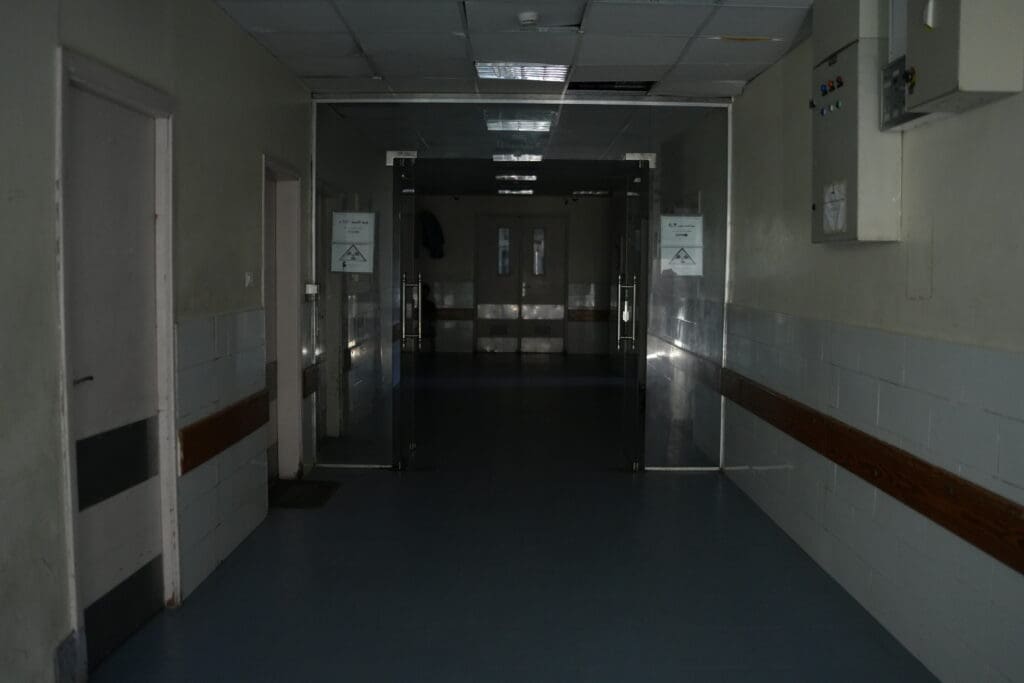
In the Gaza Strip, patients and doctors rely on generators to power medical equipment, store medication, and perform surgeries and tests. In the absence of public utilities for nearly three years, a generator failure at a hospital can mean the difference between life and death.
The deeper problem is not simply that a machine might stop working, but that everything in Gaza’s health care system is dependent on a vulnerable supply chain. Fuel, oil, spare parts, medicine, equipment, tests, medical staff and even safe routes to reach a hospital are hard to come by.
Dr. Bassam Zaqout, director of the Palestinian Medical Relief Society in Gaza, said in some hospitals, emergency and trauma services cannot be maintained overnight when generators stop.
“We reduce operating hours and limit diagnostic and laboratory services to a minimum,” he said.
A patient might travel a long distance, paying whatever they can to reach a health center, only to discover the generator is out and the service they came for is unavailable.
“People arrive, and we tell them: ‘Come back tomorrow.’ This is a huge problem because we can’t even guarantee we’ll be able to provide the service tomorrow,” Dr. Zaqout said.
“We’re talking about 250,000 people who need regular medication for chronic diseases.”
Since war between Israel and Hamas broke out in October 2023, the health system in the Gaza Strip has been under immense strain, and hospitals and health centers continue to operate at a limited capacity.
Last month, the United Nations reported that the persistent shortage of essential medical supplies hinders the treatment of both communicable and noncommunicable diseases in Gaza. It also noted that funding shortfalls and Israeli restrictions on the entry of vital materials, engine oil and spare parts continue to impede humanitarian work.
The report further indicates that the lack of reliable electricity forces essential services, including health care facilities, to rely heavily on generators that were not designed to operate around the clock, nor for three consecutive years without interruption.
In an assessment of health services up to 31 August, the World Health Organization also indicated continued and significant gaps in the availability of health care and resources in Gaza, even as data collection and verification continued.
“We haven’t entered the recovery phase or the phase of treating the injured,” said Mousa Ayyad, a board member at Al-Ahli Arab Hospital. “We are still in the phase of responding to the needs of the citizens.”
Dozens of injured people arrive at the hospital daily, and its proximity to the “yellow line,” Israel’s demarcation line, impacts the hospital’s operations and daily plans, he said.
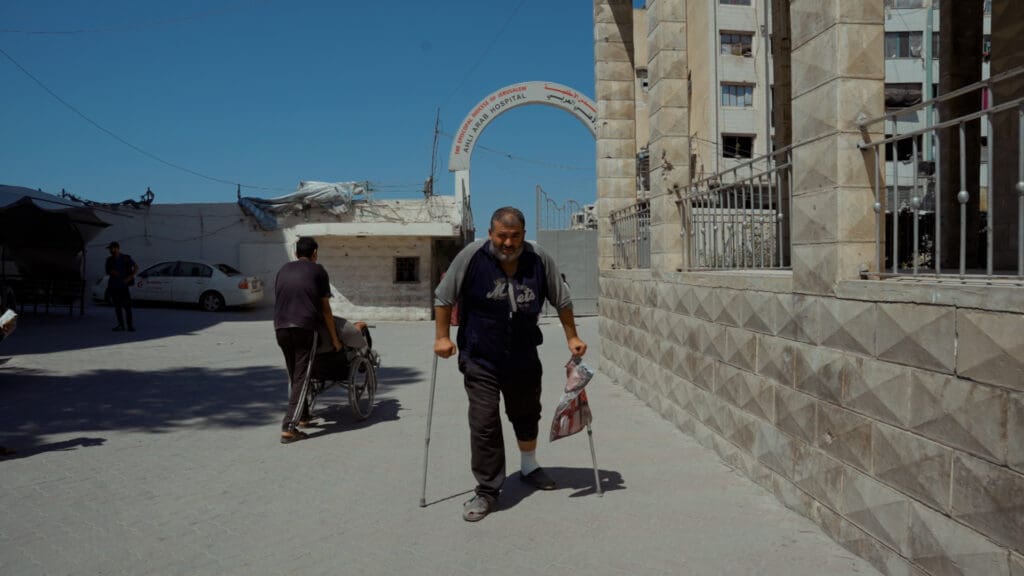
The hospital serves about one million people in northern Gaza, and its services are free for anyone in need of care.
Dr. Zaqout said medicine shortage was a chronic problem in the strip before the war, but it has become much more acute since 2023.
“We’re talking about 250,000 people who need regular medication for chronic diseases,” Dr. Zaqout said.
The problem cannot be solved by bringing in limited quantities of medicine from time to time; it requires a sustainable supply chain, he said.
“There are delays all the time, and often we can’t respond, leaving people without medication. They suffer and then return later with complications we can’t handle,” he said.
Zaher al-Wahidi, an engineer and director of the information unit at the Ministry of Health in Gaza, said that before the war, the Gaza Strip had 17 CT scanners; only four remain operational. The Gaza Strip had nine MRI machines before the war; currently, it has none.
He said the lack of diagnostic equipment not only makes it difficult to get a medical exam, but affects the entire treatment process.
“Health care cannot be provided without comprehensive diagnostic services,” he said, describing the situation as rendering the health care system, medically speaking, “a blind system.”
He said the absence of certain tests, such as cardiac enzyme tests, could prevent the timely diagnosis of heart attacks, and the inability to perform early cancer diagnosis means patients reach more advanced stages before treatment begins.
Mr. Wahidi presented Ministry of Health statistics revealing a shortage of up to 45 percent of medicines and medical supplies, up to 80 percent of laboratory materials, and up to 60 percent of some essential medicines.
He also spoke of a 53 percent shortage of primary health care supplies, in addition to shortages of emergency, intensive care, cardiac and orthopedic medications.
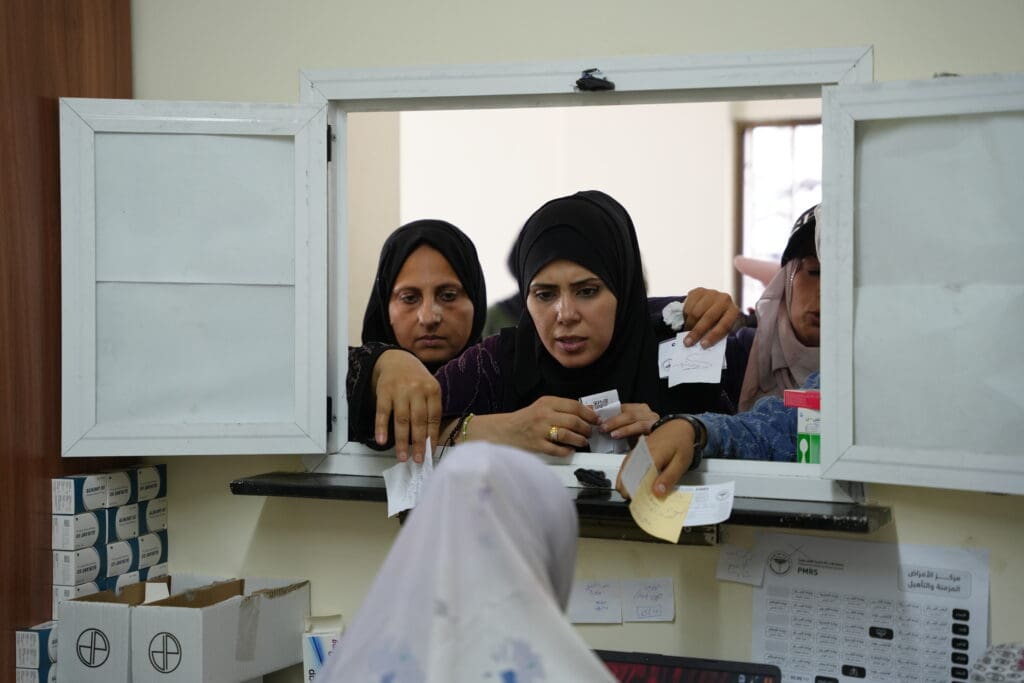
He said the waiting list for patients in need of referrals for treatment outside Gaza has exceeded 20,900, including more than 2,000 people in critical condition. More than 1,900 patients have died while waiting for referrals since the Rafah Border Crossing between Gaza and Egypt closed on 7 May 2024, he added.
A limited number of patients are being evacuated, he said, and the approval process for travel can take six to eight weeks. In some cases, the patient is approved, but their companion is not, forcing the process to start all over again.
The Ministry of Health requires approximately 660 gallons of engine oil per month, he said, and shortages of oil and spare parts have led to the deterioration of generators that have been operating for years under harsh conditions. He said only 34 of the 113 generators that were operational in the Gaza Strip before the war received supplies during that period.
This aligns with a broader picture documented by the United Nations in recent weeks. In its report issued on 11 September, the Office for the Coordination of Humanitarian Affairs (OCHA) stated that the near-total lack of reliable electricity has forced hospitals, water and health facilities to rely heavily on backup generators, and that shortages of engine oil and spare parts threaten their continued operation. It reported that Israel has approved only 3,552 gallons of engine oil since 1 March, while another 24,509 gallons were awaiting approval.
“I can’t walk. I can’t help my children.”
Behind these alarming numbers are people waiting.
Abdel Naim, 52, has been suffering from a serious leg injury since December 2023. He said he needs treatment outside Gaza and has been waiting without knowing when he will be able to travel. For now, he is treated at Al-Ahli Arab Hospital.
“I can’t walk. I can’t help my children,” he said.
Mr. Naim has six children. His house was bombed, and his family moved into a tent. He said he does not have the money for travel or for treatment.
“I want to get treatment. I want to see my health improve. I can’t walk,” he repeated.
Elsewhere in Gaza, the family of Youssef Humaid is living with a different problem.
Youssef, 15, was born with severe bone deformities and spinal problems. He had numerous surgeries before the war and doctors regularly monitored his treatment.
But the war changed everything.
During an evacuation order, issued by the Israeli army, Youssef’s family was forced to flee. Youssef did not have a wheelchair. His mother, Khitam Humaid, said they put him in a shopping cart instead, but he fell out of the cart on the journey and was injured.
“Since then, his condition has deteriorated. If you watch his old videos, you would be surprised by the difference,” she said.
The family has been displaced within Gaza several times, and moving a sick child from one place to another has been one of the hardest things she has ever faced, she said.
Today, Youssef and his family live on the fifth floor of a partially destroyed apartment building in Gaza City. He cannot go down the stairs on his own, and he cannot walk long distances. He sometimes needs help to use the bathroom.
His education and social life have virtually ceased. Before the war, Youssef was an excellent sixth-grade student, scoring high on tests, his mother said. After regular schooling stopped, she hired tutors to come to their home, despite the cost.
Beyond his studies, his lack of socialization with peers has affected him adversely.
“Since the beginning of the war, Youssef hasn’t interacted with other children his age,” Mrs. Humaid said.
Some schools have refused to accept him because of his health condition, she continued, adding that transportation has become difficult and expensive, and leaving the house has become an adventure.
“Youssef is like a prisoner,” she said. “All I wish is for Youssef to travel, receive treatment, and live a dignified life.”
The CNEWA Connection
For years, CNEWA-Pontifical Mission has partnered with Al-Ahli Arab Hospital in Gaza, and in January 2025 bolstered its support for urgent medical services in the wake of the Israel-Hamas war. In December 2025, two months after a ceasefire was announced, CNEWA-Pontifical Mission provided funds and supplies to help with life-saving surgeries and to help repair the hospital’s burn unit. All of this was in addition to funds allocated to help vulnerable families in the Gaza Strip.
To support CNEWA’s work in Gaza, call 1-866-322-4441 (Canada) or 1-800-442-6392 (United States) or visit cnewa.org/donate.