A citizen-driven tree-planting initiative in Ethiopia aims to fight deforestation, end the destructive ecological cycle that triggers drought, and in the process change the narrative of Ethiopia as a destitute nation prone to misfortune.
The Ethiopian government began the Green Legacy Initiative in 2019 as a strategic approach for the country’s more than 130 million people to build resilience against climate change, promote environmental initiatives, end the recurrence of famine, and achieve food security.
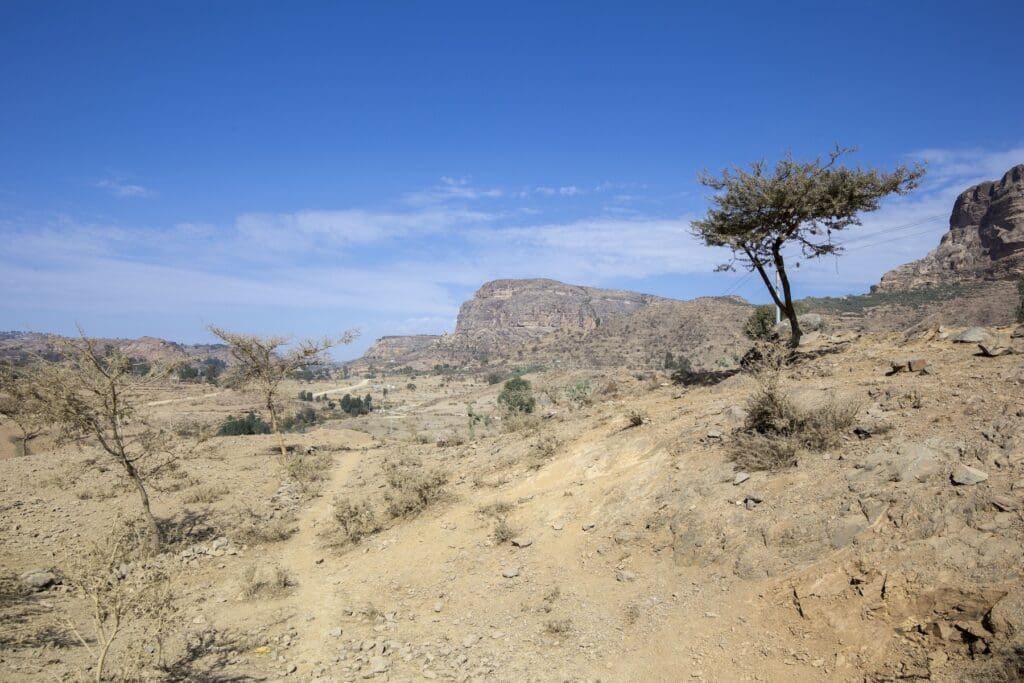
The initiative is a response to the dramatic loss of Ethiopia’s natural resources caused by climate change, urbanization and war. By the late 1990s, Ethiopia’s forests, which previously covered about 40 percent of the country’s territory, had decreased to just 3 percent. Ethiopia continues to face civil war in some of its most populous provinces.
More than a million people have been internally displaced — further stressing the country’s natural resources — prompting humanitarian organizations grappling with dwindling aid to warn of potential famine in parts of the country. Recurring conflicts have forced most farmers to skip farming seasons.
The goal of the Green Legacy Initiative to plant more than 50 billion trees by the end of 2030 has widespread community support, including that of the Catholic Church.
Argaw Fantu, regional director for Catholic Near East Welfare Association, said the ambitious plan echoes the teachings of the late Pope Francis, whose 2015 encyclical, “Laudato Si’,” urged people to protect the earth, “our common home.”
“We align with this initiative as a way to realize the (teachings) of the Catholic bishops of Ethiopia by also planting trees,” he said.
In towns and villages across the country, many citizens have contributed toward this goal, including in the northern region of Tigray, devastated by a two-year war (2020-2022), and in the neighboring Amhara and Afar regions, also impacted by the war.
News organizations reported a return to war in the Tigray region on 23 September, with an offensive launched by Tigrayan militias against government forces.
In some of the most vulnerable parts of Ethiopia — such as in the south, where dilapidated infrastructure is prone to extreme flooding — tree planting is a solution to help absorb rainwater and stabilize the land.
In 2024, hundreds of people died and dozens of communities were destroyed because of mudslides and landslides in Gofa, a mountainous area in southern Ethiopia. Earlier this year, more than a dozen people in the Amhara region were killed in a landslide.
In 2027, Ethiopia will host COP32, the 2027 Climate Change Conference of the United Nations. The government is expected to highlight its Green Legacy Initiative in what Prime Minister Abiy Ahmed Ali calls a demonstration “that climate leadership begins with restoring nature.”
This year, Mr. Abiy closed government offices for a day and encouraged businesses to join him in planting trees in major cities, offering incentives to achieve the goal of planting 800 million trees in a single day. The government claimed more than 805 million trees were planted that day, but skeptics questioned how the government managed to plant that many trees when some of its populous provinces were in turmoil and involved in conflicts.
The government has said it is on track to plant 8 billion trees this year alone.
In the nation’s capital of Addis Ababa, marketer Michael Teklu said some Ethiopians have made it “a ritual to join friends and colleagues to plant trees, take care of the trees already planted and find wisdom and yield the results as a practical solution of our problems.”
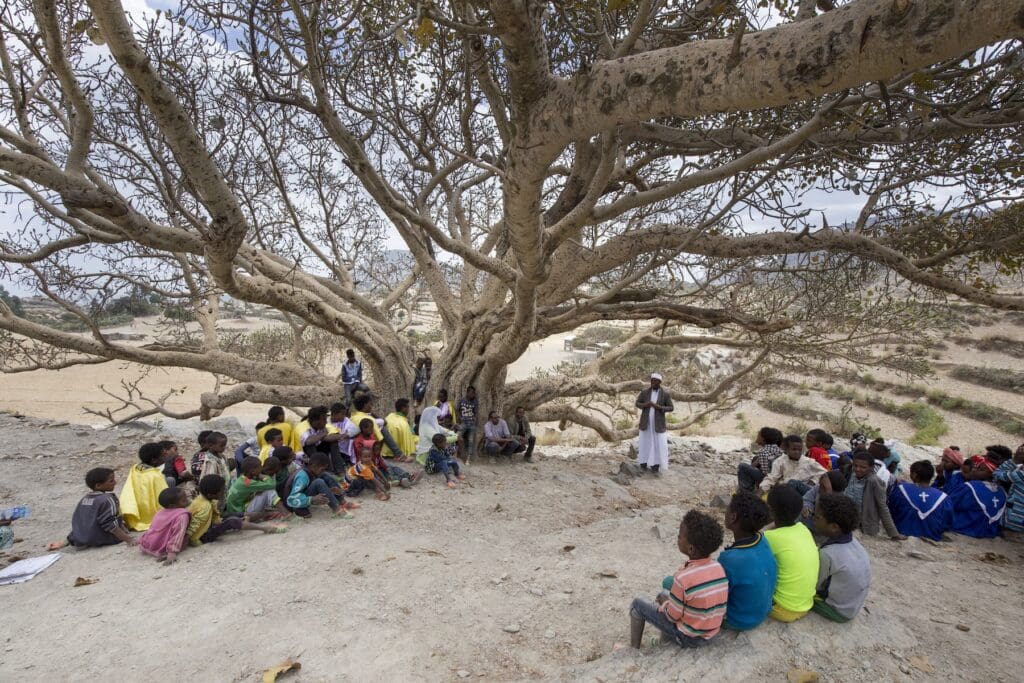
Salem Berhanu, an entrepreneur in Addis Ababa, joined others, including students from the Lideta Catholic Cathedral School, in planting trees. He said he was elated that young people were learning the value of planting trees and hoped they would make a lifetime commitment to the environment, becoming enthusiastic environmentalists.
“Trees give us hope and help us preserve water resources that can protect our soil and help us produce our own food security, which is often the reason for our conflict,” he said. “It should be a commitment and an obligation practiced by all of us.”