The days that followed an attack on a funeral in Jordan showed “how united Jordanians truly are,” said Ra’ed Bahou, regional director of CNEWA-Pontifical Mission for Jordan and Cyprus.
“Christians and Muslims came together to support one another,” said Mr. Bahou. “People rushed to hospitals to donate blood, neighbors comforted grieving families, and religious leaders spoke out against the attack. It was not only the Christian community that was mourning. The whole country shared in the sadness.”
On 26 October, Jordan arrested three men it said were responsible for an attack 23 October on a funeral at St. George’s Greek Orthodox Church in Kerak. Nine people died as the three gunmen fired continuously for five minutes before fleeing the scene, OSV News reported. One of those present said up to 200 mourners were in and around the church for the funeral service, adding that most of the victims were between 50 and 70 years old.
Later 26 October, Jordan launched airstrikes against some armed groups in Syria in retaliation for the church attack, which it described as a terrorist incident. Syrian officials said Jordan did not notify them before the attack and that civilians were killed in the airstrikes.
Mr. Bahou said the arrest of the three suspects helped Jordanians feel safer. “It showed that the government was taking this terrible crime seriously and was determined to protect its people,” he said.
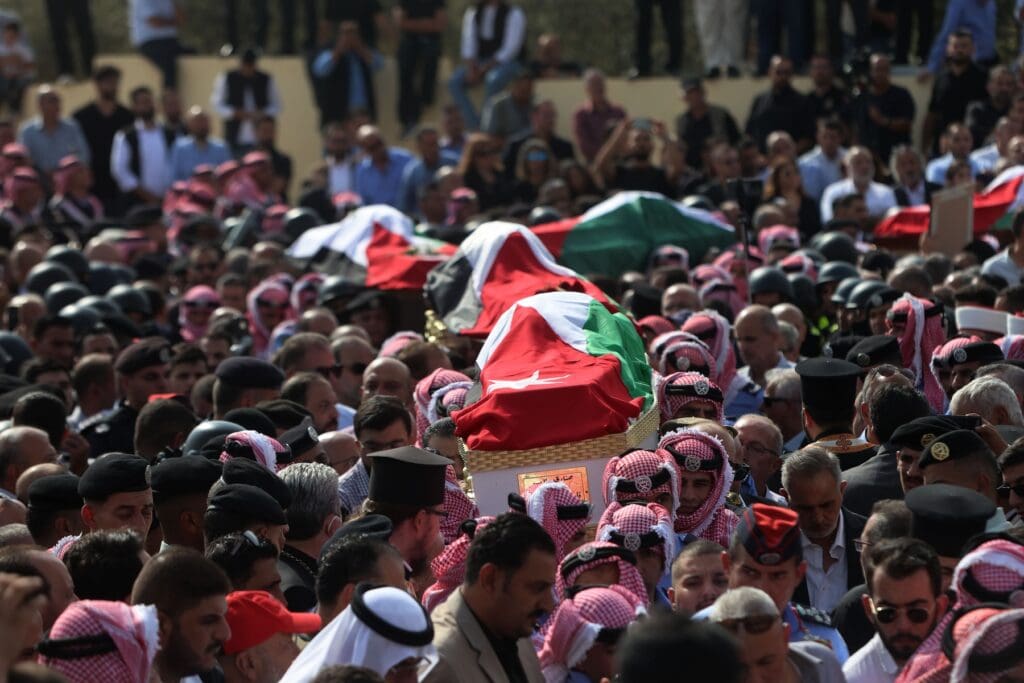
He also praised the response of the royal family. King Abdullah II “visited the injured and promised that those responsible would be brought to justice,” Mr. Bahou said. “The victims were honored with an official national funeral attended by thousands of Jordanians. Their coffins were covered with Jordanian flags, and they were recognized as martyrs of the nation.
“This meant a great deal to the Christian community. It showed that these men were not only being mourned as Christians, but as Jordanians. Queen Rania, Crown Prince Hussein, and other members of the royal family also stood beside the grieving families,” Mr. Bahou said.
Muslims make up more than 97 percent of Jordan’s population; they and minority Christians have lived in peace for centuries.
“We have seen what happened in Iraq and Syria, where many Christian families were forced to leave,” Mr. Bahou said. “We do not want the same future for Jordan. Christians will continue to live here, raise their families, practice their faith and celebrate their traditions.”
He also said people must learn more about extremism, especially through education. CNEWA-Pontifical Mission has partnered with the Royal Institute for Inter-Faith Studies for a program that aims to promote better interreligious understanding in the kingdom.
“The unity we have seen following this tragedy has given the Christian community strength and hope,” Mr. Bahou said. “We must build on this by encouraging more dialogue and understanding between Christians and Muslims, especially among younger generations.
“By bringing people of different faiths together, we can strengthen the relationships that have always been part of Jordanian society and help ensure that future generations continue living together in peace and mutual respect.”