On a pleasant drizzly morning in August, a group in Kothamangalam, southern India, prepared for a steep climb to the pilgrimage site of Nadukani Kurisumala, or St. Thomas Mount. The monsoon had not quite left the state of Kerala, but it had lost its ferocity, leaving breezy and misty weather.
Not a single plastic bottle or bag of chips littered the route. Father Robin Padinjarekuttu, the parish priest of St. Thomas Syro-Malabar Church in Nadukani, led the trekkers, with church volunteers Christo Jojo, on break from his shipping job, and Steve Jase John, a student on a school break.
“We’ve been raising awareness against littering,” Father Padinjarekuttu said. “It was and still is a huge problem, especially with thousands of tourists from Kerala as well as across India not giving a thought to our environment.”
The Nadukani parish is part of the Syro-Malabar Eparchy of Kothamangalam. This year, volunteers from 12 parishes hiked up the hill the week after Easter to collect the waste left by tourists who visited during the Easter break.
“It was a lot,” Father Padinjarekuttu said. “Every year, despite our efforts, people don’t take care with litter. But things have definitely gotten better since we started the awareness drive post-COVID.”
In Kerala, littering and accumulating plastic waste is a huge environmental problem. Even though the state banned single-use plastics in 2020 — ahead of the rest of the country — government statistics show banned single-use items such as straws, plastic bags, food packaging, wrappers, and water and soft drink bottles still make up nearly half of Kerala’s plastic litter.
“The problem is so big that even in quaint tourist areas, such as Kothamangalam, local waste collection facilities and recycling plants can’t cope with the volume of waste,” Father Padinjarekuttu said.
The church has stepped up its efforts to help the local administration deal with the problem. The priests educate parishioners about keeping their surroundings clean and about the dangers of using plastic.
As trekkers descended, a Christian family sold lemonade. The family sells the drink to visitors during the October to March tourist season.
“We encourage them to serve the lemonade in glasses rather than single-use paper or plastic cups,” Father Robin said. “It doesn’t seem like much, but when you look at the amount of waste it saves on a daily basis, that’s when you realize how the smallest steps make a difference in the bigger scheme of things.”
The church is also promoting plastic-free cemeteries. Plastic flowers, wreaths and ornaments cause near burial sites cause surface pollution. At the St. Thomas Church cemetery, parishioners are discouraged from taking plastic flowers or wreaths to decorate graves.
“During the monsoon season, plastic flowers and wreaths can wash into local canals, rivers and eventually the ocean. This causes havoc for marine life,” Father Padinjarekuttu said.
“We encourage green burials and visits to graves,” he said. The church is aware of its responsibility to the environment, he said, and the Eparchy of Kothamangalam has instructed all its parishes to adopt environment-friendly practices.
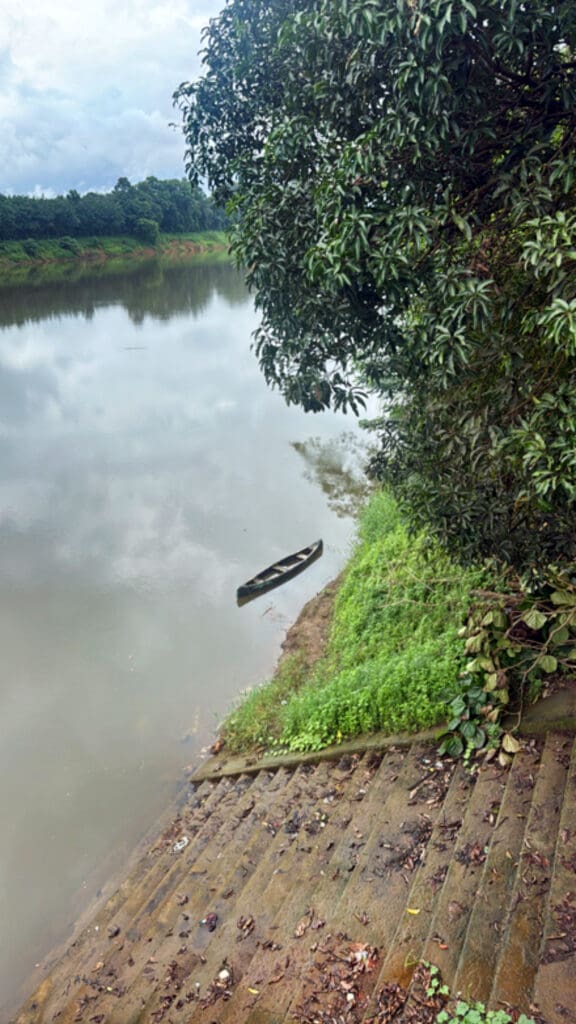
The Periyar River flows through Kothamangalam. On its path, it softens rocks.
“The church encourages the use of these stones and pebbles in the grottos,” Father Padinjarekuttu said. “It’s not just easy on the eye, but also sustainable and friendly to the environment.”
Grottos in Kerala are a popular tourist attraction.
“Most grottos, especially in Catholic churches in Kerala, are shrines dedicated to the Blessed Virgin Mary,” Father Padinjarekuttu said. “Roadside grottos attract travelers and pilgrims. So, the church is keen for us to use natural rocks rather than ones made from concrete.”
Kothamangalam, a city of about 38,000 situated in the foothills of the Western Ghats mountain ranges, remains relatively untouched by urbanization and industrialization. It survives on domestic and international tourism.
“Our reputation relies on what visitors see,” said Father Padinjarekuttu. “We want them to go away feeling they came to a clean, green place where the river flows gently, people are welcoming and there’s not a trace of unwanted waste.”