The Holy See and UNRWA. Vatican News has reported that the Holy See “has reaffirmed its financial support for the United Nations Relief and Works Agency for Palestine Refugees in the Near East (UNRWA), describing the agency as an ‘essential lifeline’ for millions of Palestinian refugees” and urged the “international community to ensure its work can continue unhindered.”
For decades, Israel has questioned the neutrality and objectivity of the largest U.N. humanitarian aid organization in Gaza and the West Bank, alleging Hamas members have infiltrated UNRWA and assisted in the planning of the 7 October 2023, attacks in Israel. The Knesset consequently banned UNRWA from Israel.
The Permanent Observer Mission of the Holy See to the United Nations addressed the U.N. General Assembly’s Ad Hoc Committee for the Announcement of Voluntary Contributions to UNRWA on 30 June, and “expressed deep concern over the humanitarian situation in the occupied Palestinian territories, particularly in Gaza, where civilians continue to endure violence, displacement and severe hardship,” Vatican News reported.
“For over seven decades, UNRWA has provided education, health care, food assistance and social services,” the Permanent Mission stated, stressing that it offers not only tangible help, but “the opportunity to live with dignity.”
Condemning the killing of UNRWA personnel and military attacks on its facilities sheltering civilians, the Holy See noted that “such acts exacerbate the suffering of those already living in precarious conditions and constitute a grave violation of international humanitarian law.”
As a sign of its “concrete expression of solidarity with Palestinian refugees and confidence in the agency’s humanitarian mission,” the Holy See renewed its annual pledge to UNRWA, stating that UNRWA requires “adequate, predictable and sustainable support” to fulfill its mandate with effectiveness.
According to Vatican News, the Holy See “stressed that the agency’s work must continue to be guided by the principles of humanity, neutrality, impartiality and independence.” It also “reaffirmed the importance of safeguarding UNRWA’s mandate, recalling that the agency was established by the United Nations General Assembly in 1949,” and that any discussion regarding its future should take place within a multilateral framework rather than through unilateral measures.
Pope Leo to Aid Agencies. The Holy See’s call for multilateral frameworks, partnerships, dialogue and discussion through its Permanent Observer Mission to the United Nations echoes the words of Pope Leo XIV in his 18 June address in Rome to the Catholic funding agencies that work with the Dicastery for the Eastern Churches, which includes CNEWA.
“My dear friends,” he said, “as I look at you and reflect on the quiet, benevolent service you carry out — and on the many benefactors who, through you, channel resources to those in need — I cannot help but think of how much money, in this dark period of history, is being wasted on killing, squandered by so many who foment wars.” He continued:
While you generate life, they sow death; while you reach out to your brother, they seek enemies to crush; while you create dialogue, they seek monologues; while you open paths of hope, they lock people into fear; while you build the future, they destroy the present.
How can we fail to think of the painful exodus of Eastern Christians from their own lands, caused above all by war — which, I repeat, does not solve problems but creates tragedies, tragedies that are often consigned to oblivion? There is a plague, a scourge born of war, which I would like to speak about today, one that continues to drain the lifeblood of the Eastern churches in particular. I define it with a single word: instability.
When a visitor travels to a country that has experienced conflicts now shrouded in silence, things generally may appear peaceful, even if deeply scarred by the tragedies of the past. Yet those societies are weakened by institutional instability, by the presence of armed gangs that divide up the territory and by a political system influenced and, not infrequently, manipulated by external agents and interests. Such a system does not act freely, but instead navigates a maze of subterfuge, secret agreements and partisan interests. As a result, a perpetual cycle of instability is created, stifling opportunities for development and always falling hardest on the poor.
As a result, fear and insecurity prevail everywhere in many countries: Jobs seem precarious, wages are paid irregularly, health care — when it functions at all — is sporadic and education remains precarious. This is to the detriment of ordinary people, families, children and young people, the elderly and the sick. It becomes a tragedy that weighs on everyone’s hearts, devours hopes and makes it impossible to build for the future, which drives many to leave, as is the case for so many of our brothers and sisters in faith, especially in the Middle East.
I would like to appeal once again for reflection on the consequences of war and instability and for their prevention through wise and responsible decision-making, for this is not the result of an inevitable fate, but of free choices and, therefore, of morally accountable actions. History shows how the schemes of violence and oppression, of power and domination, of gains made without justice and without scruples, backfire not only against those who suffer them, but also against those who pursue them. Let us pray to Jesus, the Lord of peace, and appeal to people’s consciences so that they may be moved by indignation; and may respect for humanity and a proper sense of civility be restored!
Cardinal Pizzaballa and Palestine. Perhaps nowhere in the world served by CNEWA are the consequences of war and instability clearer than in Gaza. On Monday, the Solemnity of Sts. Peter and Paul, Pierbattista Cardinal Pizzaballa, Latin patriarch of Jerusalem, commented on his recent visit to the devastated territory with his brother patriarch, Theophilos III, who serves the Orthodox community throughout the Holy Land.
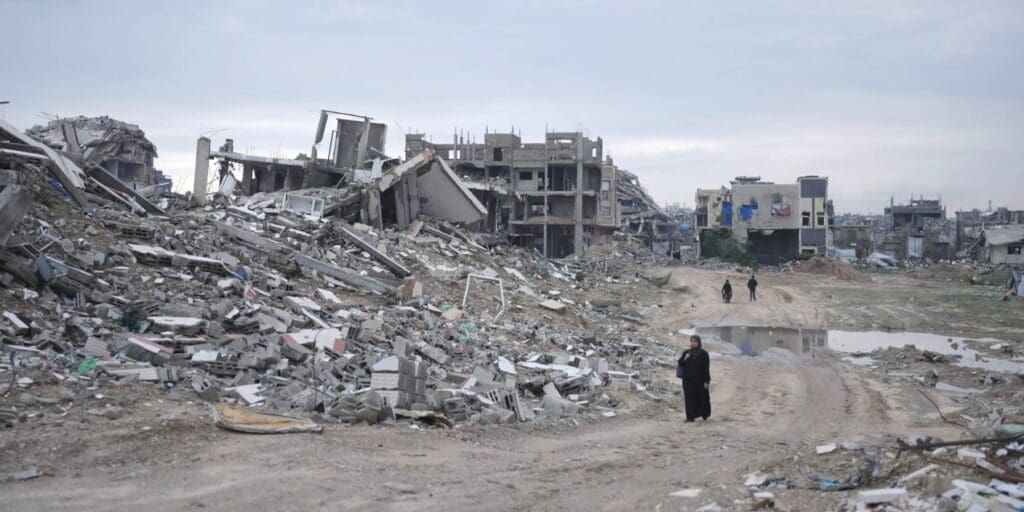
“The cities have been razed to the ground, leveled, wiped out,” he said upon his reception of the Limes Prize for Dialogue and Peace from the Italian geopolitical magazine, Limes, in Bergamo, Italy.
“Rafah no longer exists. What strikes me most is traveling along makeshift roads, through tents and sewage. This is where the people of Gaza live,” he explained.
“One thing the images do not convey is the smell. And one of the greatest scourges right now is the rats, which bite. They bite children above all, and Gaza is full of children — you see them everywhere, but instead of going to school, they play, dirty, beside the sewers.
“While some food is now able to enter,” he continued, “almost everything else is still prohibited. Dual use goods are not allowed in. And by dual use they even mean school desks, pencils, notebooks and the glass needed for windows.
“We want to reopen the schools, but we are missing almost everything. We try to make do by recycling whatever pieces we can find here and there.
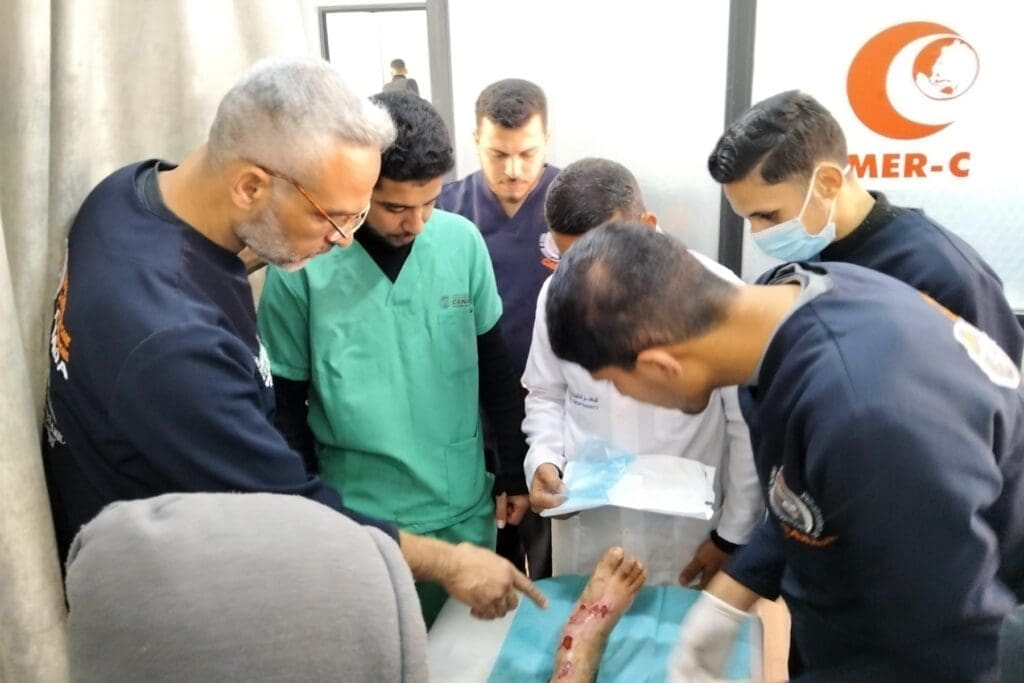
“Health care workers have told me that what is needed right now is staff trained to handle the psychological trauma experienced by children and mothers. This is an issue that must be handled with the sensitivity it deserves. I’ll say it in a not-very-diplomatic way,” he added, “but I feel profound sorrow. I just can’t understand.”
The patriarch’s sorrow extends to the occupied West Bank, where, he said, “there is no rule of law.
“The law does not apply, and even if it does, it is not meant for Palestinians. Israeli settlers are allowed to do anything. They set up checkpoints everywhere, cut down trees, and prevent people from cultivating their land. Assaults, thefts and insults have become everyday occurrences.”
Nevertheless, the patriarch said, the only way forward, if justice and peace are to be attained, is through dialogue. And he appealed to the media as a partner: “Journalism that seeks to help people understand is important. Keep talking about it, and do not follow passing fashions.
“We must not isolate people. There is a need for empathy, for understanding, for dialogue, without erecting new barriers. … You must help us climb out of that well and not leave us trapped inside it.”