Ethiopia’s women and children bear much of the burden of the country’s multiple crises — conflict, displacement, inflation, drought and reductions in international aid, said Argaw Fantu, regional director for Catholic Near East Welfare Association in Ethiopia.
“In Ethiopia, there is also a scarcity of job opportunities,” he said.
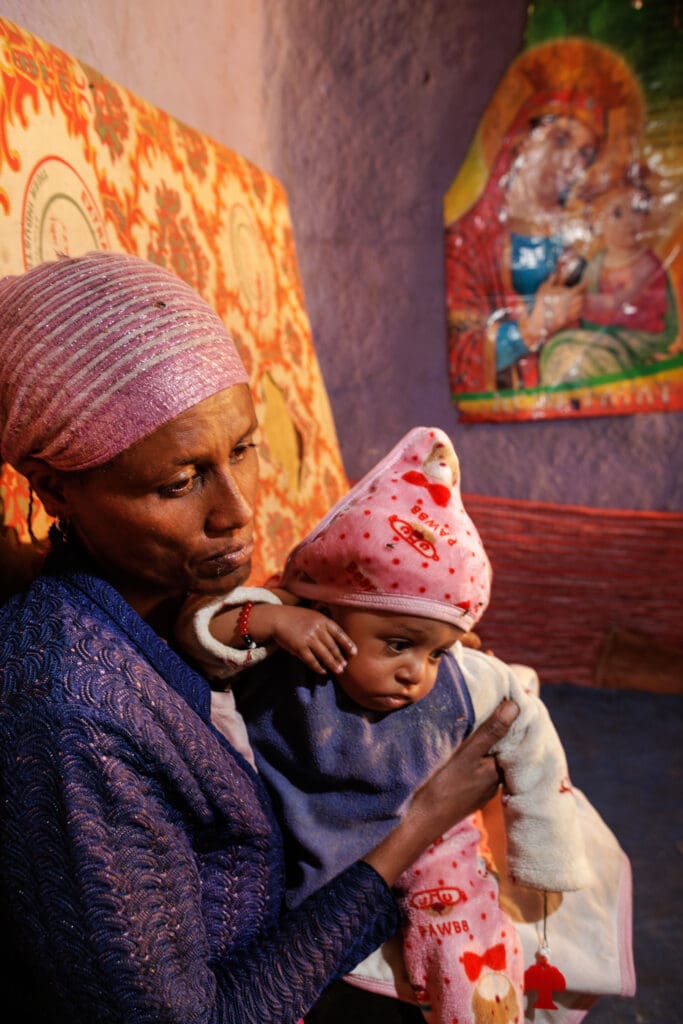
Often young men leave their families in search of work, leaving mothers and sometimes grandmothers to care for the children without support, Mr. Fantu told a virtual seminar, organized by CNEWA’s national office in Canada on 8 July. There are few child care centers in Ethiopia, making it difficult for women with children to find work, he added.
The lack of support compounded by the other crises makes it difficult to raise healthy children, he said.
He gave an example of the cycle of poverty in Ethiopia: The children of a displaced mother qualified for nutritional support. After three or four months, the children had gained enough weight that they no longer qualified for the supplemental feeding program. At a checkup, a few months later, the children again were malnourished.
The mother was given instruction on how to feed her children, “but instruction alone will not help, if she doesn’t have food to feed her children,” Mr. Fantu said. “These are really very painful situations.”
He showed photos of CNEWA staff visits to different areas of the country. One photo showed crops that had shriveled due to drought. “Once this season is lost, then the people are just suffering with the food shortage for another one year,” he said.
In addition to drought, conflict and displacement disrupt crop production. They also interrupt education, “leaving millions of children out of the classroom.”
“It is really painful to see the school-age children stranded on roadsides or in the village for having no access to schools, in particular in war-affected areas,” Mr. Fantu said. For instance, a civil war in the Tigray, Ahmara and Afar regions of Ethiopia lasted from November 2020 to November 2022.
To improve their situation, some young people opt to leave their villages in search of work and, in the process, become victims of human trafficking, he said. In some areas, there are few teens between the ages of 15 and 19; they leave, travel across the desert to Libya or Djibouti, and die trying to cross oceans.
“Every day, we receive dead bodies from different areas,” he said. “The situation on the ground is really unspeakable,” especially for young people. Earlier this year, Mr. Fantu reported that more than 10 million people were projected to face high levels of acute food insecurity.
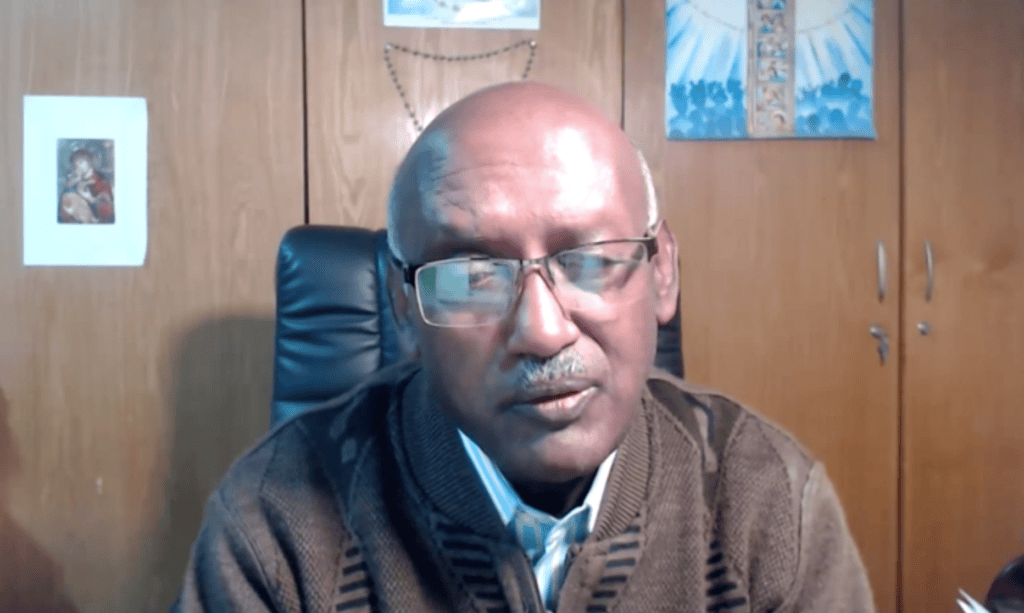
Mr. Fantu said one thing that makes churches different from other aid organizations “is they are always with the people on the ground.
“Whether it is in good times or in hard times, the religious sisters and the priests are always there. Religious sisters and priests share the daily suffering of people,” he emphasized. “When they get some support in such a very difficult situation from donors, the joy of the beneficiaries is their own joy.”
Sometimes the sisters will share their own meals with people who beg at their gates. “That is how the religious sisters and the priests … are suffering with the people.”
Mr. Fantu said he visits communities for a day or two, and those visits give the sisters hope. CNEWA staffers spend evenings discussing with the sisters and priests “about their challenges, about their difficulties, their suffering with the people.”
“I really wonder how these sisters … encounter this daily suffering of people that come to them every day asking for something,” he said.
Ethiopians “have strong faith while encountering difficulties. They don’t lose hope, that’s also the most important thing, even in difficult times. Even being in challenging situations, you see them smiling. So that smiling radiates hope, in particular in mothers and small children.”
He said CNEWA staffers pray daily for people who understand that the Gospel message of “who is my neighbor” can mean people far away, people they never see, but “whose suffering they feel in their heart.”
Because CNEWA has spent decades in Ethiopia, when the church requires emergency aid, people “knock at the door of CNEWA.”
When CNEWA can help, it gives everyone, including the staff, hope, Mr. Fantu added. “Hope in the sense that tomorrow I will try another one. The day after tomorrow, I will try to reach another one. So that is the hope that we encounter, me and also my staff here, in the office.”
“But if we don’t have [anything to give], really I also share their pain. How to respond?”
Support CNEWA’s work in Ethiopia: Ethiopia in Crisis