Darine Tawk has seen her share of devastation from the Israel-Hezbollah conflict in Lebanon, but there is one moment she cannot forget.
As more than a million people were being displaced from southern Lebanon amid escalating violence in 2024, she was distributing food and supplies in Beirut at a Daughters of Charity school serving as a shelter. A little girl ran to her, crying, and hugged her.
Ms. Tawk, who also began to cry, told the girl they had food, water and everything she needed. But the girl, about nine years old, only wanted one thing.
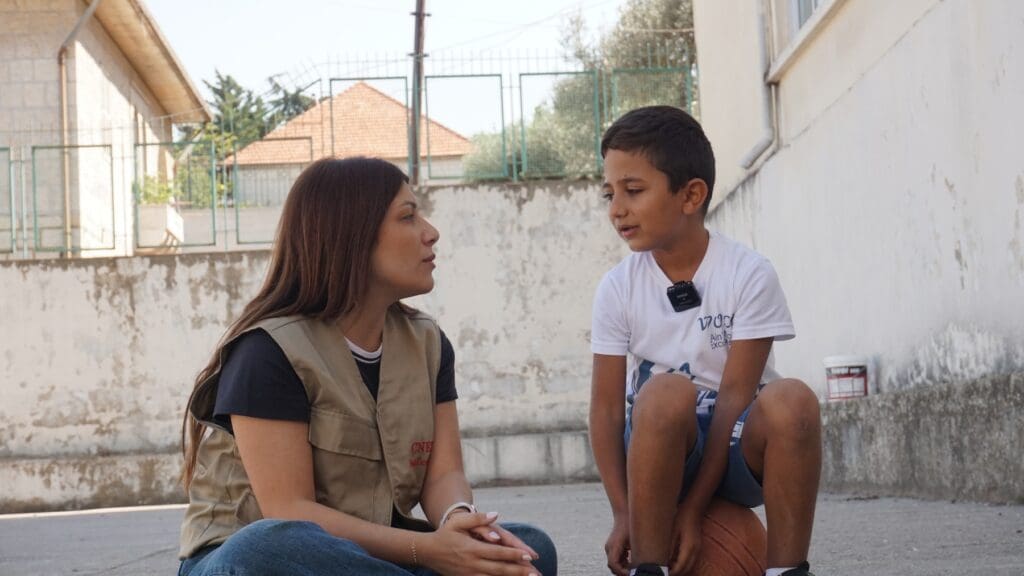
“She asked if I could bring her toys to the shelter,” Ms. Tawk said. “She told me, ‘I left my toys at my house.’ ”
Ms. Tawk, senior projects coordinator for the regional CNEWA-Pontifical Mission office in Beirut, said the experience illustrated the impact of the mass displacement.
“Children remember,” she said. “She wanted to live her childhood.”
Ms. Tawk described the emotional encounter during a webinar, hosted by CNEWA’s national office in Canada, on 1 October about the growing pressures on Lebanese children after years of economic crisis and war.
The toll of ongoing violence on Lebanon’s population of 6 million includes not only loss of life and injuries, but displacement, economic crisis, and a crippling strain on schools struggling to stay open.
Renewed fighting in 2026 has again displaced families from southern villages to Beirut and other points north, while some families have chosen to remain. CNEWA-Pontifical Mission and its local partners have been delivering food, water, medicine, fuel and other aid since the start of the war to displaced families and families in the south, providing those who have lost their livelihoods with necessities.
“It’s because of the efforts of the local church and the Christian institutions that until now the Christians can remain in their villages,” said Larissa Habib, a CNEWA-Pontifical Mission projects coordinator based in Beirut.
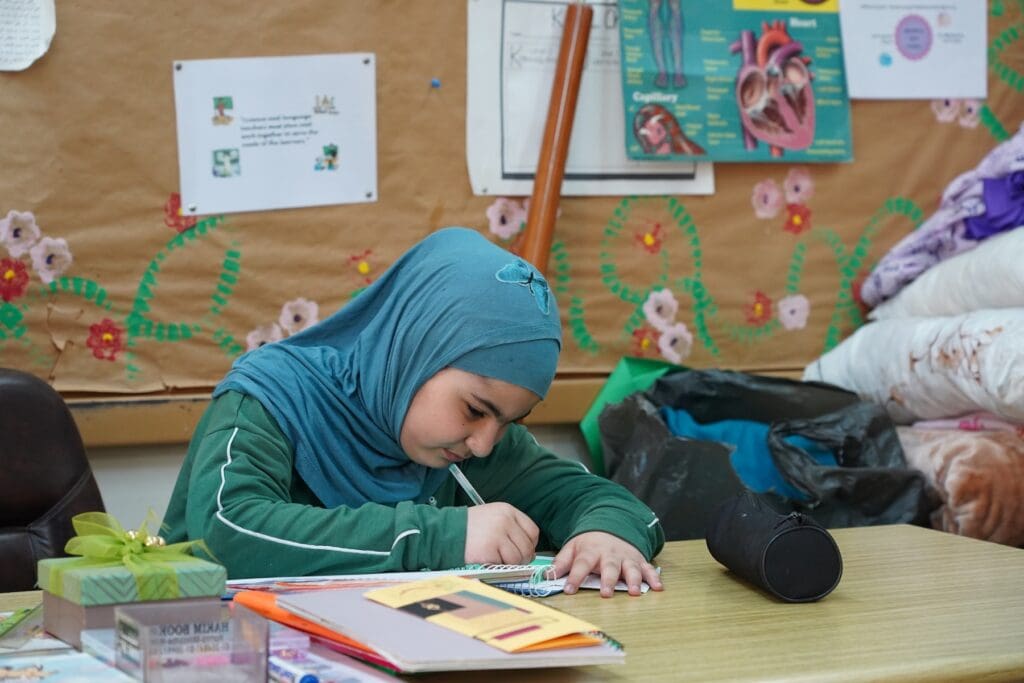
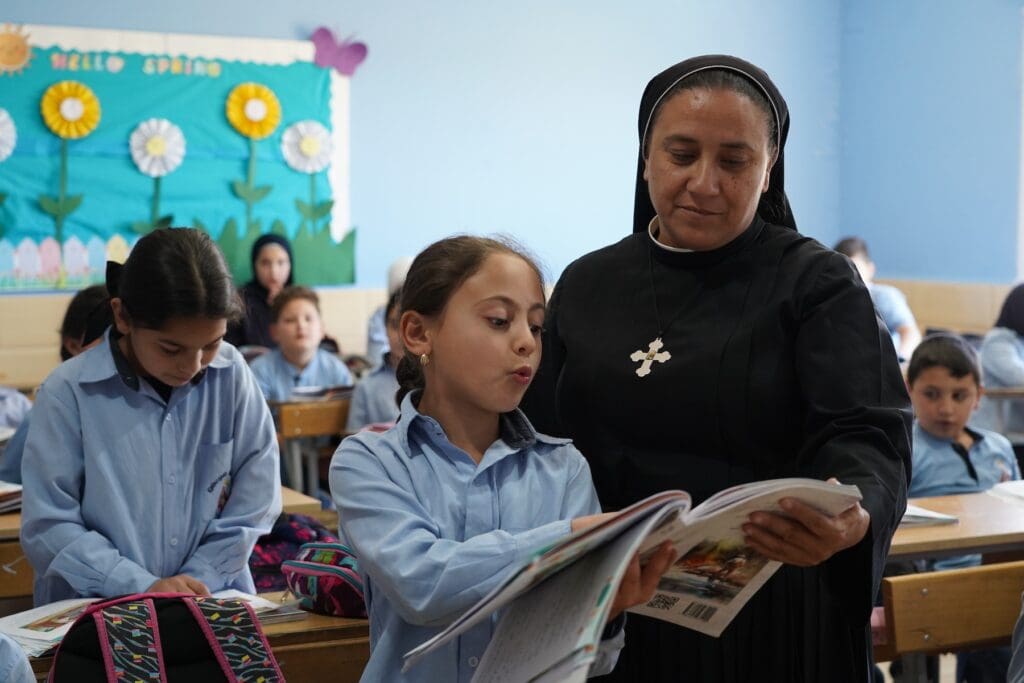
Churches, convents and Catholic schools also shelter displaced families and provide recreational and mental-health programs for children.
Despite the crisis, education remains a priority. About nine Catholic schools in southern Lebanon struggle to operate as families without income are unable to pay tuition, Ms. Tawk said. At one school, enrollment fell to about 200 students, a tenth of what it was previously, while the same number of teachers remain. Some teachers have stayed behind to teach, paid or not, added Ms. Habib.
The schools go “beyond education and learning,” Ms. Tawk said, providing “a sense of belonging” and helping to shape children’s character. They also serve as centers for cultural understanding. About 30 percent of their students are Muslim. “This indicates how important it is to build a bridge between the Christian community and Muslim community,” Ms. Tawk said.
The schools continue with partial tuition and salary support from CNEWA-Pontifical Mission and other church institutions. CNEWA-Pontifical Mission also supports the formation of 120 seminarians in seven Lebanese seminaries, as well as lay leadership development programs.
The webinar took place a day after UNICEF reported at least 261 children have been killed and 1,056 injured in southern Lebanon since renewed hostilities began 2 March. UNICEF said 436 schools have been damaged or destroyed, putting about 100,000 children at risk of having no classroom. Four in five households were struggling to afford necessities, while 17 percent of surveyed households said their children had stopped attending school.
Behind these statistics are the people CNEWA-Pontifical Mission serves, Ms. Tawk said.
“Behind every single project we do with the support of our donors, [behind] every number and every report, there is a real child and a real smile and a real family behind it,” she said.
Every contribution can mean “a child is being fed, or a child is being educated in a school,” she said. “This is our mission, and this is what we [are here] for.”
Medical support is also a major focus. Ms. Tawk said CNEWA-Pontifical Mission is helping cover some surgery, medication and hospitalization costs. Ms. Habib said Lebanon’s economic collapse has made private medical insurance unaffordable for many families.
Despite the grim picture, the CNEWA-Pontifical Mission team said they were sustained by stories of resilience. Ms. Habib described a young boy diagnosed with autism who joined a summer program supported by CNEWA-Pontifical Mission. When he arrived, he was not speaking and engaged little with others. After two months, including music therapy, he began singing.
“He started to talk more and engage and communicate,” Ms. Habib said. The boy was subsequently referred to another school and a team of specialists, who are working with his parents as well to support his progress and ongoing development.